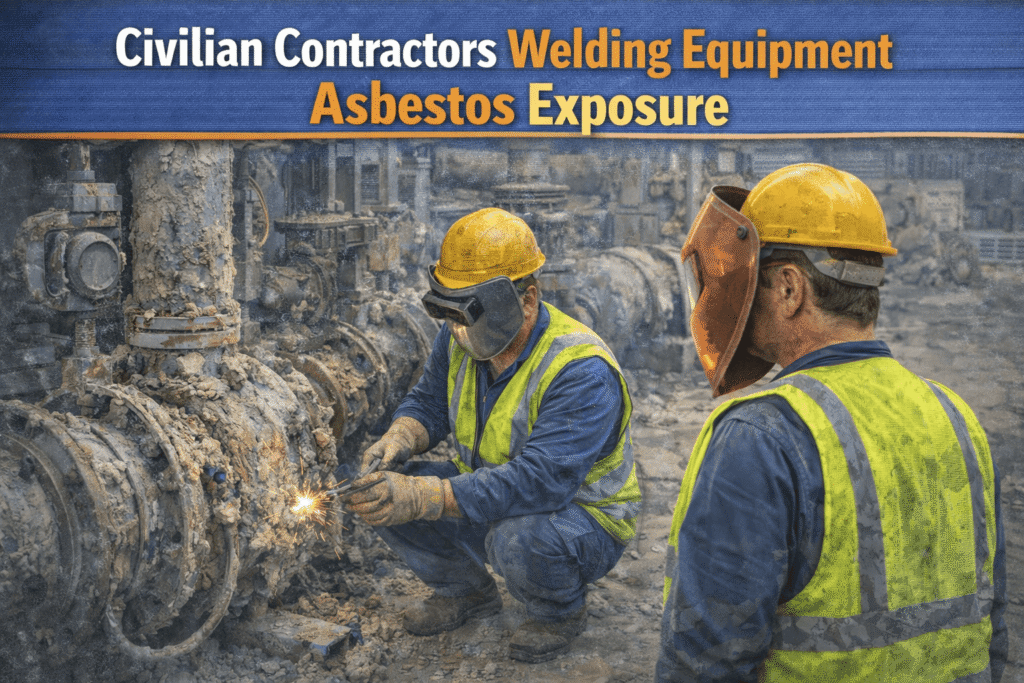
🔥 Civilian Contractors Welding Equipment Asbestos Exposure
Welding torches, heat shields, blankets, gloves, rods, cables, and surrounding insulation exposed civilian contractors to asbestos fibers during fabrication, repair, and maintenance work.
For much of the 20th century, welding operations depended on asbestos to control extreme heat, sparks, molten metal, and fire hazards. Civilian contractors worked as welders, fitters, mechanics, fabricators, and maintenance specialists across construction sites, factories, shipyards, refineries, power plants, pipelines, rail yards, and military-supported facilities.
From the 1930s through the late 1980s, asbestos was intentionally built into welding equipment and protective materials. Contractors often worked in confined, poorly ventilated spaces where asbestos blankets and insulation were repeatedly heated, disturbed, and deteriorated. Many are now being diagnosed with mesothelioma and other asbestos-related diseases decades later.
🧱 Why Asbestos Was Used in Welding Equipment
Welding produces intense heat, sparks, and slag.
Asbestos was widely used because it:
-
🔥 Withstood extremely high temperatures
-
🧱 Provided fire resistance against sparks and molten metal
-
⚙️ Insulated welding torches and cables
-
🧤 Protected workers through heat-resistant PPE
-
💲 Reduced equipment damage and replacement costs
These design standards were common in welding operations performed at industrial, infrastructure, energy, transportation, and military-supported facilities, including projects tied to agencies associated with the Department of Defense.
🚧 Civilian Contractor Roles Involving Welding Equipment
Welding required extensive contractor labor across many trades.
High-risk civilian contractor roles included:
-
🔥 Welders and welding technicians
-
🔧 Pipefitters and boilermakers
-
⚙️ Fabrication and repair specialists
-
🛠️ Maintenance and shutdown contractors
-
🧱 Structural steel workers
-
🧹 Cleanup and demolition crews
-
🚧 Emergency repair technicians
Many contractors worked alongside active welding operations, even if welding was not their primary job.
🧰 Asbestos-Containing Materials in Welding Operations
Asbestos was present in and around welding equipment.
Common asbestos materials included:
-
🔥 Welding blankets and curtains
-
🧤 Heat-resistant gloves and aprons
-
🧱 Insulation on pipes, boilers, and tanks being welded
-
⚙️ Torch insulation and cable coverings
-
🧱 Fireproof pads and barriers
-
🔩 Gaskets and insulation disturbed during hot work
-
🧱 Fireproofing in welding areas
Repeated heating caused asbestos materials to break down and release fibers, especially when moved or folded.
🔧 How Civilian Contractors Were Exposed During Welding Work
Exposure occurred during routine welding tasks.
Common exposure scenarios included:
-
🔥 Handling and repositioning asbestos welding blankets
-
🧤 Wearing asbestos-lined gloves and protective gear
-
🧱 Welding near asbestos-insulated pipes or equipment
-
🔧 Cutting or grinding materials coated with asbestos
-
🧹 Cleaning slag, dust, and debris after welding
-
🚧 Hot-work repairs in confined industrial spaces
Welding fumes combined with asbestos dust created high-risk inhalation environments.
⚠️ Why Welding-Related Asbestos Exposure Was Especially Dangerous
Welding exposure was severe because:
-
❌ Asbestos materials were repeatedly heated and degraded
-
❌ Fibers became airborne at breathing level
-
❌ Confined spaces trapped contaminated air
-
❌ Welding masks did not filter asbestos fibers
-
❌ Respirators were rarely required or provided
Welders and nearby trades show elevated mesothelioma risk in occupational studies.
🫁 Diseases Linked to Welding Equipment Asbestos Exposure
Civilian contractors exposed to welding asbestos face high risk for:
-
Mesothelioma
-
Asbestos-related lung cancer
-
Asbestosis
-
Pleural plaques and pleural thickening
Exposure often occurred daily, even when welding was intermittent.
⏳ Latency Period and Delayed Diagnosis
Welding-related asbestos disease typically involves:
-
⏱️ Repeated exposure over years
-
⏱️ No immediate symptoms
-
⏱️ Diagnosis 20–50 years later
Many welders are diagnosed long after retirement.
⚖️ Legal Responsibility for Welding Asbestos Exposure
Civilian contractor asbestos claims do not sue employers or job sites.
Claims target:
-
🏭 Welding equipment manufacturers
-
🏭 Asbestos blanket and PPE manufacturers
-
🏭 Insulation and fireproofing suppliers
-
🏭 Companies that failed to warn contractors
Many responsible companies later created asbestos trust funds to compensate victims.
🧑⚖️ How a Lawyer Can Help Welding Contractors
An experienced asbestos lawyer can:
-
🔍 Identify asbestos-containing welding materials
-
📂 Reconstruct welding job histories
-
🏗️ Match tasks to known asbestos products
-
🏦 File multiple asbestos trust fund claims
-
⚖️ Pursue lawsuits against solvent manufacturers
-
👨👩👧 Handle wrongful death claims
Contractors do not need to recall specific product names—lawyers rely on welding-industry records and expert databases.
⌛ Statute of Limitations for Welding Claims
Deadlines vary by state and usually begin:
-
🩺 At date of diagnosis, or
-
⚰️ At date of death for wrongful death claims
Waiting too long can permanently block compensation.
❓ Frequently Asked Questions (FAQs)
❓ Can welders file asbestos lawsuits?
Yes. Welding-related asbestos claims are well established.
❓ Does protective gear prevent asbestos exposure?
No. Welding PPE often contained asbestos and did not filter fibers.
❓ What if I only welded occasionally?
Even limited exposure can cause disease.
❓ Can multiple companies be responsible?
Yes. Welding involved many manufacturers and suppliers.
❓ Can families file claims?
Yes. Wrongful death and secondhand exposure claims apply.
📞 Help for Civilian Contractors Exposed Through Welding Equipment
If you worked as a civilian contractor performing or working near welding operations and later developed an asbestos-related disease, you may still have strong legal options today.
📌 You May Be Eligible For:
-
Asbestos trust fund compensation
-
Manufacturer lawsuit settlements
-
Wrongful death compensation for families
📞 Call 800-291-0963 for a free, confidential welding-equipment asbestos exposure review
⏱️ No upfront costs • Welding-focused cases • Nationwide representation
You built and repaired critical infrastructure. You deserve accountability.