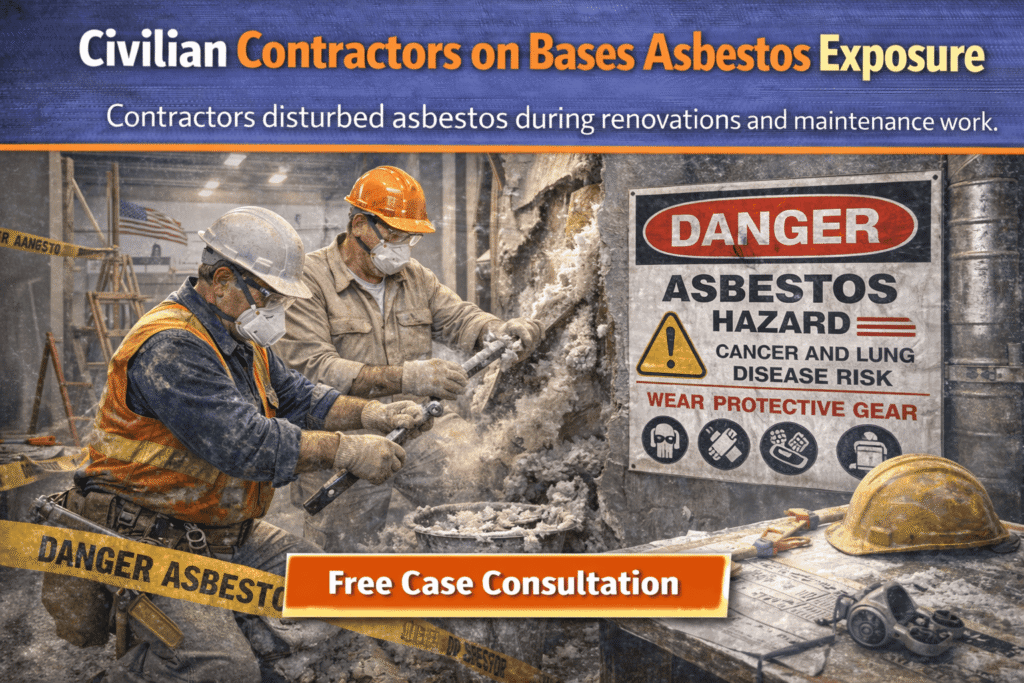
🏗️ Civilian Contractors on Bases Asbestos Exposure
Civilian contractors have worked on U.S. military bases for decades, performing construction, renovation, demolition, utilities work, electrical upgrades, mechanical repairs, and disaster cleanup. From the 1930s through the late 1980s, asbestos was a standard building and equipment material because it resisted heat, fire, and corrosion. Contractors frequently handled asbestos in walls, ceilings, floors, pipes, insulation, boilers, fireproofing, electrical systems, and machinery.
When contractors cut, drilled, sanded, scraped, or removed these materials, asbestos fibers were released into the air. Workers, supervisors, inspectors, and nearby service members were often exposed without warnings or protective equipment. Decades later, many contractors were diagnosed with mesothelioma, lung cancer, asbestosis, and other asbestos‑related diseases.
🏗️ What Is Civilian Contractors on Bases Asbestos Exposure?
Civilian contractors perform specialized work on bases, including construction, maintenance, utilities, electrical, mechanical, and environmental services. Most projects built before the 1980s used asbestos in both building materials and mechanical systems.
Exposure occurred when asbestos‑containing materials were:
- Installed or removed during construction
- Cut, drilled, or sanded during repairs
- Broken during demolition or disaster cleanup
- Disturbed during utility and foundation work
- Left to deteriorate with age and vibration
Because asbestos fibers are microscopic and invisible, workers often inhaled them unknowingly.
🧱 Where Asbestos Was Found in Contractor Work
Asbestos was used throughout base projects:
- Walls & Ceilings: Drywall, plaster, joint compound, fire‑resistant panels
- Floors: Vinyl tile, linoleum, black mastic adhesive
- Roofs & Siding: Shingles, felt, siding panels
- Pipes & Utilities: Insulation, wraps, asbestos‑cement pipe
- Boilers & Power Systems: Insulation, gaskets, refractory linings
- Fireproofing: Sprayed coatings on steel and concrete
- Electrical Systems: Panels, wiring insulation, arc barriers
- Machinery: Gaskets, seals, heat shields
Cutting and removing these materials released asbestos dust directly into breathing zones.
🔨 How Contractor Work Released Asbestos
Contractor activities frequently disturbed asbestos:
- Demolishing old buildings and utilities
- Cutting walls and ceilings for upgrades
- Removing pipe insulation and boilers
- Sanding joint compound and surfaces
- Excavating asbestos‑cement pipe
- Cleaning debris after asbestos disturbance
Large projects could blanket entire work zones with asbestos dust, exposing everyone nearby.
👷 Who Was Most at Risk
High‑risk contractor roles included:
- Construction and demolition workers
- Electricians and plumbers
- Pipefitters and HVAC technicians
- Mechanical and equipment technicians
- Environmental and cleanup crews
- Supervisors and inspectors
Nearby service members and base workers were also exposed when fibers traveled through air and ventilation systems.
🫁 Diseases Linked to Contractor Asbestos Exposure
Asbestos fibers lodge in lung tissue and organ linings, causing progressive disease.
Common illnesses include:
- Mesothelioma – Cancer of lung or abdominal lining
- Lung Cancer – Increased risk with asbestos and smoking
- Asbestosis – Permanent lung scarring
- Pleural Disease – Thickening or fluid around lungs
⏳ Why Symptoms Appear Decades Later
Asbestos diseases often take 20–50 years to develop. Slow cellular damage means many contractors are diagnosed long after leaving base work.
Early symptoms may include:
- Shortness of breath
- Chest pain
- Chronic cough
- Fatigue and weight loss
📜 Branch‑Specific Contractor Asbestos Exposure
Every military branch relied on civilian contractors for base projects.
Army
Army bases used contractors to renovate barracks, hospitals, and utilities with asbestos materials. Contractors and soldiers were exposed during large modernization projects.
Navy
Naval bases and shipyards used contractors for dock, housing, and power upgrades involving asbestos insulation and fireproofing.
Air Force
Air bases hired contractors to update hangars, dormitories, and power systems containing asbestos materials.
Marines
Marine bases relied on contractors for training facility construction and housing upgrades with asbestos materials.
Coast Guard
Coast Guard stations used contractors for lighthouse, dock, and housing repairs involving asbestos insulation.
National Guard
Guard armories and training centers used contractors to renovate older asbestos‑containing buildings.
⚠️ Secondary Exposure from Contractor Work
Asbestos fibers clung to clothes, boots, and hair. Contractors brought fibers home, exposing spouses and children. Many family members later developed asbestos‑related diseases without ever working on base projects.
⚖️ Your Legal Rights After Contractor Exposure
Victims may qualify for:
- Asbestos trust fund claims
- Lawsuits against asbestos manufacturers
- Workers’ compensation or third‑party claims
- Wrongful death claims for families
Claims target asbestos product makers—not the military.
🤝 How a Lawyer Can Help
An asbestos lawyer can:
- Identify exposure sources
- Research base and contractor project records
- Match products to manufacturers
- File trust fund and lawsuit claims
- Fight for maximum compensation
Most lawyers work on contingency—you pay nothing unless you win.
📄 Types of Compensation Available
- Medical expenses
- Lost wages and future income
- Travel for treatment
- Pain and suffering
- Wrongful death benefits
❓ FAQs – Civilian Contractors on Bases Asbestos Exposure
1. Can I file if exposure was decades ago?
Yes. Deadlines usually begin at diagnosis.
2. Do I sue the military?
No. Claims target asbestos manufacturers.
3. What if I don’t remember products?
Lawyers use historical construction and base records.
4. Can family members file?
Yes, for secondary exposure or wrongful death.
5. How long do I have?
Depends on state law and diagnosis date.
🛑 What To Do If You Were Exposed
- Tell your doctor about asbestos exposure
- Gather work and project records
- List bases and jobs you worked on
- Speak with an asbestos lawyer
📞 Get Help Today
If you or a loved one was exposed while working as a civilian contractor on military bases and now has mesothelioma or lung disease, you may be entitled to compensation.
Cal 800.291.0963
Free case review. No obligation. No cost unless you win.
Your work mattered. Your health matters. And you deserve justice.