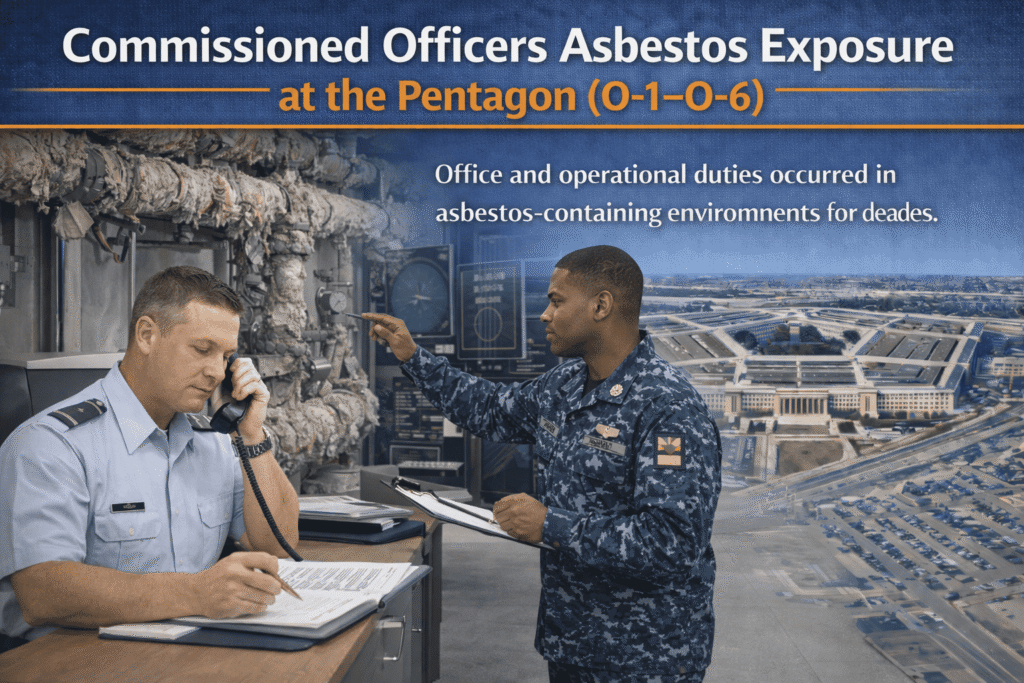
Commissioned Officers Asbestos Exposure at the Pentagon (O-1–O-6)
Commissioned Officers from O‑1 through O‑6 have served in leadership, planning, intelligence, logistics, operations, and command roles at the Pentagon since it opened in 1943. The building was constructed during a time when asbestos was considered essential for fire resistance, insulation, and durability. As a result, asbestos was built into walls, ceilings, floors, fireproofing, pipes, boilers, electrical systems, and ventilation components throughout the facility.
Over decades of service, many officers worked daily in offices connected to aging asbestos‑containing systems. As materials deteriorated or were disturbed by renovations, maintenance, emergencies, and modernization projects, asbestos fibers were released into occupied spaces. Because the fibers are microscopic and invisible, many officers inhaled them unknowingly—sometimes for years. Decades later, some were diagnosed with mesothelioma, lung cancer, asbestosis, and other asbestos‑related diseases.
🎖️ What Is Commissioned Officers Asbestos Exposure at the Pentagon?
Commissioned Officer exposure occurs when asbestos‑containing materials in offices, conference rooms, command areas, and support spaces are disturbed and release fibers into the air. At the Pentagon, asbestos was embedded throughout the original construction and remained in many systems for decades.
Exposure happened when asbestos materials were:
- Crumbling from age and vibration
- Disturbed during renovations and upgrades
- Broken during maintenance or emergencies
- Opened during ceiling, wall, or floor access
- Carried through ventilation systems
Because asbestos fibers are microscopic, officers often inhaled them without realizing it.
🏢 Where Commissioned Officers Encountered Asbestos
Officers worked in spaces containing asbestos in:
- Walls & Ceilings: Plaster, drywall, joint compound, fireproofing
- Floors: Asbestos tile, linoleum, black mastic
- Pipes & Boilers: Insulation, gaskets, refractory cement
- Electrical Systems: Panels, wiring insulation, arc barriers
- HVAC Systems: Duct insulation, air handlers, fire dampers
- Structural Areas: Fireproofed beams and concrete
Any command or administrative space tied to aging building systems could be affected.
📋 How Daily Officer Duties Led to Exposure
Commissioned Officers were exposed when:
- Renovations occurred near occupied offices
- Ceiling tiles were removed for wiring or ducts
- Floor tile and mastic were replaced
- Pipes or boilers were repaired nearby
- Fireproofing deteriorated overhead
- Emergency repairs disturbed hidden materials
Dust often traveled beyond work zones through corridors and ventilation systems.
👥 Who Was Most at Risk
High‑risk officer roles included:
- Command and operations staff
- Planning and intelligence officers
- Logistics and supply officers
- Training and policy officers
- Liaison and coordination officers
- Long‑term Pentagon assignments
Long service careers and extended time in the building increased cumulative exposure risk.
🫁 Diseases Linked to Officer Asbestos Exposure
Asbestos fibers lodge in lung tissue and organ linings, causing progressive disease.
Common illnesses include:
- Mesothelioma – Cancer of lung or abdominal lining
- Lung Cancer – Increased risk with asbestos exposure
- Asbestosis – Permanent lung scarring
- Pleural Disease – Thickening or fluid around lungs
⏳ Why Symptoms Appear Decades Later
Asbestos diseases often take 20–50 years to develop. Many officers exposed in the 1950s–1990s were not diagnosed until decades later.
Early symptoms may include:
- Shortness of breath
- Chest or abdominal pain
- Chronic cough
- Fatigue and weight loss
🏗️ Renovations That Affected Officer Workspaces
Major projects replaced:
- Walls and partitions
- Ceilings and lighting systems
- Floors and adhesives
- Electrical and communications lines
- HVAC and ventilation components
Some projects occurred while command areas remained occupied, increasing exposure risk.
⚠️ Airborne Spread in Command Areas
Once released, asbestos fibers can:
- Remain airborne for hours
- Travel through corridors and shafts
- Enter ventilation systems
- Settle on desks, documents, and uniforms
Officers far from construction zones could still be exposed.
📜 Branches Affected
Commissioned Officers from all branches served at the Pentagon.
Army – Command and planning in asbestos‑containing offices
Navy – Operations and strategy near aging infrastructure
Air Force – Command centers served by asbestos‑based systems
Marines – Leadership roles near renovation zones
Coast Guard – Liaison command in older building sections
National Guard – Command support in areas served by aging systems
⚠️ Secondary Exposure from Uniforms
Asbestos fibers clung to uniforms, shoes, and hair. Officers carried fibers home, exposing spouses and children. Many family members later developed asbestos‑related diseases without ever working at the Pentagon.
⚖️ Your Legal Rights After Exposure
Victims may qualify for:
- VA disability benefits
- Asbestos trust fund claims
- Lawsuits against asbestos manufacturers
- Wrongful death claims for families
Claims are filed against asbestos product makers—not the government.
🤝 How a Lawyer Can Help
An asbestos lawyer can:
- Identify exposure sources in officer work areas
- Research building and renovation records
- Match materials to manufacturers
- File trust fund and lawsuit claims
- Seek maximum compensation
Most lawyers work on contingency—you pay nothing unless you win.
❓ FAQs – Commissioned Officers Asbestos Exposure
1. Can officers be exposed even in office roles?
Yes. Fibers traveled through air and ventilation systems during repairs and renovations.
2. Do I sue the government?
No. Claims target asbestos manufacturers.
3. What if I don’t know products used?
Lawyers use historical building and maintenance records.
4. Can family members file claims?
Yes, for secondary exposure or wrongful death.
5. How long do I have to file?
Depends on state law and diagnosis date.
📞 Get Help Today
If you were exposed as a Commissioned Officer at the Pentagon and now have an asbestos‑related disease, you may be entitled to compensation.
Cal 800.291.0963
Free case review. No obligation. No cost unless you win.
Your service mattered. Your health matters. And you deserve justice.