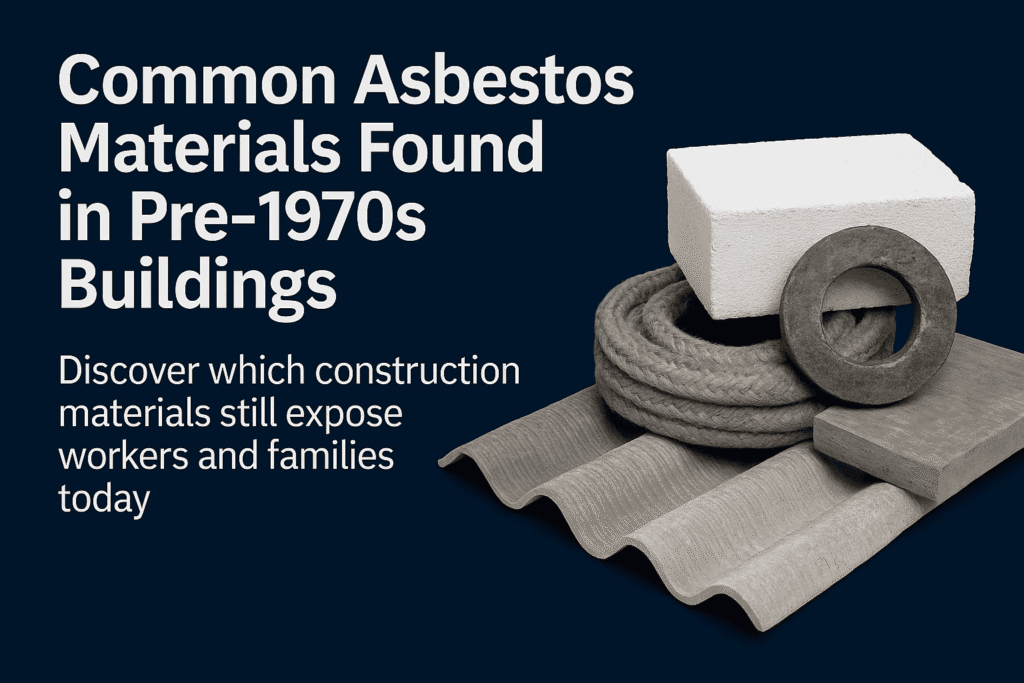
Common Asbestos Materials Found in Pre-1970s Buildings
Before the 1970s, asbestos was used in thousands of construction materials across homes, schools, factories, military bases, apartment buildings, and commercial properties. These materials were marketed as fireproof, durable, and inexpensive — but today they remain one of the biggest sources of long-term exposure for workers, homeowners, and families.
Even decades later, millions of older buildings still contain asbestos in floors, ceilings, insulation, pipes, drywall, roofing, and heating systems. Understanding which materials are most dangerous helps families stay safe, avoid disturbance, and seek proper testing when renovating or demolishing older structures.
If you believe you’ve been exposed to asbestos in a pre-1970s building, call 800.291.0963 to learn about medical monitoring and legal compensation options.
📘 Step 1: Why Asbestos Was Used in Older Buildings
Before scientists fully understood the dangers, asbestos was widely promoted for its ability to withstand heat, chemicals, and electrical fire.
✔ It Was Added to Building Materials Because It Was:
-
Fire-resistant
-
Cheap
-
Strong and flexible
-
Easy to mix with cement or adhesives
-
Able to insulate high-temperature systems
Construction companies, landlords, and manufacturers used asbestos as a “miracle material,” even as internal documents (later uncovered in lawsuits) showed companies knew about its health risks.
🧱 Step 2: Insulation — The Most Widespread and Dangerous Source
Insulation is responsible for more asbestos exposure than any other category.
✔ Common Pre-1970s Asbestos Insulation Types:
-
Boiler insulation
-
Pipe wrapping (lagging)
-
Duct insulation
-
Blown-in attic insulation (especially vermiculite from Libby, Montana)
-
Furnace insulation
-
Turbine and pump insulation
✔ Why It’s High-Risk:
-
Crumbles easily
-
Releases fibers into air when disturbed
-
Found in tight spaces where installers inhaled high concentrations
Workers in shipyards, refineries, power plants, and older schools were exposed daily.
📂 Step 3: Floor and Ceiling Materials Containing Asbestos
Many interior finishing products in older buildings contained asbestos.
✔ Flooring Materials:
-
Vinyl floor tiles (especially 9×9 tiles)
-
Asphalt tile
-
Linoleum backing
-
Flooring adhesives (“black mastic”)
✔ Ceiling Materials:
-
Popcorn ceilings (“acoustic textured ceilings”)
-
Ceiling tiles in offices and classrooms
-
Acoustic plaster in auditoriums and schools
✔ Risk Level:
Low when undisturbed
High risk during renovation, sanding, scraping, drilling, or demolition
📁 Step 4: Drywall and Wall-System Asbestos Products
Contractors throughout the 1940s-70s used wall systems made with asbestos to increase fire resistance.
✔ These Materials Commonly Contain Asbestos:
-
Drywall joint compound (“mud”)
-
Wallboard
-
Plaster
-
Texture coatings
-
Wall adhesives
Installing or demolishing drywall released clouds of asbestos dust, especially harmful to:
-
Carpenters
-
Painters
-
Plasterers
-
Renovation workers
-
HVAC installers
-
Electricians
🔍 Step 5: Roofing and Exterior Asbestos Materials
Exterior building work involved frequent asbestos exposure.
✔ Roofing Products:
-
Shingles
-
Roof felt
-
Underlayment
-
Tar paper
-
Flashing compounds
✔ Exterior Siding:
-
Asbestos-cement shingles
-
Stucco patching compounds
-
Exterior coating materials
Roofers, general contractors, and homeowners performing repairs often inhaled fibers as old shingles cracked and crumbled.
⚙️ Step 6: Heating, Cooling, and Mechanical System Materials
Mechanical systems were heavily insulated with asbestos, especially in industrial buildings, schools, and military housing.
✔ Mechanical Materials With Asbestos:
-
HVAC duct insulation
-
Heating-system duct tape
-
Furnace cement
-
Boilers and pressure vessels
-
Pump gaskets
-
Valve packing
-
Cooling-tower components
✔ Why These Systems Are High-Risk:
Heat, vibration, and aging cause fibers to break down over time — especially dangerous during repair or removal.
📈 Step 7: Asbestos Cement — One of the Most Overlooked Dangers
Asbestos was commonly mixed into cement to create inexpensive, durable material.
✔ Common Asbestos-Cement Products:
-
Sewer pipes
-
Drainpipes
-
Chimney flues
-
Roof tiles
-
Wall panels
-
Foundation siding
-
Backer boards
These materials release fibers when cut, drilled, or broken.
📜 Step 8: Adhesives, Caulks, Paints, and Sealants
Many cosmetic and finishing products contained asbestos.
✔ Common Examples:
-
Construction adhesives
-
Glazing putties
-
Window caulk
-
Pipe sealants
-
Paints and textured coatings
-
Waterproofing compounds
These materials become crumbly and unstable with age — especially when removing old windows or renovating bathrooms.
🧠 Step 9: Fireproofing Materials and Structural Reinforcements
Asbestos was the primary fireproofing material used in commercial and high-rise buildings before the 1980s.
✔ High-Risk Applications:
-
Fireproof spray coatings on steel beams
-
Thermal spray insulation
-
Fire doors
-
Elevator brake systems
-
Fire curtains
-
Electrical panel insulation
When disturbed during renovation or demolition, these materials release extremely high fiber concentrations.
📦 Step 10: Why These Older Materials Still Pose a Risk Today
Asbestos does not break down over time — it simply becomes more fragile.
✔ Reasons Pre-1970s Buildings Remain Hazardous:
-
Materials deteriorate with age
-
Renovation disturbs hidden asbestos
-
DIY home repairs spread fibers unknowingly
-
Schools and public buildings often contain original materials
-
Older military housing and bases still have asbestos insulation
-
Commercial buildings use outdated heating or fireproofing systems
Many victims are exposed decades after construction simply because old materials were never removed.
📁 Step 11: Who Faces the Highest Exposure Risk Today?
Thousands of people continue to encounter asbestos in older buildings, especially workers performing maintenance, renovation, or demolition.
✔ High-Risk Occupations:
-
Construction workers
-
Plumbers and pipefitters
-
Electricians
-
HVAC technicians
-
Roofers
-
Carpenters
-
Demolition crews
-
Insulators
-
Firefighters
-
School custodians
-
Maintenance workers
-
Real-estate renovators
Even brief exposure can increase the lifetime risk of mesothelioma.
💼 Step 12: What To Do If You Suspect Asbestos in a Building
Never disturb a material unless you’re certain it does not contain asbestos.
✔ Recommended Safety Steps:
-
Stop work immediately
-
Contact licensed asbestos inspectors
-
Request bulk sampling and analysis
-
Seal off the area
-
Avoid sweeping or vacuuming debris
-
Hire certified abatement professionals for removal
Asbestos exposure can occur even from small renovations like replacing flooring or scraping ceilings.
📞 Where to Get Help
If you’ve lived or worked in a pre-1970s building — or if a renovation exposed you to older materials — you may qualify for medical screenings or financial compensation.
We help individuals:
-
Understand which building materials contain asbestos
-
Identify the likely sources of exposure
-
Review job-site and renovation history
-
Connect with licensed inspection professionals
-
Evaluate legal options for asbestos exposure claims
-
File trust-fund and legal claims for compensation
-
Access medical resources for early detection
📞 Call 800.291.0963 today to get guidance on exposure risks and compensation options.
📝 Summary
Common asbestos materials in pre-1970s buildings include:
-
Insulation
-
Flooring and ceiling products
-
Drywall and joint compound
-
Roofing materials
-
HVAC and mechanical insulation
-
Asbestos-cement products
-
Adhesives, caulk, and paints
-
Fireproofing sprays
-
Structural reinforcements
These materials remain in millions of older structures today, posing ongoing risks to workers and families.
If you believe you were exposed, call 800.291.0963 to protect your health and explore compensation options.