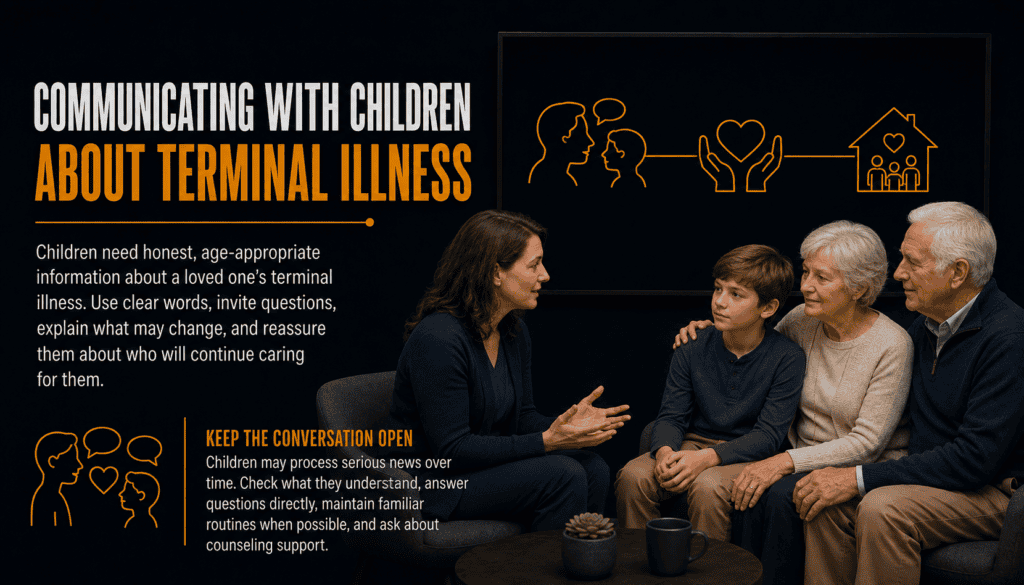
🧸 Communicating With Children About Terminal Illness
Explaining a serious or terminal illness to children is one of the hardest conversations a parent or grandparent may ever face. Yet children sense when something is wrong — and silence often breeds more fear than truth. With gentle honesty, reassurance, and emotional safety, you can help them process what’s happening in a way that strengthens trust and preserves peace.
This guide provides age-appropriate communication strategies, faith-based reassurance, and emotional support techniques to help children feel loved, informed, and secure — even in uncertain times.
📞 Need help right now? Call 800.291.0963 for compassionate family and emotional support today.
💬 Step 1: Why Honest Communication Matters
Children are often more perceptive than adults realize. Even young kids notice emotional changes, medical visits, or whispered conversations. Being open — in gentle, age-appropriate ways — helps prevent confusion and builds lasting trust.
Benefits of honest communication:
-
💞 Strengthens emotional connection and family trust.
-
🧠 Reduces anxiety caused by guessing or overhearing partial truths.
-
💬 Encourages open dialogue about fears and feelings.
-
🕊️ Helps children process grief in healthy ways.
-
❤️ Reinforces the message: “You are safe and loved.”
Goal:
To give children clarity and comfort through compassionate honesty rather than silence.
👶 Step 2: Tailoring the Message by Age
Every child’s understanding depends on age, maturity, and personality. Adapt your language and tone to meet them where they are emotionally and mentally.
Age-appropriate approaches:
-
Ages 3–6: Use simple terms. “Grandma is very sick, and the doctors are helping her, but she might not get better.”
-
Ages 7–10: Be honest but gentle. “The illness is serious, and we’re doing everything we can. We’ll always be together and love you.”
-
Ages 11–14: Encourage questions. “You may have heard the word ‘terminal.’ It means the doctors can’t cure it, but they can help manage pain.”
-
Ages 15+ (teens): Involve them in discussions. “You can help by being part of our support system. We’ll face this as a family.”
Pro Tip:
Match your tone to the child’s emotional state — stay calm, compassionate, and clear.
🕊️ Step 3: Creating a Safe Space for Questions
Children need reassurance that their thoughts and questions are welcome. Encourage openness without forcing conversation.
How to build safety in communication:
-
💬 Tell them it’s okay to feel sad, angry, or confused.
-
🧸 Let them express feelings through drawing, stories, or play.
-
💭 Avoid false promises — but emphasize love and care.
-
🕯️ Be patient with repeated questions; repetition helps them process.
-
🤝 Reassure them: “No matter what happens, you will always be loved and cared for.”
Goal:
To help children feel emotionally secure even when the future feels uncertain.
🌈 Step 4: Explaining Death and Dying in Gentle Terms
When discussing terminal illness, avoid euphemisms that can confuse children (like “went to sleep”). Speak truthfully, but with compassion and spiritual reassurance.
Helpful language:
-
🌿 “The doctors can’t make the illness go away, but we’re making sure there’s no pain.”
-
🕊️ “When someone dies, their body stops working, but our love never ends.”
-
💖 “It’s okay to feel sad and miss them — we’ll remember them together.”
-
🙏 “God’s love never leaves us, even when someone goes to heaven.”
Faith reminder:
“The Lord is nigh unto them that are of a broken heart.” – Psalm 34:18 (KJV)
Pro Tip:
Use simple truths and focus on reassurance — not fear.
💞 Step 5: Managing Children’s Reactions
Children process grief in bursts, often alternating between play and sadness. These mixed reactions are normal.
Common emotional responses:
-
😢 Crying, clinging, or withdrawal.
-
💬 Asking direct or difficult questions.
-
😶 Acting out or becoming quiet.
-
🧸 Regression (bedwetting, fear of being alone).
-
❤️ Seeking reassurance that they are still loved and safe.
How to help:
-
🫂 Offer hugs and presence — words aren’t always needed.
-
🕯️ Maintain routines for a sense of stability.
-
🎨 Provide creative outlets like drawing or journaling.
-
💬 Encourage them to talk about memories and happy times.
Goal:
To honor each child’s emotional process with patience and compassion.
🌷 Step 6: Involving Children in Care and Farewell Moments
Including children in caregiving or farewell experiences helps them feel connected and reduces regret later.
Safe ways to involve them:
-
💐 Let them help with small gestures — bringing water, reading aloud, or holding hands.
-
📖 Encourage them to write letters or make cards.
-
🕯️ Allow older children to visit hospitals or hospice with preparation.
-
🕊️ Reassure them that saying goodbye is an act of love, not fear.
-
🌈 Create memory boxes or albums together.
Pro Tip:
Participation helps children process loss as part of life, surrounded by love.
🌼 Step 7: Supporting Faith and Hope
Faith offers comfort and perspective for both children and adults. Helping children understand that love and spirit continue beyond death can ease fear.
Faith-based reassurance:
-
🙏 “God is watching over our family.”
-
🌟 “Heaven is a peaceful place where there is no pain.”
-
💞 “We can still talk to God anytime when we feel sad.”
-
🎶 “Songs and prayers remind us that love never ends.”
Scripture to share:
“And God shall wipe away all tears from their eyes.” – Revelation 21:4 (KJV)
Goal:
To nurture lasting faith that transforms loss into hope.
💬 Step 8: Getting Professional Help When Needed
Sometimes children struggle to express emotions and may benefit from professional support.
When to seek help:
-
⚠️ Prolonged sadness, nightmares, or withdrawal.
-
💭 Anxiety about illness or death.
-
💔 Decline in school performance or friendships.
-
😶 Persistent questions about dying that cause distress.
Resources for support:
-
🩺 Pediatric grief counselors.
-
🧸 Child-life specialists at hospitals.
-
🕊️ Faith-based family therapists.
-
💞 Hospice bereavement programs for children.
Pro Tip:
Professional guidance helps children develop healthy coping skills early on.
🤝 Where to Get Help
Our advocates can connect you with child grief counselors, hospice family programs, and caregiver support groups that specialize in helping children navigate serious illness with peace and understanding.
📞 Call 800.291.0963 to speak with a Mesothelioma Help Center advocate today.
🧭 Summary
Communicating with children about terminal illness requires compassion, patience, and honesty. By speaking truthfully, listening deeply, and surrounding them with love and faith, you help them feel secure and hopeful — even in grief. The words you share today can become anchors of comfort for years to come.
You are not alone — support and guidance are only one call away.
800.291.0963