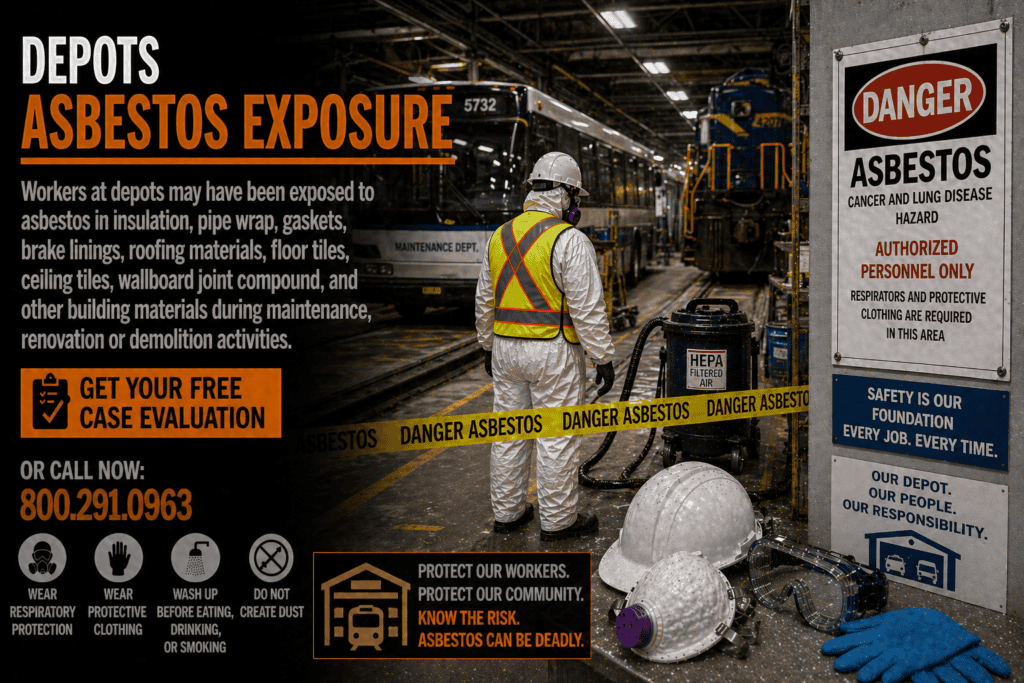
🏭 Depots Asbestos Exposure
For much of the 20th century, truck depots, bus depots, transit depots, and train depots relied heavily on asbestos-containing materials due to asbestos’s heat resistance, durability, and fire-retardant properties. Depot buildings, vehicle maintenance bays, boiler rooms, electrical systems, and mechanical equipment commonly incorporated asbestos insulation, gaskets, brake components, packing materials, and fireproof coatings.
As vehicles entered and exited daily, routine servicing—including brake work, clutch replacement, engine repairs, insulation removal, pipe maintenance, and electrical upgrades—disturbed asbestos materials. These activities released microscopic asbestos fibers into the air, particularly in enclosed, poorly ventilated depot environments. Workers inhaled fibers unknowingly during routine shifts, often over years or decades.
Because asbestos diseases have long latency periods, many depot workers were not diagnosed with mesothelioma, asbestos-related lung cancer, or asbestosis until decades after exposure. Today, depot job sites are recognized as significant sources of occupational asbestos exposure and are frequently cited in asbestos lawsuits and trust fund claims nationwide.
🚛 Types of Depots with Asbestos Exposure
For decades, depots of all types relied on asbestos for fire resistance, friction control, insulation, and equipment protection. As depot infrastructure aged, asbestos-containing materials deteriorated, cracked, or became friable. Routine operations—such as vehicle servicing, building maintenance, renovations, emergency repairs, and demolition—released asbestos fibers into the air.
Workers were exposed while performing everyday tasks inside maintenance bays, inspection lanes, boiler rooms, storage areas, loading docks, and administrative spaces. In many depots, asbestos dust accumulated on floors, tools, uniforms, and vehicles, increasing both direct and secondary exposure risks. These conditions placed mechanics, drivers, custodians, electricians, supervisors, and support staff at heightened risk for serious asbestos-related diseases.
🚛 Transportation & Vehicle Depots
Transportation depots servicing trucks, buses, and service vehicles contained asbestos in brakes, clutches, insulation, and gaskets. Repairs, inspections, and fleet maintenance released fibers into enclosed bays.
-
Truck Depots
Brake servicing, clutch work, and engine repairs released asbestos from friction materials and gaskets. -
Freight Truck Terminals
High-volume brake replacements and vehicle idling disturbed asbestos dust inside service bays. -
Bus Depots
Asbestos exposure occurred during brake work, boiler maintenance, and ceiling or pipe insulation repairs. -
Transit Authority Depots
Rail cars, buses, and support buildings contained asbestos in electrical systems and HVAC insulation. -
Train Depots
Locomotive repairs exposed workers to asbestos insulation, brake linings, and gaskets. -
Rail Yards
Large-scale maintenance and storage areas re-aerosolized asbestos from railcars and infrastructure. -
Light Rail & Subway Depots
Confined underground environments amplified asbestos exposure during repairs and upgrades.
🚆 Railroad & Industrial Service Depots
Railroad service depots used asbestos-insulated locomotives, brake systems, and piping. Overhauls, inspections, and component replacements exposed machinists, electricians, and maintenance crews to airborne fibers.
-
Locomotive Maintenance Depots
Boilers, insulation, and engine components released asbestos during overhauls. -
Railcar Repair Depots
Brake systems, floor panels, and insulation exposed machinists and electricians. -
Roundhouse Engine Depots
Circular rail facilities concentrated asbestos dust from repeated engine servicing. -
Switching & Marshalling Yards
Brake wear and insulation deterioration exposed rail workers daily.
🏗️ Municipal & Government Depots
City and government depots stored asbestos-containing equipment, vehicles, and utilities. Maintenance, retrofits, and aging infrastructure disturbed insulation and materials, exposing public works employees and contractors.
-
Public Works Depots
Heavy equipment garages contained asbestos insulation, brakes, and electrical panels. -
City Fleet Depots
Police, fire, and sanitation vehicles exposed mechanics during routine maintenance. -
Transit Authority Maintenance Yards
Combined vehicle and building asbestos sources increased cumulative exposure risks. -
State Highway Department Depots
Plow trucks, graders, and support equipment used asbestos-containing parts.
🚒 Emergency Services Depots
Fire, police, and emergency depots housed asbestos-insulated vehicles, generators, and protective equipment. Routine maintenance and emergency readiness checks released fibers into living and work areas.
-
Fire Apparatus Depots
Fire engines and support vehicles contained asbestos brake linings and insulation. -
Emergency Vehicle Maintenance Depots
Ambulance and rescue vehicle repairs released asbestos fibers in enclosed shops.
🏭 Industrial & Logistics Depots
Industrial depots handled asbestos-containing machinery, packing materials, and spare parts. Loading, storage, and repair activities disturbed insulation and components, exposing warehouse and logistics workers.
-
Freight Distribution Depots
Material handling equipment and boilers contained asbestos insulation. -
Warehouse Depots
Asbestos ceiling tiles, pipe insulation, and floor mastics released fibers during upgrades. -
Shipping & Logistics Depots
Forklifts, compressors, and dock equipment exposed workers during repairs. -
Intermodal Transfer Depots
Rail-to-truck transfer facilities combined multiple asbestos exposure sources.
🛢️ Utility & Fuel Depots
Fuel storage and utility depots relied on asbestos insulation for pipes, tanks, pumps, and boilers. Maintenance and leak repairs released fibers in confined, poorly ventilated environments.
-
Fuel Storage Depots
Boilers, pumps, and pipe insulation contained asbestos disturbed during maintenance. -
Oil & Gas Distribution Depots
Valve packing and gaskets released asbestos during servicing. -
Municipal Utility Depots
Electrical switchgear and heating systems exposed maintenance staff.
⚓ Marine & Port-Related Depots
Port depots serviced ships, cranes, and dock equipment insulated with asbestos. Repairs, refits, and parts handling exposed dockworkers, mechanics, and maritime technicians.
-
Port Authority Depots
Cranes, vehicles, and building insulation exposed dock workers and mechanics. -
Harbor Maintenance Depots
Marine engines and pipe systems used asbestos insulation. -
Ship Supply Depots
Warehousing and servicing ship components exposed workers to legacy asbestos dust.
🪖 Military & Defense Depots
Military depots stored and repaired asbestos-containing vehicles, aircraft components, and equipment. Long-term storage degradation and maintenance activities exposed service members and civilian workers.
-
Military Vehicle Depots
Trucks, armored vehicles, and support equipment used asbestos brake and clutch systems. -
Base Transportation Depots
Routine fleet maintenance exposed service members and civilians. -
National Guard Vehicle Depots
Aging facilities and vehicles increased asbestos exposure during repairs. -
Defense Logistics Depots
Long-term storage and refurbishment disturbed asbestos-containing materials.
🧪 Specialty & Support Depots
Specialty and support depots often housed aging equipment, stored materials, and mechanical systems containing asbestos. Disturbing insulation, gaskets, or stored components released fibers into enclosed workspaces.
-
Equipment Storage Depots
Long-stored machinery shed asbestos insulation over time. -
Cold Storage Depots
Refrigeration systems contained asbestos insulation and gaskets. -
Maintenance Supply Depots
Handling asbestos-containing replacement parts exposed workers during inventory tasks.
🔧 Depot Equipment & Materials That Contained Asbestos
Common depot materials included brakes, clutches, gaskets, insulation, packing, electrical panels, boilers, and fireproofing—frequently disturbed during servicing and inventory handling.
-
Brake Systems & Friction Materials
Brake shoes, pads, and linings released asbestos during grinding, sanding, and replacement. -
Boilers & Heating Systems
Depot boiler rooms used asbestos insulation that deteriorated during servicing or removal. -
Piping & Valve Insulation
Steam and water lines were wrapped with asbestos lagging disturbed during repairs. -
Electrical Panels & Switchgear
Electrical components contained asbestos arc chutes and insulating boards. -
Floor Tiles, Mastics & Roofing
Building materials released asbestos during renovations or water damage cleanup.
👷 Workers Most at Risk at Depot Job Sites
Common depot materials included brakes, clutches, gaskets, insulation, packing, electrical panels, boilers, and fireproofing—frequently disturbed during servicing and inventory handling.
-
Vehicle mechanics and technicians
-
Brake and clutch specialists
-
Maintenance and repair crews
-
Custodians and cleaning staff
-
Electricians and pipefitters
-
Supervisors and inspectors
-
Contractors and renovation workers
Secondary exposure also affected family members when asbestos fibers were carried home on work clothing.
🧬 Diseases Linked to Depot Asbestos Exposure
Long-term or repeated exposure at depot job sites has been directly linked to:
-
Mesothelioma
-
Asbestos-related lung cancer
-
Asbestosis
-
Pleural thickening and effusions
Symptoms often appear 20–50 years after exposure, delaying diagnosis until advanced stages.
⚖️ Depot Job Site Asbestos Lawsuits & Compensation
Asbestos exposure at depot job sites has resulted in numerous lawsuits and asbestos trust fund claims nationwide. Truck, bus, transit, and train depots frequently exposed workers to asbestos through vehicle systems, insulation, and aging infrastructure.
Workers and families may qualify for:
-
Personal injury lawsuits
-
Asbestos trust fund claims
-
Wrongful death lawsuits
-
Veterans benefits (for military-connected depots)
🧑⚖️ Legal & Claims Options
Depot Mesothelioma Lawsuit
Depot workers may pursue lawsuits for asbestos exposure injuries and resulting diagnoses.
Depot Asbestos Trust Fund Claims
Trust funds compensate documented asbestos exposure tied to depot maintenance and repair work.
Depot Wrongful Death Lawsuits
Families seek compensation after fatal asbestos-related illnesses caused by depot exposure.
Depot Statute of Limitations
Deadlines vary by state and diagnosis date—early legal review is critical.
Depot Settlement & Verdict History
Significant settlements and verdicts have resulted from depot asbestos exposure cases.
📞 Legal Help for Depot Asbestos Exposure
If you or a loved one worked at a truck, bus, transit, or train depot and were later diagnosed with mesothelioma, asbestos-related lung cancer, or asbestosis, legal help may be available.
📞 Call 800-291-0963 for a free case review.
✔ No upfront costs
✔ Nationwide representation
✔ Full depot exposure investigation
✔ Assistance with lawsuits and trust fund claims