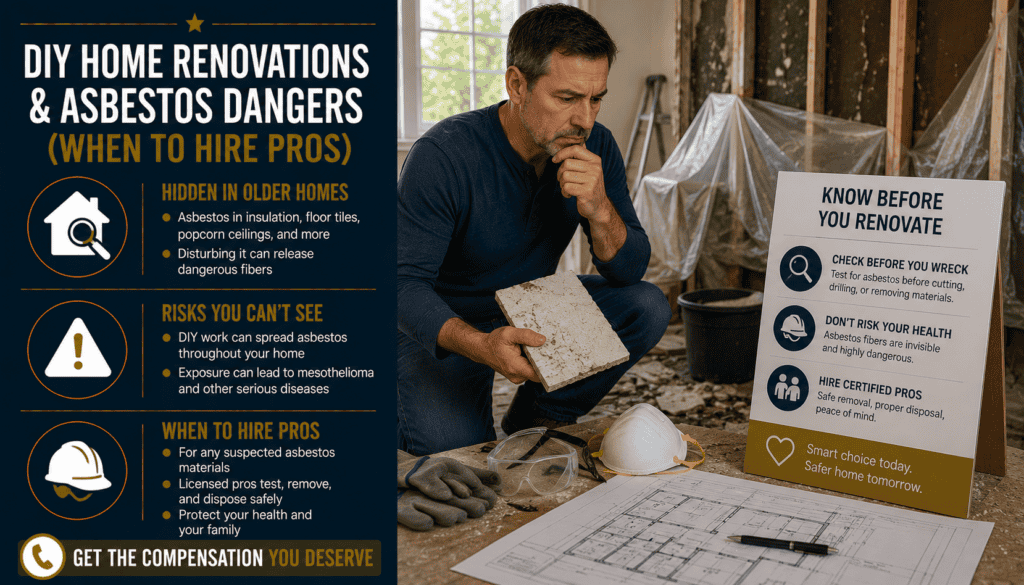
DIY Home Renovations & Asbestos Dangers (When to Hire Pros)
Renovating an older home can be exciting — new floors, fresh paint, updated bathrooms, and modern layouts. But if your home was built before the 1980s, there’s a strong chance asbestos-containing materials (ACMs) are hiding behind walls, under floors, or inside ceilings. Disturbing these materials without proper precautions can release microscopic asbestos fibers into the air, putting you and your family at serious risk.
Before you start tearing out tile or scraping a ceiling, it’s important to understand how asbestos behaves and when DIY work becomes dangerous. If you suspect asbestos in your home, call 800.291.0963 for guidance from certified asbestos professionals.
🏚️ Step 1: Why DIY Renovations Are High-Risk in Older Homes
Asbestos was heavily used in American houses from the 1920s through the late 1970s. Many common renovation tasks — such as sanding, drilling, scraping, or demolition — can disturb asbestos materials that would otherwise remain safely intact.
📌 Common Renovation Projects That Disturb Asbestos
-
Pulling up old vinyl tile or linoleum
-
Sanding or scraping popcorn ceilings
-
Removing drywall or plaster
-
Cutting into old insulation
-
Replacing HVAC ductwork
-
Demolishing walls, ceilings, or floors
-
Removing siding or roofing
-
Renovating basements or attics
Even a simple “weekend project” can unknowingly release thousands of asbestos fibers.
🔍 Step 2: Where Asbestos Hides in Homes Built Before 1980
Many homeowners are surprised to learn how many materials once contained asbestos. The risk is greatest in older and unrenovated homes.
🧱 Common Asbestos-Containing Materials (ACMs)
-
Popcorn or textured ceilings
-
Vinyl flooring, 9×9 tiles, and adhesives
-
Drywall joint compound
-
Cement board and siding
-
Insulation around pipes or boilers
-
Furnace and duct insulation
-
Roofing shingles and felt
-
Plaster walls
-
Vermiculite insulation in attics
If your home is older, assume certain materials may contain asbestos until proven otherwise.
⚠️ Step 3: How Renovation Activities Release Asbestos Fibers
When asbestos-containing materials are disturbed, fibers become airborne. These fibers are extremely small, meaning:
-
You cannot see them
-
You cannot smell them
-
You cannot feel them
-
They stay airborne for hours — even days
-
They settle on clothing, bedding, carpets, and surfaces
Breathing these fibers increases the risk of mesothelioma, lung cancer, asbestosis, and other serious diseases.
Renovation Tasks That Trigger Fiber Release
-
Drilling
-
Sanding
-
Grinding
-
Sawing
-
Scraping
-
Cutting tiles or mastic
-
Breaking old materials during demolition
-
Vacuuming dust with non-HEPA vacuums
Even low-impact actions, such as pushing furniture or hammering nails, can disturb friable materials.
🧪 Step 4: When to Test Before Starting DIY Renovations
Before any project that involves demolition, sanding, or removal of building materials, testing is essential.
✔ You Should Test If:
-
Your home was built before 1980
-
You’re unsure what materials are present
-
Floor tiles look old or brittle
-
Popcorn ceilings are present
-
You see wrapped pipes or old insulation
-
There’s damaged drywall, plaster, or ceiling texture
-
Vermiculite insulation is present in the attic
⚠️ Never Assume Materials Are Safe
Many homeowners mistakenly believe only commercial buildings used asbestos — but residential use was widespread.
🛑 Step 5: Why DIY Asbestos Removal Is Extremely Dangerous
Removing or disturbing asbestos on your own is risky and often illegal. Most states require licensed abatement contractors for any removal over a small amount.
🚫 Risks of DIY Removal
-
Massive fiber release during material disturbance
-
Contamination of clothing, furniture, HVAC systems
-
Long-term cleanup costs
-
Permanent contamination of the home
-
Health hazards for family members
-
Legal penalties for improper disposal
Even touching or moving asbestos can be dangerous.
👷 Step 6: When to Call Licensed Asbestos Professionals
Certain renovation situations are too dangerous for DIY work and require certified asbestos inspectors or abatement teams.
📌 Always Call a Professional When:
-
Renovating a home built before 1980
-
Materials look damaged or crumbly
-
You plan to remove or sand any building materials
-
Flooring, insulation, or ceiling materials are old
-
You discover unexpected materials behind walls
-
You’re unsure how to identify ACMs
-
You’re planning major remodels or demolition
-
You already started a project and suspect asbestos
Professionals use:
-
Negative-air containment
-
HEPA filtration systems
-
Full protective respirators
-
Air monitoring
-
Safe disposal procedures
-
EPA-approved removal techniques
They keep your home and family safe from contamination.
🛠️ Step 7: Safe Renovation Practices When Asbestos May Be Present
If you’re doing small updates that don’t disturb building materials, you can still take precautions.
✔ Safe DIY Practices
-
Avoid sanding or scraping any surfaces
-
Do not drill into old walls or ceilings
-
Do not remove old tile flooring yourself
-
Keep materials wet if they might be friable
-
Use HEPA vacuums only (never standard vacuums)
-
Seal off renovation areas
-
Turn off HVAC systems
-
Wear disposable clothing and masks
-
Avoid sweeping dust
If You See Suspicious Dust:
Stop work immediately, leave the area, and contact a certified asbestos professional.
🧹 Step 8: What to Do If You Accidentally Disturb Asbestos
Mistakes happen. If you’ve unintentionally cut into, scraped, or broken a material that may contain asbestos:
🚨 Take These Steps Immediately
-
Stop work
-
Do NOT sweep or vacuum
-
Leave the area
-
Turn off all fans and HVAC systems
-
Close the door or block off the room
-
Call a licensed asbestos inspector
-
Have air testing performed
-
Follow professional cleanup recommendations
Quick action limits contamination and reduces exposure.
📘 Step 9: Renovation Projects That Always Require Pros
Some materials are considered too hazardous for homeowners to touch.
✔ Professional Abatement Required For:
-
Pipe insulation removal
-
Popcorn ceiling removal
-
Floor tile removal
-
Attic vermiculite insulation
-
HVAC duct insulation
-
Boiler and furnace insulation
-
Asbestos siding or roofing
-
Drywall joint compound removal
-
Demolition of older structures
These jobs require specialized equipment and legally mandated disposal procedures.
📜 Step 10: Legal Requirements for Asbestos Renovations
Federal and state regulations govern how asbestos must be handled.
📝 Key Regulations Include:
-
EPA NESHAP asbestos standards
-
OSHA worker-safety guidelines
-
AHERA rules for proper testing
-
State certification for abatement contractors
-
Legal disposal requirements for ACMs
-
Mandatory notifications before removal in some states
Improper removal can lead to fines and liability.
🏥 Where to Get Help
If you’re planning a renovation or suspect asbestos in your home, we can help you:
-
Identify asbestos-containing materials
-
Schedule certified inspections
-
Find licensed removal contractors
-
Review lab results and safety recommendations
-
Protect your family from asbestos exposure
-
Understand renovation requirements for older homes
-
Determine which projects need professional abatement
📞 Call 800.291.0963 today for asbestos-safe renovation guidance.
📝 Summary
DIY home renovations can be dangerous when asbestos is present.
Key takeaways:
-
Homes built before 1980 often contain asbestos
-
Renovation activities can disturb hidden fibers
-
DIY removal is unsafe and often illegal
-
Certified professionals are needed for high-risk materials
-
Testing is essential before demolition, sanding, or flooring removal
-
Early detection and prevention reduce long-term health risks
Protect your home, your family, and your future.
📞 Call 800.291.0963 today for safe renovation planning and asbestos support.