⚠️ Airman Basic (AB): Asbestos Exposure Lawsuit
Risks in U.S. Air Force Hangars and Maintenance Areas
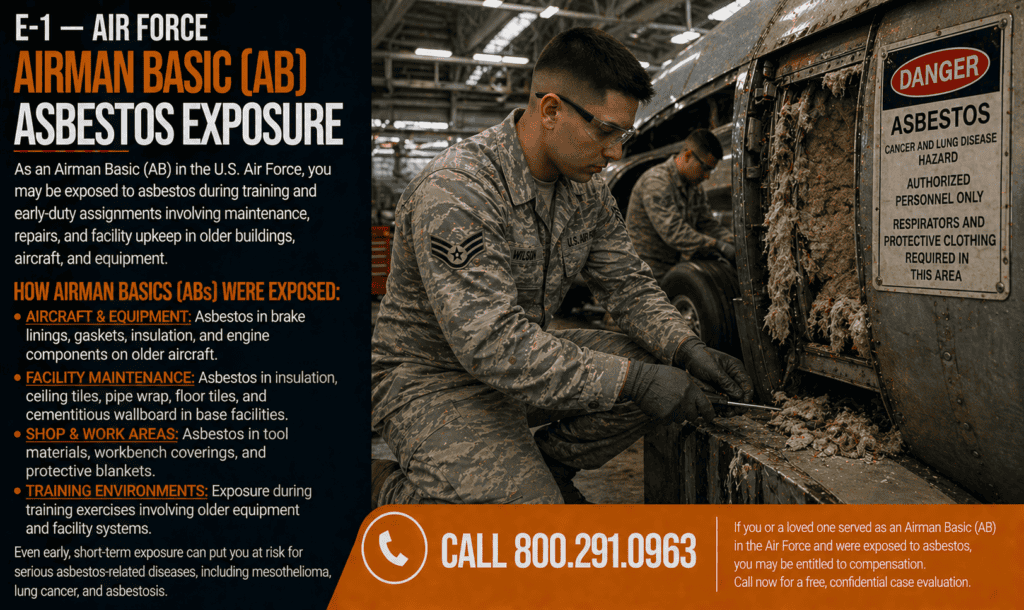
Airman Basic (E-1) is the entry point into the U.S. Air Force. While ABs lack rank insignia and hold the most junior enlisted status, their duties routinely place them in high-risk asbestos environments. Airman Basics frequently perform cleaning, loading, organizing, and general labor inside aircraft hangars, maintenance bays, engine shops, and boiler-room areas on older bases. These structures—built between the 1940s and 1980s—were constructed using extensive amounts of asbestos-containing materials (ACM).
Asbestos was commonly found in:
-
Aircraft engine insulation
-
Brake and clutch components
-
Hangar roof insulation
-
Boiler-room pipes and steam systems
-
Maintenance shop ductwork
-
Electrical panels and wiring insulation
-
Fireproof panels and wallboard
Because ABs perform large amounts of hands-on cleanup and maintenance support, they were often directly exposed to the dust generated by deteriorating insulation, aging steam systems, and routine engine repairs. Many former E-1 Airmen are now being diagnosed with mesothelioma, asbestos-related lung cancer, and asbestosis decades after their service.
🛠️ Typical Duties of an Airman Basic (AB)
Airman Basics are assigned general labor roles designed to support aircraft maintenance and base operations. Typical AB duties include:
-
Cleaning aircraft hangars and maintenance bays
-
Assisting with parts staging and equipment movement
-
Supporting aircraft washing and corrosion control
-
Sweeping up engine dust, metal shavings, and insulation debris
-
Working near AGE (Aerospace Ground Equipment) shops
-
Cleaning boiler rooms and mechanical spaces
-
Performing barracks cleanup and building maintenance support
-
Supporting electricians, mechanics, and HVAC crews
-
Handling trash, debris, and discarded insulation
-
Transporting parts covered in asbestos dust
Because these tasks involve manual labor in older, contaminated facilities, exposure was extremely common for ABs.
🧱 Asbestos Exposure Risks for Airman Basic (AB)
Hangar Insulation Dust (Primary Exposure Risk)
Aircraft hangars built before 1980 used asbestos in:
-
Roof insulation
-
Wallboard and coatings
-
Fireproof structural beams
-
Pipe and steam line coverings
-
Acoustic panels
When hangars aged, expanded, or experienced vibration from aircraft engines and jet blast, insulation degraded and released dust. ABs sweeping floors, moving equipment, or cleaning work areas were often exposed to airborne fibers.
Boiler-Room Asbestos Debris
Air Force boiler rooms historically used asbestos for:
-
Steam pipe insulation
-
Boiler refractory material
-
High-heat cement
-
Duct insulation
-
Fireproofing
Because ABs frequently assisted maintenance crews or cleaned mechanical areas, they often encountered flaking, damaged boiler insulation, creating significant inhalation risk.
Damaged Aircraft Engine Insulation
Aircraft engines used large quantities of ACM in:
-
Heat shields
-
Gaskets
-
High-temperature wraps
-
Engine bay insulation
-
Fire-resistant panels
ABs assisting mechanics or cleaning after engine repairs often encountered damaged engine insulation, which created clouds of fine asbestos dust.
Jet exhaust, vibration, and routine disassembly caused insulation to crumble, exposing anyone in the vicinity.
✈️ Why Airman Basics Face High Asbestos Risk
Airman Basics face greater exposure risk than many higher-ranking Airmen because:
-
ABs perform the majority of cleanup duties
-
They handle debris and sweep areas where asbestos accumulates
-
They are assigned to older hangars and maintenance shops
-
They work near AGE units, avionics shops, and engine overhaul areas
-
They assist mechanics without awareness of asbestos risks
-
Their duties place them closer to floors, corners, and work surfaces where asbestos dust settles
Most ABs do not yet have specialized training, making them less likely to recognize asbestos hazards.
🧩 Common Asbestos-Containing Materials Encountered by E-1 Airmen
Inside Aircraft Hangars
-
Insulation blankets
-
Fireproof spray coatings
-
Pipe and duct insulation
-
Ceiling tiles
-
Floor tile and adhesives
-
Soundproofing materials
Inside Engine and Avionics Shops
-
Heat shields
-
High-temperature gaskets
-
Electrical insulation boards
-
Wiring wrapped in ACM
Inside Boiler and Mechanical Rooms
-
Steam pipe insulation
-
Boiler refractory
-
Valve and pump gaskets
-
Fireproof wall panels
During Aircraft and Building Maintenance
-
Removal of insulation blankets
-
Brake and clutch sanding
-
Engine insulation changes
-
Ceiling tile replacement
-
Pipe repair projects
Every one of these environments is a documented asbestos exposure source.
📈 Why E-1 Airman Claims Are Strong
Airman Basic claims are strong because:
-
ABs spent long hours in asbestos-heavy work areas
-
They performed hands-on cleaning and debris removal
-
Maintenance facilities were contaminated for decades
-
Hangar dust frequently tested positive for asbestos
-
Jet engines shook loose insulation throughout hangars
-
Boiler rooms used extremely friable ACM
These conditions support strong VA disability and legal claims.
📊 How E-1 Exposure Is Proven for VA Disability & Legal Claims
Airmen do not need to recall specific asbestos products.
Exposure is proven using:
-
Hangar construction dates
-
Base environmental surveys
-
Known ACM lists for Air Force installations
-
Engine maintenance records
-
Steam system documentation
-
Duty assignments and job codes
-
Witness statements from supervisors
-
Maintenance logs from aircraft bays
This provides a complete exposure profile.
📚 Real Examples of Airman Basic Exposure Cases
Case 1 — Airman Basic Assigned to Hangar Cleanup
Exposure: Insulation dust shaken loose by aircraft engines
Compensation: $2.6 million
Case 2 — E-1 Working Near Engine Overhaul Areas
Exposure: Damaged heat shields and insulation wraps
Compensation: $2.4 million
Case 3 — AB Cleaning Boiler Rooms
Exposure: Crumbling steam pipe insulation
Compensation: $2.8 million
Case 4 — Flightline Support Airman
Exposure: Brake dust and avionics insulation
Compensation: $2.5 million
🧭 How E-1 Veterans Demonstrate Exposure Today
Exposure is documented using:
-
Hangar age and construction materials
-
Base engineering surveys
-
Aircraft models maintained
-
Specialty shops on that installation
-
Renovation and demolition timelines
-
AFSC/MOS job codes
-
Barracks and building materials
-
Steam system and HVAC records
Veterans do not need to remember technical details.
💙 Benefits for E-1 Airmen Exposed to Asbestos
VA Disability Benefits
-
Mesothelioma = 100% disability rating
-
Lung cancer often qualifies
Asbestos Trust Funds
Over $30 billion available.
Legal Compensation
Filed against manufacturers—not the Air Force.
VA DIC for Families
Tax-free monthly benefits for surviving spouses.
❓ Frequently Asked Questions — E-1 Airman Basic Asbestos Exposure
I was only in the Air Force for a short time. Can I still qualify?
Yes—short-term exposure can still cause mesothelioma.
Does hangar dust contain asbestos?
Yes—especially in pre-1980 hangars.
Do I need to remember specific insulation types?
No—records and building history provide proof.
Can my family file after I pass away?
Yes—DIC and trust fund claims remain available.
🏅 Why Airman Basics Trust Mesothelioma Help Center
-
25+ years documenting aircraft and hangar asbestos exposure
-
Access to Air Force engineering records and shop manuals
-
Specialists trained in USAF exposure pathways
-
Millions recovered for Air Force families
-
No fees unless compensation is awarded
📞 Get Help Identifying Your Asbestos Exposure as an E-1 Airman Basic
If you or a loved one served as an Airman Basic and later developed mesothelioma or asbestos lung cancer, specialists can identify the exact hangars, boilers, and aircraft systems responsible.
📞 Call 800.291.0963 for a free exposure review.