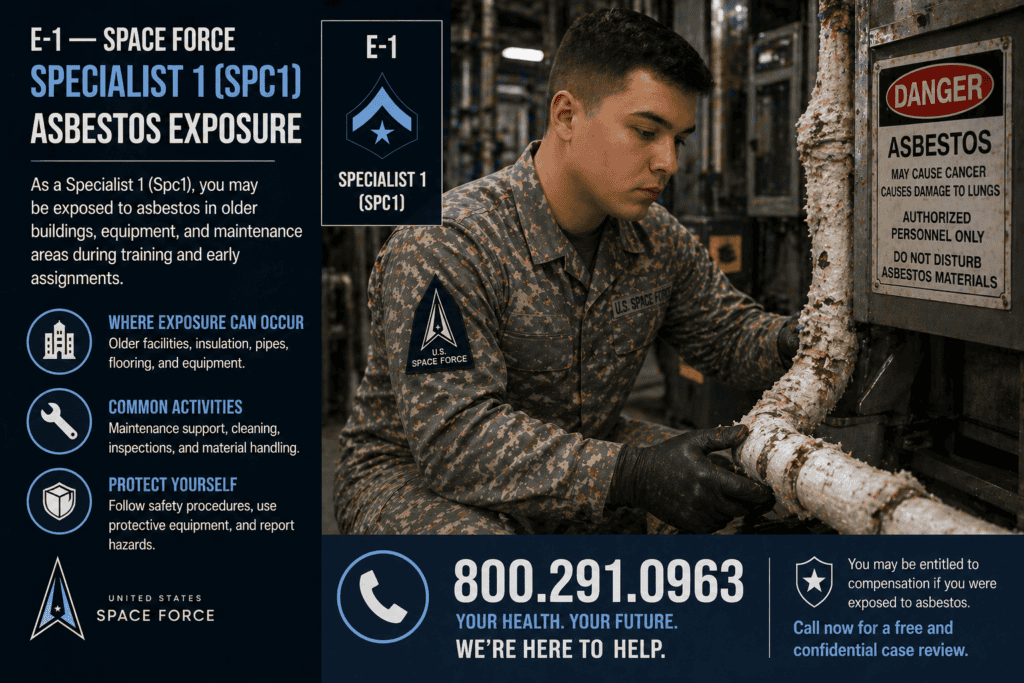
E-1 – Space Force Specialist 1 (Spc1)
🛠️ Entry-level space operations support, equipment handling
Asbestos Exposure
⚠️ Older Air Force building insulation
⚠️ Aged HVAC components
⚠️ Dust from legacy electronics rooms
Asbestos Exposure Risks for Space Force Specialist 1 Personnel
A Specialist 1 (Spc1) in the U.S. Space Force performs foundational duties in space operations, equipment maintenance, communications support, and technical assistance. Although the Space Force is the newest military branch, Spc1 personnel still work inside many older Air Force facilities inherited from past decades—buildings originally constructed with asbestos in insulation, HVAC systems, floor tiles, and electronic control rooms.
As a result, Spc1 members may be unintentionally exposed to asbestos while assisting with equipment handling, performing routine support tasks, or entering older infrastructure areas during training and daily operations.
The Entry-Level Role of a Space Force Specialist 1
Spc1 personnel form the backbone of basic mission support within the Space Force. Their work directly supports senior operators, technicians, and space system specialists.
Typical Responsibilities of a Spc1 Include:
-
supporting space operations teams
-
transporting, staging, and handling sensitive equipment
-
assisting with electronics maintenance and diagnostics
-
operating in older Air Force buildings and training facilities
-
completing communications and systems support tasks
-
maintaining readiness and security for operational areas
-
helping prepare mission rooms and technical spaces
Most Space Force installations still rely heavily on pre-1980 Air Force structures—placing Spc1 members in buildings where asbestos remains in insulation, ceiling tiles, HVAC layers, and electronic equipment rooms.
Why Spc1 Personnel Faced Asbestos Exposure
Exposure occurred through:
-
routine access to aging Air Force facilities
-
dust from legacy electronics and communications rooms
-
deteriorating HVAC and ventilation systems
-
insulation, ceiling tile, or drywall disturbance during daily operations
Because Spc1 duties involve frequent movement through various facility types, early-career members are often exposed before recognizing the risks.
Exposure Source #1: Older Air Force Buildings Inherited by the Space Force
The Space Force occupies numerous facilities originally built in the 1960s–1980s.
Common asbestos materials include:
-
🔹 ceiling tiles and plaster
-
🔹 HVAC duct insulation
-
🔹 flooring adhesives and vinyl tile
-
🔹 drywall compound and wallboard
-
🔹 pipe wrap on steam or chilled-water systems
-
🔹 electrical insulation in communications rooms
How Spc1 Members Become Exposed
-
working in buildings undergoing upgrades
-
entering mechanical or utility rooms
-
passing through areas with deteriorating insulation
-
supporting equipment movement in older operations centers
Simply walking through contaminated areas can stir asbestos fibers into the air.
Exposure Source #2: Legacy Electronics & Communications Rooms
Space operations rely heavily on older electronics infrastructure.
These areas often contain asbestos in:
-
acoustic panels
-
electronic cabinet insulation
-
floor tiles
-
overheating-resistant wiring insulation
Risks for Spc1 Personnel
-
dust released during maintenance
-
deteriorated insulation shedding fibers
-
disturbance of ceiling tiles during equipment installation
Legacy electronic spaces present a high-risk environment due to poor ventilation and decades-old components.
Exposure Source #3: HVAC and Ventilation Systems
Many pre-1980 HVAC systems used asbestos for fire resistance and heat shielding.
Spc1 personnel may encounter:
-
deteriorating duct insulation
-
cracked HVAC panels
-
asbestos debris near air handlers
-
contaminated dust spreading through vents
These systems can release airborne fibers long before renovations occur.
Exposure Source #4: Routine Training & Support Tasks
Entry-level duties often require:
-
moving equipment
-
cleaning work areas
-
assisting maintenance teams
-
supporting mission-prep tasks in older rooms
Disturbing flooring, insulation, or dusty surfaces increases exposure risk.
Long-Term Health Risks for Spc1 Personnel
Asbestos diseases develop 20–50 years after exposure.
Illnesses Include:
-
🫁 Mesothelioma
-
🫀 Asbestos-related lung cancer
-
🌫️ Asbestosis
-
🩻 Pleural plaques and scarring
Even low-dose exposure early in a career can lead to severe disease decades later.
VA Disability Benefits for Space Force Spc1 Members
Since the Space Force relies on older Air Force facilities, the VA recognizes exposure risks for early-career personnel.
Evidence That Strengthens a VA Claim:
-
service records showing duty in older buildings
-
documentation of outdated HVAC or electronics rooms
-
statements from supervisors or fellow personnel
-
maintenance reports showing deteriorating infrastructure
Mesothelioma automatically qualifies for 100% VA disability.
Asbestos Trust Fund & Legal Compensation
Over $30 billion remains in asbestos trust funds, compensating veterans harmed by asbestos products—not the military.
Compensation Options Include:
-
💵 asbestos trust fund claims
-
⚖️ lawsuits against product manufacturers
-
👨👩👧 survivor claims
-
🎖️ VA disability benefits (separate from legal compensation)
Early-career exposure is strongly supported by facility-based documentation.
📞 Free Case Review for U.S. Space Force Spc1 Personnel
If you served as a Space Force Specialist 1 and later developed mesothelioma, asbestos lung cancer, or asbestosis, you may be eligible for significant compensation.
📞 Call 800.291.0963 now for a free, confidential case review.
A specialist will verify building histories, exposure sources, and all compensation programs available to you.