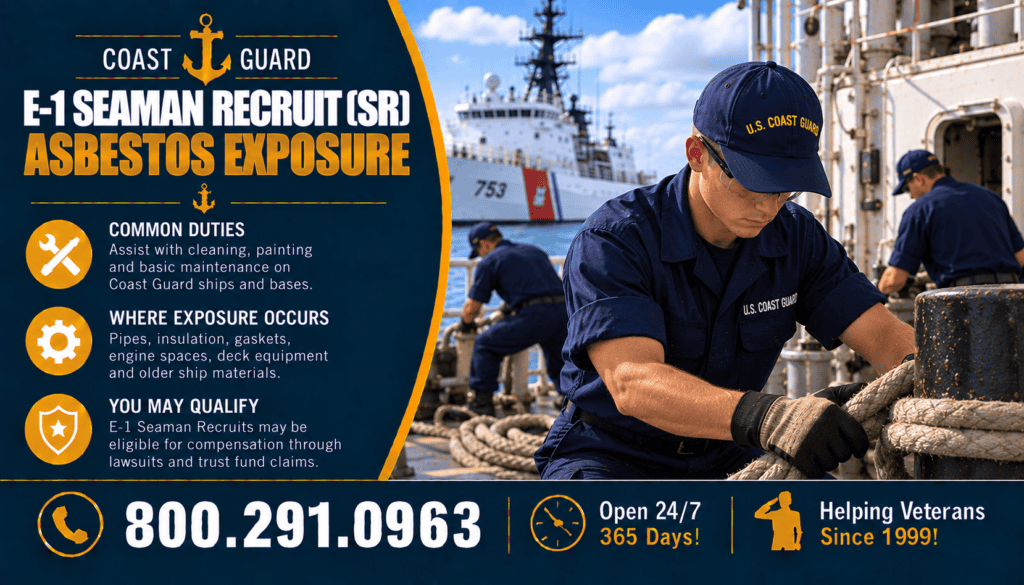
E-2 – Coast Guard Seaman Apprentice (SA) Asbestos Exposure
⚠️ Asbestos Risks for Coast Guard Seaman Apprentices (SA)
Coast Guard Seaman Apprentices—typically sailors with a few months of experience—performed essential deck, engineering, and maintenance duties that placed them in direct contact with asbestos-containing materials (ACM) throughout Coast Guard cutters, patrol boats, buoy tenders, icebreakers, training stations, and shore facilities.
Because SAs worked hands-on with ship maintenance, pipe systems, machinery spaces, and bulkheads, they were routinely exposed to asbestos dust from deteriorating insulation, gaskets, deck coverings, paneling, and ventilation systems. Many vessels built before 1990 still contained original ACM, exposing SAs as they scraped, cleaned, painted, repaired, carried tools, or assisted engineers.
Seaman Apprentices often experienced exposure levels similar to E-1 Seaman Recruits—sometimes higher—because their duties became more technical, involving deeper entry into engine rooms and machinery compartments.
This page details duties, exposure pathways, documented risks, and compensation options for Coast Guard SAs today.
🛠 Typical Duties of a Coast Guard Seaman Apprentice (SA)
🛳 Deck Seamanship & Operations
SAs supported daily deck operations, including:
-
line and rigging handling
-
mooring and anchoring
-
small-boat launching and retrieval
-
painting, chipping, sanding, and corrosion control
-
maintenance of deck equipment and fittings
Many of these tasks disturbed areas lined with:
-
asbestos adhesives
-
bulkhead coverings
-
ACM non-skid coatings
-
insulation panels beneath paint and tile
Chipping, grinding, and scraping often released fibers invisible to the naked eye.
⚙ Basic Engineering Support
SAs assisted Machinery Technicians (MKs) and Damage Controlmen (DCs) with:
-
routine engine room cleaning
-
basic maintenance around pumps, valves, and heat exchangers
-
polishing, scraping, and degreasing machinery
-
wiping down steam lines
-
carrying asbestos-coated gaskets and packing rings
Engine rooms contained the highest concentrations of asbestos aboard Coast Guard vessels, including:
-
pipe lagging
-
refractory insulation
-
boiler components
-
turbine casings
-
high-temperature wiring coverings
Even simple cleaning or sweeping could stir asbestos dust.
🧹 Ship Maintenance & Cleaning Duties
Seaman Apprentices cleaned:
-
berthing compartments
-
passageways
-
storage rooms
-
electrical spaces
-
ventilation grates
-
overheads and deck areas
These compartments typically contained:
-
ACM deck tiles
-
fireproof bulkheads
-
asbestos acoustic insulation
-
wiring coverings
-
thermal pipe wrap behind removable panels
Routine sweeping of accumulated dust created recurrent fiber exposure.
🛠 Support for Repairs & Overhauls
SAs helped during at-sea repairs and dry dock periods by:
-
carrying tools and equipment
-
removing panels and insulation covers
-
scraping loose materials
-
assisting with pump and valve disassembly
-
cleaning post-repair debris
Shipyard dry docks historically had some of the highest asbestos concentrations of any Coast Guard environment.
🛟 Search & Rescue (SAR) & Emergency Operations
Emergency gear used by Coast Guard units often contained asbestos, including:
-
fire curtains
-
insulated blankets
-
heat-resistant gloves
-
emergency doors with ACM gasketing
-
older hoses and fittings
SAs handled this equipment frequently during drills and missions.
🧱 Asbestos Exposure Risks for Coast Guard Seaman Apprentices
1. Pipe Insulation and Gaskets
Nearly all Coast Guard vessels built before 1990 used asbestos for:
-
steam pipe insulation
-
valve packing
-
pump gaskets
-
turbine seals
-
boiler fittings
SAs cleaning or assisting engineers were exposed to dust whenever insulation was frayed, damaged, or removed.
2. Heat-Resistant Bulkhead Coverings
Bulkheads throughout ships used asbestos for:
-
fireproofing
-
soundproofing
-
thermal insulation
Over time, vibration and corrosion caused coverings to break apart, spreading dust into passageways and compartments where SAs worked.
3. Machinery Space Insulation
Machinery spaces contained degraded ACM on:
-
reduction gears
-
turbines
-
engine exhaust systems
-
boiler casings
-
compressors
-
pumps
Working in these confined, poorly ventilated spaces dramatically increased exposure.
4. Ventilation and Air System Contamination
Asbestos fibers traveled through ship ventilation systems and accumulated:
-
inside ducts
-
on grates
-
in fan rooms
-
behind access panels
Cleaning or removing these areas released trapped fibers.
5. Deck Machinery & Rigging Equipment
Winches, capstans, cranes, davits, and mooring machinery used ACM parts such as:
-
asbestos brake linings
-
friction materials
-
gasketed housings
SAs frequently serviced or cleaned these systems.
6. Berthing & Mess Deck Exposure
Sleeping quarters and common areas contained ACM in:
-
deck tiles
-
ceiling insulation
-
steam lines beneath panels
SAs’ cleaning duties significantly disturbed dust.
7. Shipyard & Maintenance Periods
During maintenance cycles, SAs were exposed to:
-
insulation removal
-
ACM sandblasting & grinding
-
lagging replacement
-
valve and pump overhauls
-
compartment demolition
These were some of the most hazardous conditions in the Coast Guard.
📊 Why Coast Guard SAs Have Strong Asbestos Claims
1. High direct exposure early in career
SAs handled tasks that disturbed asbestos more than senior ranks.
2. Coast Guard ships were ACM-heavy until the 1990s
Even ships decommissioned much later kept original asbestos onboard.
3. PPE was rarely issued
Respirators were uncommon for deck or engineering trainees.
4. Exposure documented in Coast Guard records
Ship histories and maintenance logs clearly show where ACM was used.
📂 Evidence Used in SA Asbestos Claims
📁 Service & Training Records
These establish:
-
vessel assignments
-
duty stations
-
engineering or deck involvement
📘 Ship Technical Manuals & Blueprints
These show:
-
thermal insulation types
-
pipe lagging locations
-
ACM components
📜 Cutter & Patrol Boat Asbestos Lists
Many Coast Guard cutters have documented ACM histories.
🧰 Witness Statements
Statements from:
-
Machinery Technicians (MKs)
-
Damage Controlmen (DCs)
-
Boatswain’s Mates (BMs)
-
Warrant Officers
These testimony types strengthen claims dramatically.
💼 Example Compensation Results
Case 1 — SA aboard a 210-foot cutter
Machinery room and bulkhead exposure.
Compensation: $2.5M
Case 2 — SA in dry dock overhaul
Lagging removal and pump-room debris exposure.
Compensation: $2.9M
Case 3 — SA on an icebreaker
High engine-room insulation dust exposure.
Compensation: $3.2M
💙 Benefits Available to Coast Guard SA Veterans
💵 Asbestos Trust Funds
Part of the $30B national trust fund pool.
⚖ Civilian/Military Product Liability Claims
Claims target manufacturers—not the Coast Guard.
❤️ Survivor Benefits
Available for families of those who passed from asbestos illnesses.
📞 Get Help Identifying Your Coast Guard SA Asbestos Exposure
Coast Guard Seaman Apprentices worked in some of the most contaminated areas aboard Coast Guard ships and shore installations. Even brief exposure can lead to mesothelioma decades later.
📞 Call 800.291.0963 for a free, confidential case review.