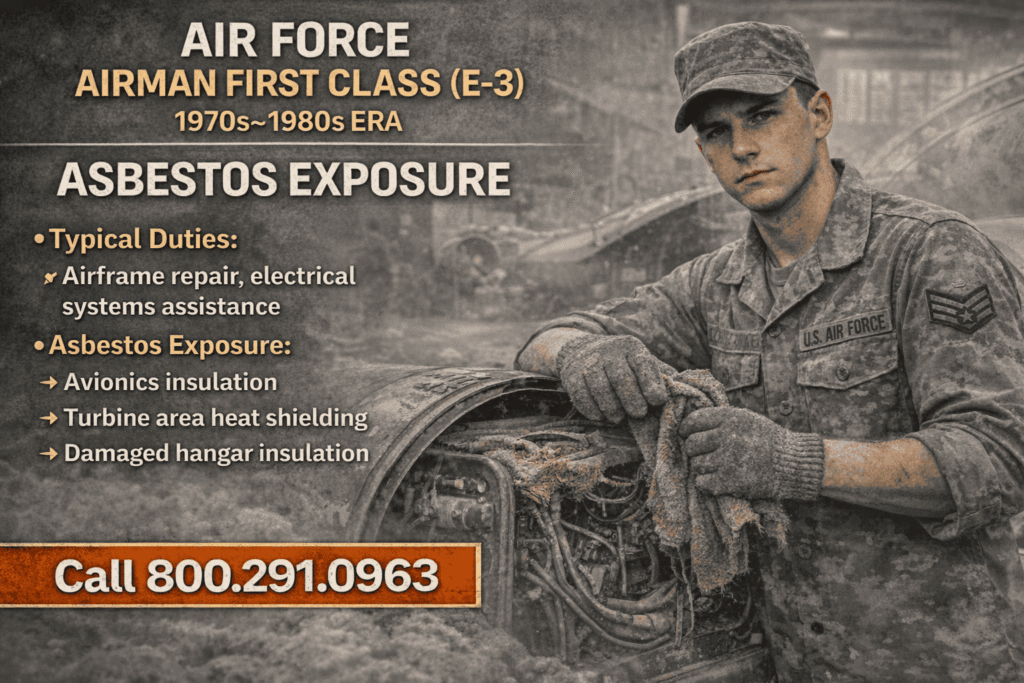
E-3 – Airman First Class (A1C) Asbestos Exposure
Risks in Aircraft Maintenance, Avionics, and Hangar Operations
Airman First Class (A1C) is the rank where Airmen transition from basic helpers into active, hands-on technicians within aircraft maintenance, avionics, electrical systems, and airframe repair. These roles put A1Cs directly in contact with some of the most asbestos-intense environments in the U.S. Air Force.
From the 1940s through the late 1980s, Air Force aircraft, hangars, and support facilities relied heavily on asbestos-containing materials (ACM) for heat resistance, fireproofing, and electrical insulation. A1Cs routinely worked near:
-
Avionics insulation
-
Jet turbine heat shielding
-
Wiring insulation
-
Hangar roof and wall insulation
-
Fireproofing blankets and boards
-
High-temperature gaskets
-
Cement-based wallboard
-
Pipe insulation in maintenance bays
Because A1Cs perform actual repairs—not just cleanup—they often handled asbestos materials directly, without knowing the risks. Many former A1Cs are being diagnosed today with mesothelioma, asbestos lung cancer, and asbestosis from exposure during these early-career maintenance assignments.
🛠️ Typical Duties of an A1C (E-3)
Airman First Class personnel take on more specialized responsibilities than ABs and Amns. They begin assisting certified technicians, crew chiefs, and avionics specialists on actual aircraft systems.
Typical A1C duties include:
-
Assisting with airframe repair and sheet-metal work
-
Working with electricians on wiring replacement and troubleshooting
-
Removing and installing avionics panels
-
Replacing damaged insulation in aircraft compartments
-
Supporting turbine and engine maintenance cycles
-
Disconnecting and reconnecting electrical connectors
-
Inspecting aircraft bays, panels, and compartments
-
Helping with corrosion control and aircraft wash procedures
-
Cleaning, prepping, and organizing maintenance bays
-
Handling fireproof blankets and protective shielding
-
Working around AGE (Aerospace Ground Equipment) units
A1Cs typically work inside:
-
Hangars
-
Flightline engine test areas
-
Avionics shops
-
Electrical maintenance shops
-
Turbine and engine overhaul bays
Every one of these locations historically contained asbestos.
🧱 Asbestos Exposure Risks for Airman First Class (A1C)
Avionics Insulation (Major Electrical Exposure)
Aircraft avionics systems used asbestos for decades in:
-
Wiring insulation
-
Electrical boards
-
High-temperature electrical tape
-
Fire-resistant backing panels
-
Asbestos-cloth wire coverings
-
PCB-style insulation boards
When avionics panels were opened or removed:
-
Insulation crumbled
-
Dust dropped into open bays
-
Fibers became airborne
-
A1Cs inhaled whatever drifted into the workspace
A1Cs assisting in avionics troubleshooting or electrical repairs were often exposed without protective equipment.
Turbine Area Heat Shielding
Jet engines historically contained asbestos in:
-
High-temperature wraps
-
Fire barriers
-
Turbine insulation blankets
-
Combustor shielding
-
Afterburner-area insulation
-
Textile-based ACM heat panels
These materials degraded under extreme engine heat, vibration, and repeated maintenance cycles.
A1Cs helping with turbine inspections or assisting crew chiefs frequently encountered:
-
Cracked insulation
-
Torn heat blankets
-
Dust from high-temp shielding
-
Heat-damaged ACM falling into engine bays
Jet engine asbestos exposure is one of the Air Force’s most documented sources of mesothelioma.
Damaged Hangar Insulation
Aircraft hangars, especially those built before 1980, contained large amounts of asbestos:
-
Roof insulation
-
Pipe and duct insulation
-
Fireproofing on support beams
-
Cement asbestos wallboard
-
Sound insulation behind panels
-
Floor tile and adhesives
Heat cycles, humidity, aircraft vibration, and age caused this insulation to degrade. A1Cs often performed maintenance in these contaminated areas daily, breathing in fibers that had settled onto the hangar floor or drifted down from aging structural materials.
✈️ Why E-3 Airmen Face More Exposure Than E-1 and E-2
A1Cs are more likely to develop asbestos-related illnesses because:
-
They perform hands-on repairs, not just cleanup
-
They open avionics panels, engine bays, and electrical compartments
-
They interact directly with asbestos-containing components
-
Their tasks involve kneeling, crawling, and working in confined compartments
-
They spend long hours in contaminated hangars
-
They support turbine and engine maintenance cycles
-
They work with senior technicians in high-dust, high-risk areas
A1Cs are often unaware that the most “routine” maintenance tasks involved disturbing asbestos fibers.
🧩 Common Asbestos-Containing Materials Encountered by A1Cs
Aircraft Components
-
Avionics insulation
-
Heat-resistant wire coverings
-
Brake pad and clutch assemblies
-
Insulation blankets in engine bays
-
High-temp gaskets
-
Fireproofing panels and cloth
Hangar Infrastructure
-
Pipe insulation
-
Duct insulation
-
Fireproofing spray
-
Soundproof wall and ceiling panels
-
Vinyl floor tile and mastic
-
Cement board
Electrical Systems
-
Switchgear insulation
-
Arc chutes
-
Electrical mounting boards
-
ACM wiring barriers
Support Equipment (AGE)
-
Power units
-
Heaters
-
Air-start units
-
ACM insulation inside carts and trucks
A1Cs frequently worked around these materials without realizing their danger.
📈 Why A1C Claims Are Strong for VA & Legal Compensation
A1C claims are easier to prove because:
-
A1Cs perform more advanced maintenance tasks
-
Their duties involve opening insulated aircraft compartments
-
Turbine and avionics exposures are well-documented
-
Hangars built pre-1980 universally contained asbestos
-
Base engineering records support these exposures
-
Asbestos use in avionics and engine insulation is irrefutable
These factors make E-3 Airman claims highly credible and compensable.
📊 How E-3 Exposure Is Proven Today
Veterans do not need to remember specific aircraft parts.
Exposure is proven using:
-
AFSC job descriptions
-
Aircraft maintenance TOs (Technical Orders)
-
Hangar construction records
-
Base environmental health surveys
-
Engine and avionics insulation specifications
-
Turbine overhaul logs
-
AGE equipment documentation
-
Statements from former crew chiefs or NCOICs
This creates a complete, verifiable exposure profile.
📚 Real Examples of A1C Asbestos Exposure Cases
Case 1 — A1C Working Avionics Panels
Exposure: Insulation crumbling inside avionics bays
Compensation: $2.8 million
Case 2 — E-3 Assisting Turbine Maintenance
Exposure: Torn, heat-damaged turbine shielding
Compensation: $2.6 million
Case 3 — A1C in Hangar Repair Teams
Exposure: Damaged roof and wall insulation
Compensation: $2.5 million
Case 4 — E-3 Electrical Systems Helper
Exposure: Asbestos-insulated wiring
Compensation: $2.7 million
🧭 How E-3 Airmen Document Exposure for Claims
Exposure is supported by:
-
Base assignment
-
Aircraft models maintained
-
Maintenance shop type
-
Hangar age and asbestos history
-
Turbine repair cycles
-
Avionics repair logs
-
AFSC codes
This evidence is widely accepted in VA and legal claims.
💙 Benefits Available to E-3 Airmen Exposed to Asbestos
VA Disability Benefits
-
Mesothelioma = automatic 100% disability rating
-
Asbestos lung cancer often qualifies
Asbestos Trust Funds
Over $30 billion available for compensation.
Legal Compensation
Filed against equipment and insulation manufacturers—not the Air Force.
VA DIC for Families
Tax-free benefits for surviving spouses and dependents.
❓ Frequently Asked Questions — E-3 A1C Asbestos Exposure
Was avionics insulation made with asbestos?
Yes—avionics systems used asbestos-based insulation for decades.
Is turbine shielding hazardous?
Extremely—heat shielding is one of the biggest asbestos sources in jet engines.
Do I need proof of the exact aircraft I worked on?
No—assignments and AFSC are enough.
Can families file after the veteran passes away?
Yes—VA DIC and trust fund claims remain available.
🏅 Why A1Cs Trust Mesothelioma Help Center
-
25+ years documenting Air Force asbestos exposure
-
Access to aircraft manuals, TOs, and maintenance histories
-
Specialists trained in avionics, turbine, and hangar exposure
-
Millions recovered for USAF veterans
-
No fees unless compensation is awarded
📞 Get Help Identifying Your Asbestos Exposure as an E-3 Airman First Class
If you or a loved one served as an A1C and developed mesothelioma or asbestos lung cancer, specialists can pinpoint the exact aircraft systems and hangar materials responsible.
📞 Call 800.291.0963 for a free exposure review.