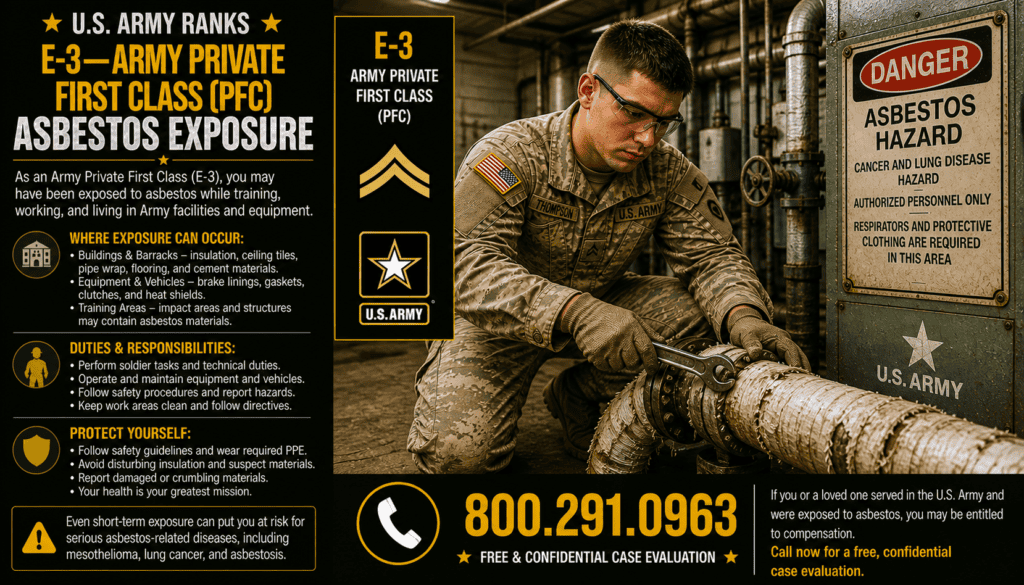
⚠️ E-3 Army Private First Class (PFC) Asbestos Exposure
Asbestos Exposure Risks in the U.S. Army
From the 1940s through the late 1980s, asbestos was deeply embedded in the infrastructure, vehicles, heating systems, and construction materials used across U.S. Army installations. As soldiers advanced to E-3 — Private First Class (PFC), they moved beyond basic support duties into more specialized roles such as light vehicle repair, electrical work, and carpentry. These responsibilities directly increased their exposure to brake dust, boiler systems, HVAC insulation, and asbestos-containing gaskets and tiles.
Many PFCs performed hands-on technical tasks in areas where aging asbestos materials were already deteriorating, creating dangerous airborne fibers. Decades later, thousands of former PFCs have developed mesothelioma, asbestos lung cancer, asbestosis, and chronic respiratory illnesses linked to these exposures.
This page explains how Army PFC duties created risk, the specific materials involved, and the benefits available today for veterans and families.
🎖 Why E-3 Army Privates First Class Faced Asbestos Exposure
🔎 Why PFC Responsibilities Increased Exposure
Once promoted to E-3, soldiers were trusted with more technical and skilled labor tasks. This moved them directly into environments such as:
-
Motor pools
-
Heating and boiler rooms
-
Electrical repair stations
-
Construction and carpentry shops
-
Barracks maintenance areas
-
Field repair locations
Each of these environments contained high-risk, friable asbestos materials.
🔎 Why Asbestos Was Everywhere on Army Bases
Asbestos was used because it was:
🔥 Fireproof
🧱 Highly heat-resistant
💧 Moisture-resistant
⚙️ Strong yet flexible
💲 Very inexpensive
These qualities made asbestos ideal for the Army’s high-heat systems, vehicle components, construction materials, adhesives, cements, and electrical insulation.
🛠 Typical Duties of an E-3 — Private First Class (PFC)
🛠 Light Vehicle Repair
PFCs working in motor pools often handled asbestos directly through:
-
Brake replacements
-
Clutch repairs
-
Gasket removal
-
Heat shield handling
-
Exhaust work
-
Engine component cleaning
Army vehicles—including jeeps, cargo trucks, APCs, and utility vehicles—used asbestos in:
-
Brake linings and shoes
-
Clutch discs
-
Drivetrain insulation
-
Exhaust wrap
-
Engine gaskets
PFCs repairing or cleaning these systems frequently inhaled asbestos fibers, especially during:
-
Brake shoe removal
-
Compressed air cleaning
-
Dry sweeping
-
Scraping old gaskets
-
Grinding brake parts
Motor pools were among the most contaminated areas of any Army installation.
🛠 Electrical Work
Electrical tasks routinely involved asbestos-based materials such as:
-
Electrical insulation
-
Wiring insulation
-
Arc chutes
-
Switchgear panels
-
Fuse panels
-
Asbestos cement boards behind panels
Common duties included:
-
Replacing wiring
-
Assisting electricians
-
Removing old electrical panels
-
Cleaning insulation dust
-
Cutting into walls containing asbestos
Because electrical insulation had to withstand heat, asbestos was heavily used, exposing PFCs during repairs or maintenance.
🛠 Carpentry Tasks
Army carpentry and construction units frequently handled asbestos-containing materials, including:
-
Wallboards
-
Joint compound
-
Acoustic ceiling tiles
-
Vinyl floor tiles
-
Tile backing
-
Roofing shingles
-
Cement sheets
-
Asbestos siding
PFC responsibilities included:
-
Removing damaged tiles
-
Cutting wallboard
-
Pulling up old flooring
-
Handling adhesive compounds
-
Cleaning demolition debris
These tasks generated significant clouds of airborne asbestos dust, especially in older barracks and administrative buildings.
🧩 Asbestos Exposure Sources for E-3 PFCs
1️⃣ Brake Replacement
Light vehicle repair was one of the highest-exposure jobs in the Army.
Asbestos brake components released fibers during:
-
Grinding
-
Sanding
-
Removal
-
Cleaning
-
Sweeping
PFCs who handled brakes, clutches, and gaskets faced intense fiber concentrations inside enclosed motor pool bays.
2️⃣ HVAC and Boiler System Dust
Army heating systems contained asbestos in:
-
Pipe insulation
-
Boiler wrap
-
Refractory materials
-
Furnace cement
-
HVAC duct insulation
-
Steam-line wrapping
PFCs assisting with HVAC or boiler repairs were exposed when:
-
Insulation crumbled
-
Ducts were opened
-
Boilers were scraped
-
Old cement or plaster was removed
-
Steam-line coverings deteriorated
Many boiler rooms were poorly ventilated, trapping airborne fibers.
3️⃣ Asbestos Gasket and Tile Removal
PFCs commonly removed or disturbed asbestos while performing:
-
Floor tile removal
-
Wallboard demolition
-
Tile scraping
-
Gasket replacement
-
Tile adhesive cleaning
-
Pipe gasket scraping
These procedures produced high-risk asbestos dust, especially in older Army buildings constructed before 1980.
📊 Why These Exposure Points Matter for Claims
📌 How E-3 Duties Strengthen Asbestos Claims
The specialized duties of an Army PFC create strong evidence for:
-
MOS-based asbestos exposure
-
Trust fund eligibility
-
VA disability approval
-
Linking exposure to manufacturers
-
Legal compensation
-
Documented service-connected illness
Because PFCs performed hands-on technical work, their claims often qualify quickly.
📂 Real Veteran Examples: E-3 PFC Exposure
⭐ Case 1 — PFC Vehicle Repair Specialist
Exposure: Brake replacement, gasket scraping, engine insulation
Compensation: $3.6M (trust funds + lawsuit)
⭐ Case 2 — PFC HVAC Assistant
Exposure: Boiler dust, steam-line insulation, furnace cement
Compensation: $3.1M
⭐ Case 3 — PFC Carpenter / Building Maintenance
Exposure: Tile removal, wallboard demolition, adhesive dust
Compensation: $2.9M
These examples match common exposure routes for thousands of Army PFCs.
🧭 How E-3 Army Privates First Class Prove Asbestos Exposure
🧾 Documentation Used to Confirm PFC Exposure
Veterans do not need to remember every detail. Claims are proven using:
-
MOS and duty assignments
-
Base construction records
-
Motor pool repair logs
-
HVAC maintenance histories
-
Army asbestos technical manuals
-
Building renovation files
-
Heating and boiler system diagrams
-
Witness or coworker statements
Experts already know which asbestos products were present at each base during specific years.
💰 Benefits for Former E-3 Army Privates First Class Exposed to Asbestos
💙 VA Disability Benefits
-
Mesothelioma is automatically rated 100%
-
Asbestos-related lung cancer frequently qualifies
-
Asbestosis and pleural disease are compensable
💵 Asbestos Trust Funds
More than $30 billion remains available for veterans exposed to asbestos-containing products.
PFCs performing brake, HVAC, electrical, or carpentry work almost always qualify.
⚖️ Legal Compensation
Cases target manufacturers, not the U.S. Army or government.
❤️ VA DIC for Families
Surviving spouses and dependents receive tax-free monthly benefits.
❓ Frequently Asked Questions — E-3 PFC Asbestos Exposure
🟦 I only served as a PFC for a short time. Does that still count?
Yes. Mesothelioma can develop from brief but intense exposure.
🟦 Does motor pool work increase asbestos risk?
Absolutely—brake and clutch work was one of the highest-risk duties.
🟦 I didn’t know asbestos was present. Can I still file?
Yes. MOS-based exposure is well-documented.
🟦 Will VA benefits reduce my lawsuits or trust fund claims?
No. All compensation sources remain separate.
🏅 Why Veterans Trust Mesothelioma Help Center
⭐ Trusted by Veterans Nationwide
-
25+ years documenting Army asbestos exposure
-
Specialists trained in mechanical, electrical, and construction MOS
-
Access to Army base and vehicle asbestos product records
-
Millions recovered for PFCs and their families
-
No fees unless compensation is awarded
📞 Get Help Identifying Your Asbestos Exposure as an E-3 Army Private First Class (PFC)
If you or a loved one served as an E-3 PFC and later developed an asbestos-related illness, our specialists can identify exactly where exposure occurred—even if you don’t remember specific details.
📞 Call 800.291.0963 for a free exposure review and case evaluation.