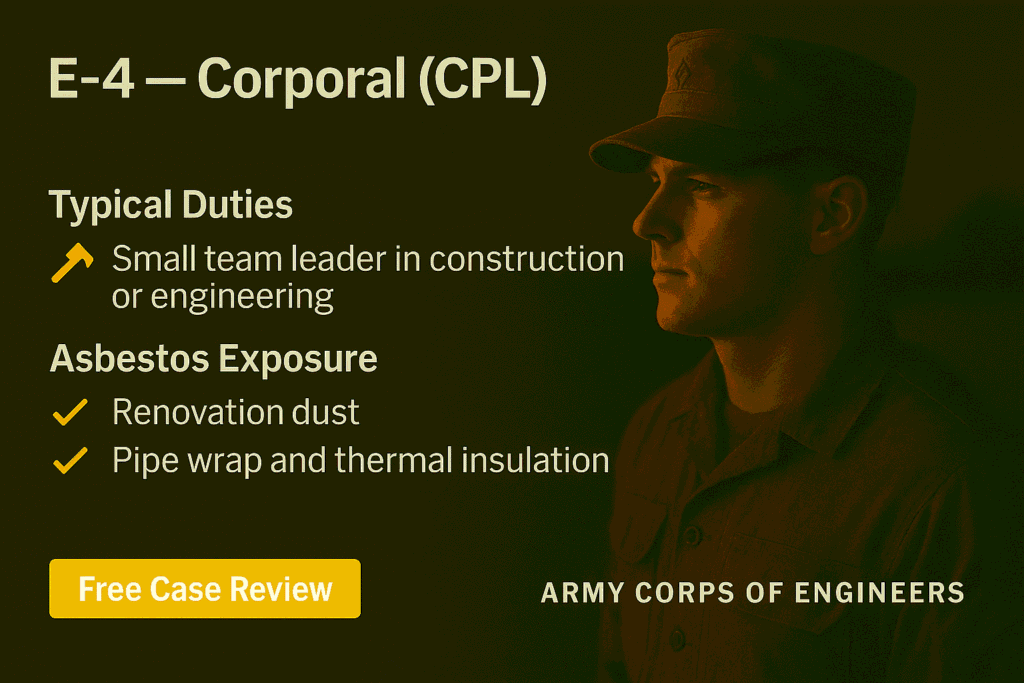
E-4 – Army Corps of Engineers Corporal (CPL)
🛠️ Small team leader in construction or engineering
Asbestos Exposure
⚠️ Renovation dust
⚠️ Pipe wrap and thermal insulation
Asbestos Exposure Risks for Junior Engineering Leaders
A Corporal (CPL) in the U.S. Army Corps of Engineers is a junior Noncommissioned Officer who leads small teams during construction, repair, and engineering support missions. CPLs perform hands-on tasks while supervising soldiers in activities such as demolition, renovation, material removal, utility system work, and structural repairs.
Because CPLs frequently operate in older Army facilities, mechanical rooms, and renovation environments, they encounter asbestos-containing materials (ACM) during routine tasks. Renovation dust, damaged pipe insulation, thermal system components, and aging building materials are common exposure sources. CPLs experience both direct and indirect exposure while working alongside soldiers performing demolition or system repairs.
The Engineering Leadership Role of an E-4 in the Corps of Engineers
CPLs serve as the first level of formal leadership within the enlisted engineering structure. They carry out technical work while guiding small teams through construction and repair missions under the supervision of senior NCOs.
Typical Responsibilities of an E-4 Include:
-
👷 leading 2–4 soldiers during engineering tasks
-
🧱 performing hands-on construction, repair, and demolition work
-
🧰 handling tools, equipment, and engineering materials
-
🔍 inspecting small work areas for damage or hazards
-
🚧 assisting in renovation and facility improvement projects
-
♨️ working around mechanical, plumbing, and HVAC systems
-
🛠️ supporting concrete, carpentry, electrical, and plumbing tasks
-
🧭 ensuring junior soldiers follow safety procedures
-
📐 reporting progress to SGTs and SSGs
These responsibilities place CPLs in close contact with asbestos-containing materials, especially during building modification or repair tasks.
Why E-4 Personnel Faced Significant Asbestos Exposure
CPLs seldom avoid hands-on work. Unlike higher-ranking NCOs, they often perform the physical labor involved in renovations, repairs, or demolition—directly disturbing ACM materials. They also supervise new soldiers who may unknowingly disturb asbestos, increasing exposure risks for the entire team.
Exposure occurs during:
-
demolition or renovation of older structures
-
handling damaged pipe insulation
-
entering mechanical rooms for small repairs
-
scraping or removing outdated flooring
-
cutting or drilling into insulated piping
-
cleaning dust left behind from previous work
Below are the most common asbestos sources for CPLs.
Exposure Source #1: Renovation Dust in Older Buildings
Renovation and light demolition activities create airborne asbestos when disturbing:
-
🪵 drywall joint compound
-
🧱 plaster or textured coatings
-
🧩 ceiling tiles
-
🧹 flooring mastic and underlayment
-
🏚️ acoustic panels
-
🧱 transite wallboard
Why Renovation Dust Is Highly Dangerous
During renovation work, CPLs often:
-
remove damaged ceilings or drywall
-
tear out old flooring or wall panels
-
scrape adhesives or coatings
-
break into old utility chases
-
clean up debris
These tasks release asbestos fibers that remain airborne for hours.
Exposure Source #2: Pipe Wrap and Thermal Insulation
Thermal systems across many Army installations were heavily insulated with asbestos products.
Common ACM Found in Thermal Systems:
-
♨️ steam pipe insulation
-
🔥 boiler insulation
-
🚰 valve and pump gaskets
-
❄️ HVAC duct insulation
-
🛠️ heat-resistant mechanical wraps
Why CPLs Encountered These Hazards
CPLs often assist with:
-
small pipe repairs
-
HVAC troubleshooting
-
leak containment
-
insulation removal or replacement
-
inspections in crawl spaces and mechanical areas
When insulation is cracked, torn, or disturbed, asbestos fibers become airborne instantly.
Exposure Source #3: Mechanical Rooms, Crawlspaces & Utility Areas
These are high-risk environments due to:
-
deteriorated insulation
-
loose asbestos dust
-
confined spaces
-
poor ventilation
Why CPLs Entered These Areas Frequently
CPL duties often include:
-
checking equipment for NCOs
-
performing minor mechanical repairs
-
escorting junior soldiers during tasks
-
clearing debris or obstructions
-
responding to emergency maintenance requests
These rooms frequently contain multiple asbestos sources at once.
Exposure Source #4: Hands-On Demolition & Material Removal
CPLs participate directly in demolition tasks such as:
-
🧱 wall and flooring removal
-
🪜 ceiling tear-outs
-
🛠️ disassembly of mechanical components
-
🪚 cutting or breaking old building materials
How This Increases Exposure
Demolition disturbs:
-
plaster
-
insulation
-
concrete panels
-
floor tiles
-
mechanical wrap
This releases high concentrations of respirable asbestos fibers.
Exposure Source #5: Long-Term Cumulative Exposure Through Multiple Tasks
CPLs rotate through many engineering assignments, including:
-
vertical construction
-
horizontal construction
-
utilities
-
carpentry
-
electrical work
-
plumbing
Each assignment exposes them to different ACM products, creating long-term cumulative risk.
Long-Term Health Risks for E-4 Engineering Personnel
Asbestos diseases often appear 20–50 years after exposure.
Diseases Include:
-
🫁 Mesothelioma
-
🫀 Asbestos-related lung cancer
-
🌫️ Asbestosis
-
🩻 Pleural plaques and scarring
Early-career exposure dramatically increases lifetime disease risk.
VA Disability Benefits for E-4 Asbestos Exposure
CPLs often have some of the strongest VA claims due to frequent hands-on work in renovation and utility environments.
Evidence That Strengthens a VA Claim:
-
📄 MOS showing construction and repair duties
-
🧱 documentation of renovation or demolition tasks
-
📝 maintenance or work assignment records
-
💬 statements from NCOs or peers
-
🩺 medical evidence linking illness to asbestos exposure
Mesothelioma automatically qualifies for a 100% VA disability rating.
Asbestos Trust Fund & Legal Compensation for E-4 Veterans
More than $30 billion remains available through asbestos trust funds.
Compensation Options Include:
-
💵 trust fund payouts
-
⚖️ product liability settlements
-
👨👩👧 survivor benefits
-
🎖️ VA disability compensation (in addition to legal claims)
CPLs often qualify due to direct involvement in demolition, thermal system work, and renovation tasks.
📞 Free Case Review for Army Corps of Engineers E-4 Veterans
If you served as a Corporal in the U.S. Army Corps of Engineers and later developed mesothelioma, asbestos lung cancer, or asbestosis, you may qualify for substantial compensation.
📞 Call 800.291.0963 now for a free, confidential case review.
A specialist will help verify your exposure history and identify every benefit available.