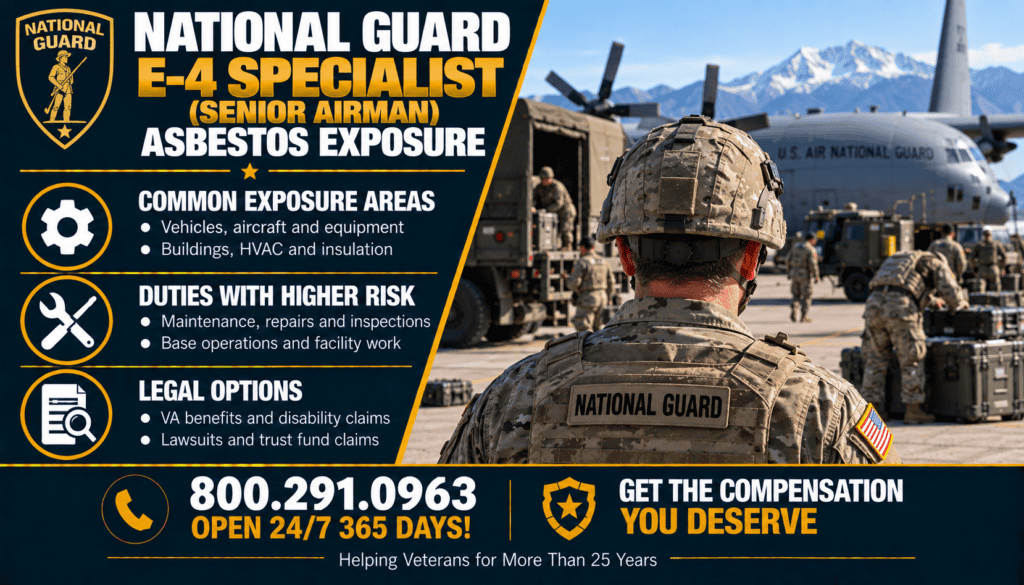
E-4 – National Guard Specialist (SPC) / Senior Airman (SrA)
🛠️ Mechanic, electrician, carpenter, HVAC tech, vehicle operator
Asbestos Exposure
⚠️ Brake and clutch replacement
⚠️ Electrical panel ACM
⚠️ Steam line insulation
Asbestos Exposure Risks for Skilled Trades Personnel in the National Guard
An E-4 in the National Guard—Army Specialist (SPC) or Air Guard Senior Airman (SrA)—performs some of the most hands-on technical work in the entire enlisted structure. Their duties often include mechanical repair, electrical system maintenance, carpentry, HVAC support, equipment operations, and troubleshooting infrastructure problems in older Guard facilities. Because these tasks place E-4 personnel directly beside aging vehicles, electrical systems, and steam or HVAC infrastructure, they experience significantly higher asbestos exposure than lower enlisted ranks.
Many Guard armories, hangars, maintenance shops, motor pools, and training buildings still contain asbestos in electrical panels, pipe insulation, boiler rooms, drywall, flooring, and mechanical systems. E-4s working in technical specialties frequently disturb these materials through routine maintenance and repair tasks.
The full scope of E-4 technical and maintenance duties
How brake jobs, electrical work, and steam system contact created asbestos exposure
Why skilled trades personnel faced elevated airborne asbestos hazards
Long-term health dangers
VA disability, asbestos trust fund eligibility, and legal options
The Technical Role of an E-4 in the National Guard
E-4 Guardsmen move beyond basic support tasks and begin performing trade-specific duties requiring specialized training and hands-on work.
Typical Responsibilities of an E-4 Include:
-
🔧 performing mechanical repairs on military vehicles
-
⚡ assisting electricians with wiring and panel maintenance
-
❄️ helping maintain HVAC units, ductwork, and mechanical systems
-
🪚 supporting carpentry and facility repair projects
-
🛞 operating vehicles and heavy equipment
-
🔌 troubleshooting older facility electrical systems
-
🧰 assisting NCOs with technical repair operations
-
🧹 cleaning and organizing motor pools, workshops, and hangars
Their work puts them directly in contact with areas where asbestos was historically used in large quantities.
Why E-4 Personnel Faced Significant Asbestos Exposure
Technicians and mechanics encounter asbestos hazards in multiple environments:
-
motor pools
-
hangars (Air Guard)
-
electrical rooms
-
HVAC and mechanical rooms
-
boiler rooms
-
older training and administrative buildings
Because E-4 personnel frequently manipulate or disturb aging components, exposure risk increases dramatically.
Exposure Source #1: Brake and Clutch Replacement
Older military and civilian-derived vehicles commonly used asbestos in:
-
🛞 brake pads
-
🛠️ clutch plates
-
🔩 gaskets
-
🧱 heat shields
How E-4 Specialists Are Exposed
E-4 mechanics may:
-
remove brake drums
-
clean brake housings
-
replace worn clutches
-
scrape gasket materials
-
sweep motor pool debris
Brake dust becomes airborne during:
-
disassembly
-
compressed-air cleaning
-
sanding or grinding
-
simple sweeping of the repair bay
This is one of the most common exposure sources for Guard mechanics.
Exposure Source #2: Electrical Panel ACM
Electrical systems in older Guard armories and maintenance shops often contain asbestos in:
-
⚡ panel backboards
-
🔥 arc chutes
-
🔌 wire insulation
-
🧱 fireproofing barriers
-
🔲 switchgear components
Why E-4 Electricians Are at Risk
SrA and SPC electricians may:
-
open electrical panels
-
replace components
-
scrape old insulation
-
work in dusty mechanical rooms
-
inspect wiring behind panels
Disturbing these systems releases microscopic asbestos fibers.
Exposure Source #3: Steam Line Insulation
Steam systems and heating lines are common in older Guard facilities—especially in cold-weather states. These systems often contain:
-
♨️ asbestos-wrapped pipes
-
🚰 boiler insulation
-
🧱 valve packing and gaskets
-
❄️ duct insulation
How E-4s Are Exposed
SPCs and SrAs may:
-
work near exposed pipe insulation
-
operate equipment in boiler rooms
-
assist HVAC techs with heating issues
-
clean or sweep mechanical rooms
-
inspect pipelines for leaks
Steam lines often shed asbestos fibers as the insulation ages and cracks.
Exposure Source #4: Facility Repair Work (Carpentry, HVAC, General Maintenance)
Older Guard buildings contain asbestos in:
-
drywall compound
-
ceiling tiles
-
vinyl floor tiles
-
ductboard insulation
-
structural adhesives
Why Skilled Trades Increase Exposure
E-4 techs often:
-
cut or drill into walls
-
remove damaged tiles
-
repair ceilings
-
handle HVAC duct materials
-
work in crawlspaces or utility rooms
Even small repair jobs disturb ACM that has been stable for decades.
Exposure Source #5: Aircraft Component Repairs (Air Guard)
Some older aircraft contain asbestos in:
-
brake assemblies
-
fireproof insulation
-
engine heat shielding
-
wiring insulation
E-4 Exposure Occurs During:
-
component disassembly
-
cleaning aircraft dust
-
inspecting brakes or avionics
-
sweeping hangar floors
Aircraft maintenance bays often circulate asbestos dust with every operation.
Long-Term Health Risks for E-4 Guard Members
Asbestos-related illnesses typically develop 20–50 years after exposure.
Diseases Include:
-
🫁 Mesothelioma
-
🫀 Asbestos-related lung cancer
-
🌫️ Asbestosis
-
🩻 Pleural plaques and fibrosis
Because E-4 personnel work directly with asbestos-containing components, their long-term risk is significantly higher.
VA Disability Benefits for E-4 Asbestos Exposure
The VA recognizes asbestos exposure for National Guard members with technical or maintenance duties.
Evidence That Strengthens a VA Claim:
-
📄 records showing mechanical, electrical, HVAC, or carpentry roles
-
🧱 documentation of older buildings or equipment
-
💬 statements from supervisors, NCOs, or mechanics
-
📝 logs or reports describing asbestos hazards
-
🩺 medical confirmation of asbestos disease
Mesothelioma qualifies automatically for a 100% disability rating.
Asbestos Trust Fund & Legal Compensation for National Guard Veterans
More than $30 billion in asbestos trust funds is available—paid by manufacturers, not the military.
Compensation Options Include:
-
💵 trust fund payouts
-
⚖️ asbestos product liability claims
-
👨👩👧 survivor benefits
-
🎖️ VA disability benefits (collected separately from legal claims)
E-4 Guard technicians often qualify due to direct contact with asbestos-containing components.
📞 Free Case Review for National Guard E-4 Veterans
If you served as an E-4 SPC or SrA in the National Guard and later developed mesothelioma, asbestos lung cancer, or asbestosis, you may qualify for significant compensation.
📞 Call 800.291.0963 now for a free, confidential case review.
A specialist will help verify your exposure history and identify all available compensation sources.