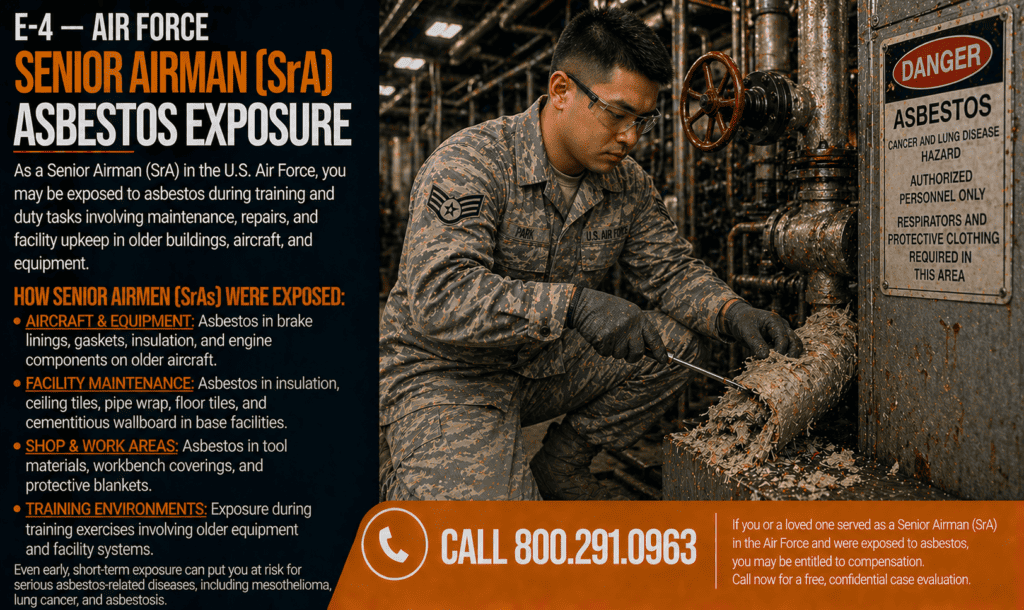
⚠️ E-4 — Senior Airman (SrA) Asbestos Exposure
Risks in Aircraft Maintenance, Propulsion Systems, and Avionics Work
Senior Airman (E-4) is the rank where Airmen become fully qualified technicians, handling complex aircraft systems with greater independence. SrAs perform hands-on duties in airframe work, turbine and propulsion repair, avionics troubleshooting, electrical systems maintenance, and brake assembly operations. These responsibilities frequently exposed them to asbestos fibers embedded throughout aircraft, hangars, and support equipment from the 1940s through the late 1980s.
Asbestos exposure for SrAs occurred in:
-
Aircraft brake components and friction assemblies
-
High-temperature gaskets and seals
-
Propulsion and turbine insulation
-
Avionics electrical insulation
-
Wiring insulation and heat-resistant coatings
-
Hangar wall and roof insulation
-
Ductwork and steam system insulation
-
Fireproofing in maintenance shops
-
AGE (Aerospace Ground Equipment) units containing ACM
Because SrAs were the primary hands-on maintainers for many of these components, they faced significant exposure, even when proper safety awareness was lacking.
🛠️ Typical Duties of a Senior Airman (E-4 SrA)
As a mid-level enlisted technician, SrAs perform more specialized work than AB, Amn, or A1C Airmen. Their duties frequently involve direct interaction with aircraft systems containing heat-resistant asbestos materials.
Typical SrA responsibilities include:
-
Conducting airframe repair and structural maintenance
-
Supporting engine and turbine inspections
-
Working on propulsion systems and afterburner sections
-
Replacing gaskets, seals, and insulation blankets
-
Performing avionics troubleshooting inside insulated compartments
-
Removing panels and opening electronics bays
-
Servicing aircraft brake assemblies
-
Repairing wiring bundles and electrical housings
-
Maintaining AGE support equipment
-
Clearing, prepping, and inspecting maintenance bays
-
Conducting post-maintenance cleanup involving dust and debris
-
Working inside older hangars built with heavy ACM
These roles put SrAs in direct contact with some of the most asbestos-intense components in the U.S. Air Force.
🧱 Asbestos Exposure Risks for Senior Airmen
Aircraft Brake Assemblies
Aircraft brakes were historically among the most concentrated sources of asbestos exposure in the Air Force.
Before the early 1990s, military aircraft used asbestos for:
-
Brake pads
-
Brake linings
-
Clutch facings
-
Piston seals
-
Drum brake systems
-
Heat-resistant friction materials
When SrAs performed brake changes or wheel and tire maintenance, asbestos dust was released through:
-
Grinding
-
Sanding
-
Blowing out assemblies
-
Wiping down components after brake changes
-
Cleaning debris from the hangar floor
These tasks created visible asbestos dust—one of the strongest documented exposure sources.
Gaskets, Seals, and High-Heat Insulation
SrAs frequently replaced gaskets and seals throughout the aircraft. These components included asbestos to withstand:
-
High heat
-
High pressure
-
Fire risk
-
Vibration
-
Fuel and hydraulic fluid exposure
Asbestos-containing parts included:
-
Engine gaskets
-
Exhaust seals
-
Turbine access port gaskets
-
Heat-resistant pads
-
High-temperature insulation sheets
-
Electrical bulkhead seals
Removing these materials often required scraping and cutting—tasks that released significant asbestos fibers directly into the air.
Turbine Component Insulation
Turbine sections contained some of the largest concentrations of asbestos in any aircraft:
-
Combustion chamber insulation
-
Turbine casing blankets
-
Shields near afterburner systems
-
Insulation panels surrounding high-heat zones
-
ACM-coated clamps and brackets
Excessive heat cycles caused these materials to:
-
Crack
-
Flake
-
Crumble
-
Release dust during removal
SrAs assisting with turbine work inhaled fibers every time an engine was opened, cleaned, or repaired.
✈️ Why E-4 Airmen Encounter Some of the Highest Asbestos Exposure Levels
Senior Airmen often have greater exposure than lower ranks because they:
-
Perform the majority of hands-on repairs
-
Remove panels that contain asbestos-lined insulation
-
Service high-heat components directly
-
Spend long hours in enclosed, dusty hangars
-
Work on electrical and avionics systems lined with ACM
-
Participate in turbine, braking, and airframe repairs
-
Open sealed compartments containing decades of debris
-
Handle old wiring bundles wrapped in asbestos insulation
SrAs were typically the technicians “in the bay,” doing the actual removal work that released the most fibers.
🧩 Common Asbestos-Containing Materials Encountered by SrAs
Aircraft Systems
-
Brake assemblies
-
High-temp engine gaskets
-
Insulation blankets around turbines
-
Asbestos electrical boards
-
Fireproof avionics panels
-
Asbestos-coated wiring
Hangar Infrastructure
-
Old insulation behind walls and ceilings
-
Pipe and steam line insulation
-
Fireproofing on metal beams
-
Acoustic ceiling panels
-
Vinyl floor tiles and adhesive
Aerospace Ground Equipment (AGE)
-
Generator insulation
-
Heaters and air-start units
-
Asbestos-based electrical housings
-
ACM brake/clutch systems in tow vehicles
Each of these materials created airborne fibers when handled, cut, repaired, or disturbed.
📈 Why E-4 Asbestos Claims Are Strong
SrA claims are among the strongest in the Air Force because:
-
SrAs perform hands-on technical tasks
-
Maintenance logs show direct contact with ACM
-
Aircraft models clearly used asbestos in brakes, gaskets, and insulation
-
Hangar asbestos is heavily documented
-
Turbine shielding exposure is one of the most recognized risks
-
SrAs have long, daily exposure periods
These documented conditions make VA and legal claims easier to prove.
📊 How E-4 Exposure Is Proven for VA Disability and Legal Cases
Airmen do not need to remember exact parts.
Exposure is proven through:
-
AFSC job duties
-
Aircraft Technical Orders (TOs)
-
Hangar construction records
-
Base environmental surveys
-
Engine and turbine maintenance logs
-
Brake system documentation
-
Wiring and avionics specs
-
Statements from supervisors or coworkers
This evidence provides a complete exposure timeline accepted by VA and trust fund systems.
📚 Real Examples of E-4 Senior Airman Exposure Cases
Case 1 — SrA Aircraft Structural Technician
Exposure: Brake assembly dust
Compensation: $3.0 million
Case 2 — SrA Propulsion Repair Specialist
Exposure: Turbine insulation shielding
Compensation: $2.9 million
Case 3 — Avionics SrA
Exposure: Electrical insulation and avionics compartment dust
Compensation: $2.7 million
Case 4 — Flightline SrA
Exposure: Brake dust and engine insulation
Compensation: $3.1 million
🧭 How E-4 Airmen Demonstrate Exposure Today
Exposure is supported through:
-
Duty station records
-
Aircraft models maintained
-
AGE equipment used
-
Maintenance shop type
-
Hangar age and asbestos inventories
-
Turbine repair histories
-
Avionics work records
SrAs do not need specialized memory—documentation backs up the exposure.
💙 Benefits Available to E-4 Airmen
VA Disability Benefits
-
Mesothelioma = 100% disability rating
-
Lung cancer often qualifies
Asbestos Trust Funds
Over $30 billion remains available.
Legal Compensation
Filed against manufacturers, not the Air Force.
VA DIC for Families
Survivors may receive tax-free monthly benefits.
❓ Frequently Asked Questions — E-4 SrA Asbestos Exposure
Did aircraft brakes really contain asbestos?
Yes—nearly all aircraft brakes before the 1990s did.
Is turbine insulation dangerous?
Extremely—one of the strongest asbestos sources in the Air Force.
Do I need to remember exact components I worked on?
No—AFSC and maintenance records prove exposure.
Can my family file after my passing?
Yes—DIC and trust fund claims remain available.
🏅 Why Senior Airmen Trust Mesothelioma Help Center
-
25+ years documenting USAF asbestos exposure
-
Access to aircraft manuals, TOs, and engineering data
-
Specialists trained in propulsion, avionics, and hangar exposures
-
Millions recovered for Air Force veterans
-
No fees unless compensation is awarded
📞 Get Help Identifying Your Asbestos Exposure as an E-4 Senior Airman
If you or a loved one served as a Senior Airman and developed mesothelioma or asbestos lung cancer, specialists can identify the exact aircraft systems and insulation materials responsible.
📞 Call 800.291.0963 for a free exposure review.