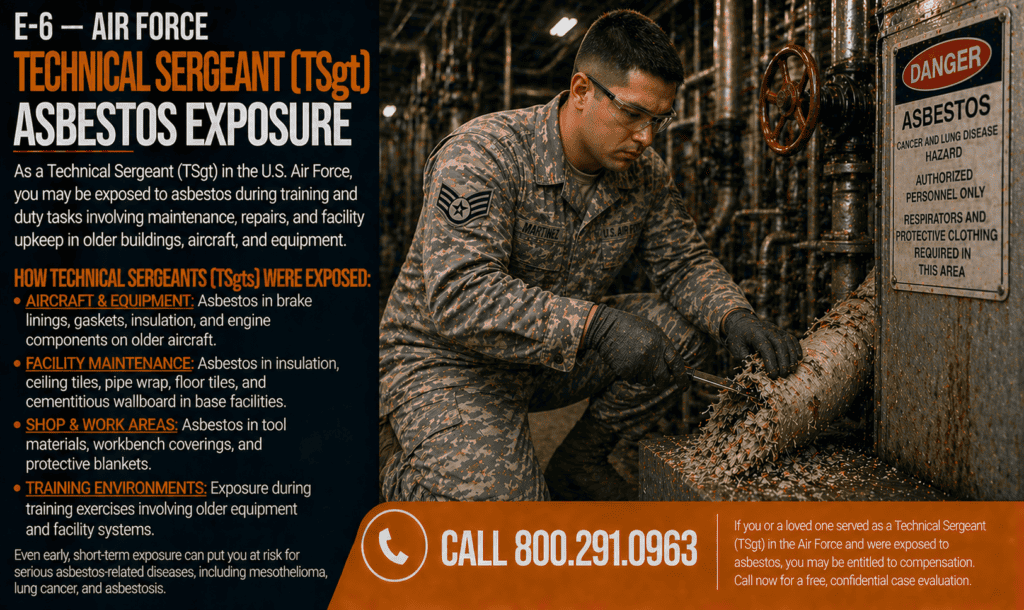
⚠️ E-6 — Technical Sergeant (TSgt) Asbestos Exposure
Risks in Flightline, Engine Overhaul, and Hangar Operations
Technical Sergeants (TSgts) are senior NCOs with expertise in aircraft systems, propulsion, avionics, electrical systems, and flightline operations. They serve as squadron-level supervisors who oversee junior maintainers, coordinate flightline readiness, and perform complex technical work on aircraft engines, wiring systems, and insulated compartments.
During their careers—especially before the early 1990s—TSgts were routinely exposed to asbestos-containing materials (ACM) in:
-
Jet engine insulation blankets
-
High-temperature gaskets and seals
-
Electrical wiring wrapped in ACM tape
-
Avionics and power-distribution boards
-
Hangar wall and roof insulation
-
Cement paneling and fireproof coatings
-
Steam pipes and duct insulation
-
Vintage AGE (Aerospace Ground Equipment) wiring and components
Because TSgts spent long hours supervising and performing high-level maintenance activities—especially during engine overhauls—they accumulated significant asbestos exposure across multiple Air Force platforms. Many TSgts decades later are being diagnosed with mesothelioma, asbestos lung cancer, and asbestosis due to long-term work in contaminated environments.
🛠️ Typical Duties of a Technical Sergeant (E-6 TSgt)
TSgts are experienced NCOs and central leaders in maintenance operations. They manage aircraft maintenance teams, oversee engine and avionics repairs, and coordinate flightline operations.
Typical TSgt duties include:
-
Supervising daily maintenance operations on the flightline
-
Overseeing jet engine tear-downs and component overhauls
-
Managing wiring and avionics repair teams
-
Conducting advanced electrical troubleshooting
-
Ensuring safety procedures during high-risk maintenance tasks
-
Inspecting engine bays, turbine sections, and insulated compartments
-
Reviewing and approving work orders
-
Training E-1 through E-4 Airmen on maintenance procedures
-
Monitoring hangar operations and maintenance bay readiness
-
Directing AGE support for engine testing and aircraft starts
-
Managing cleanup, inspection, and quality control after major repairs
-
Working inside older hangars with deteriorating insulation and ductwork
Because TSgts are responsible for ensuring mission-readiness, they are constantly inside maintenance shops and hangars—locations historically filled with asbestos.
🧱 Asbestos Exposure Risks for Technical Sergeants
Jet Engine Overhauls — One of the Strongest Asbestos Sources
Jet engines used asbestos for decades in:
-
High-temperature insulation blankets
-
Fireproofing barriers around the combustor
-
Turbine area shielding
-
Afterburner components
-
Heat-resistant gaskets
-
Thermal panels around the core
During overhaul, TSgts were exposed while:
-
Supervising removal of insulation blankets
-
Assisting with turbine disassembly
-
Cleaning dust from engine compartments
-
Handling brittle, heat-damaged insulation materials
-
Inspecting inner engine areas coated with decades of debris
Engine overhaul dust often contained high concentrations of asbestos, making this one of the most significant exposure paths.
Wiring Wrapped in ACM (Aircraft & AGE Electrical Systems)
Aircraft wiring bundles and electrical harnesses were historically insulated using asbestos-based materials, including:
-
Asbestos cloth wraps
-
Insulated wire looms
-
High-temperature electrical tape
-
Arc chutes and breaker box linings
-
Electrical mounting boards
TSgts supervising electrical crews frequently handled or inspected areas containing:
-
Crumbling wiring insulation
-
Brittle electrical tape
-
Dust from aged avionics components
-
Powdered insulation inside electrical housings
Every time wiring bundles were moved, cut, or disturbed, asbestos particles were released.
Aging Hangar Structures (Chronic Long-Term Exposure)
Many Air Force hangars built from the 1940s through the 1970s were constructed with asbestos in:
-
Roof insulation
-
Fireproofing sprayed on steel beams
-
Cement asbestos wallboard
-
Pipe and duct insulation
-
Vinyl asbestos tile
-
Soundproofing panels
-
Mechanical rooms and boiler systems
Over decades of vibration, aircraft startup cycles, humidity changes, and natural aging, this insulation deteriorated and contaminated:
-
Floors
-
Tools
-
Workbenches
-
Airflow systems
-
Maintenance equipment
TSgts worked long hours inside these environments, inhaling airborne fibers daily.
✈️ Why E-6 TSgts Experienced Heavy Asbestos Exposure
Technical Sergeants often have higher cumulative asbestos exposure than junior ranks because they:
-
Worked on advanced systems containing dense ACM
-
Oversaw and participated in engine overhauls
-
Supervised turbine area repairs
-
Conducted wiring and avionics inspections
-
Spent long hours in contaminated hangars
-
Oversaw brake and structural maintenance tasks
-
Experienced exposure at multiple bases throughout their career
-
Handled high-heat components that released fibers when disturbed
TSgts also performed “red ball” maintenance during flightline emergencies—situations where quick access to insulated components significantly increased exposure.
🧩 Common Asbestos-Containing Materials Encountered by TSgts
Aircraft Systems
-
Turbine insulation blankets
-
High-temp gaskets and seals
-
Asbestos-wrapped wiring
-
Avionics insulation boards
-
Fireproofing panels
-
Brake and clutch assemblies
Hangar & Maintenance Facility Components
-
Pipe and duct insulation
-
Fireproofing spray
-
Acoustic ceiling panels
-
Cement asbestos board
-
Vinyl asbestos tile (VAT)
-
Steam system insulation
AGE (Aerospace Ground Equipment)
-
Generator insulation
-
Heater unit ACM panels
-
Electrical housings
-
Wiring bundled with asbestos wraps
-
Brake systems containing ACM
These exposures happened repeatedly throughout TSgt careers.
📈 Why E-6 Technical Sergeant Claims Are Strong
TSgts often have some of the strongest documented Air Force asbestos cases, because:
-
They supervised insulation removal and engine tear-downs
-
Their AFSC duties are directly associated with ACM components
-
Engine and turbine insulation are well-documented exposure points
-
Hangar contamination is easily proven
-
They served long enough for cumulative exposure
-
Maintenance logs confirm daily exposure to insulated aircraft parts
-
TOs (Technical Orders) directly reference asbestos materials
This evidence provides strong support for VA disability and legal compensation.
📊 How E-6 TSgt Exposure Is Proven for VA and Legal Claims
TSgts do not need to remember exact asbestos products.
Exposure is proven using:
-
AFSC job codes
-
Base environmental surveys
-
Hangar construction and abatement records
-
Engine overhaul documentation
-
Aircraft Technical Orders (TOs)
-
Wiring and insulation material specifications
-
Duty assignment history
-
Statements from former coworkers or supervisors
This creates a detailed exposure timeline accepted by VA and courts.
📚 Real Examples of TSgt Asbestos Exposure Cases
Case 1 — TSgt Propulsion Specialist
Exposure: Turbine insulation & engine blankets
Compensation: $3.6 million
Case 2 — TSgt Avionics Supervisor
Exposure: Wiring insulated with ACM
Compensation: $3.4 million
Case 3 — TSgt Hangar Crew Leader
Exposure: Wall/roof insulation and duct ACM
Compensation: $3.2 million
Case 4 — TSgt Flightline Supervisor
Exposure: Engine servicing and contaminated shops
Compensation: $3.5 million
🧭 How TSgts Document Exposure Today
Exposure is confirmed using:
-
Aircraft platforms maintained
-
Engine and avionics shop records
-
AGE support logs
-
Hangar ACM inventories
-
Maintenance tasking orders
-
AFSC job descriptions
-
Historical environmental reports
No specialized technical memory is needed.
💙 Benefits Available to E-6 Airmen
VA Disability Benefits
-
Mesothelioma = automatic 100% rating
-
Asbestos-caused lung cancer often approved
Asbestos Trust Funds
Over $30 billion remains available.
Legal Compensation
Filed against manufacturers—not the Air Force.
VA DIC Benefits for Families
Tax-free monthly benefits for survivors.
❓ Frequently Asked Questions — E-6 TSgt Asbestos Exposure
Did jet engine overhauls contain asbestos?
Yes—engine insulation was one of the strongest asbestos sources in the Air Force.
Was wiring insulation dangerous?
Yes—many wiring bundles were wrapped in ACM tape and cloth.
Do I need specific aircraft part names?
No—TOs and duty records provide all needed evidence.
Can families file after the veteran passes away?
Yes—VA DIC + trust fund claims remain available.
🏅 Why Technical Sergeants Trust Mesothelioma Help Center
-
25+ years documenting USAF maintenance exposures
-
Access to aircraft TOs, engineering records, and base surveys
-
Specialists trained in propulsion, avionics, and hangar exposure
-
Millions recovered for Air Force families
-
No fees unless compensation is awarded
📞 Get Help Identifying Your Asbestos Exposure as an E-6 Technical Sergeant
If you or a loved one served as a TSgt and developed mesothelioma or asbestos lung cancer, specialists can identify the exact aircraft systems, wiring components, and hangar materials responsible.
📞 Call 800.291.0963 for a free exposure review.