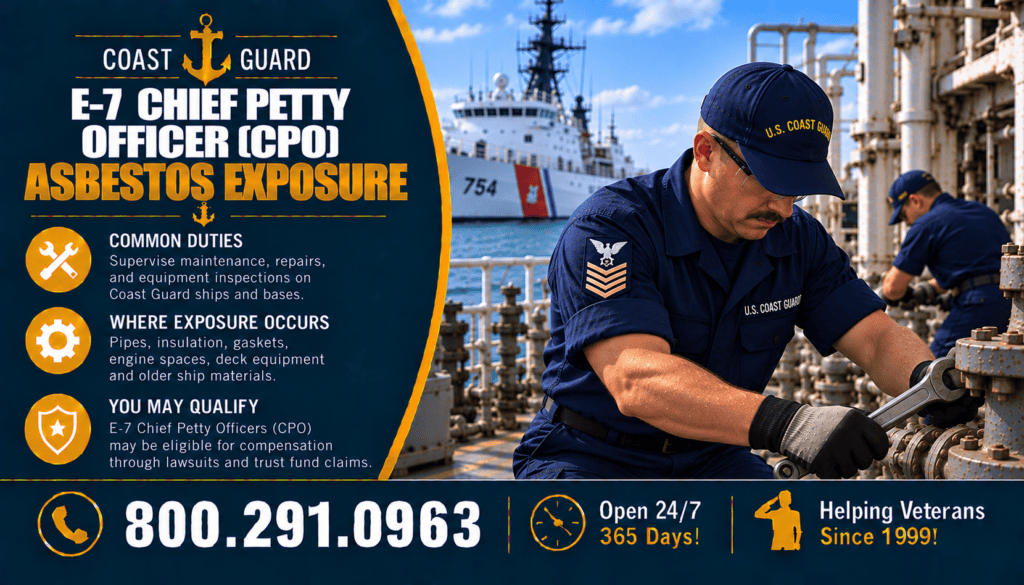
E-7 – Coast Guard Chief Petty Officer (CPO) Asbestos Exposure
⚠️ Asbestos Risks for Coast Guard Chief Petty Officer (CPO) Veterans
Coast Guard Chief Petty Officers (CPOs) serve as senior enlisted technical leaders responsible for overseeing all major engineering, mechanical, deck, electrical, and operational maintenance aboard Coast Guard cutters, small boats, stations, air stations, and shore facilities. Before the Coast Guard removed asbestos from ships and infrastructure in the 1990s, CPOs were routinely exposed to dangerously high concentrations of asbestos fibers—not only during hands-on work earlier in their careers but also throughout their leadership roles as chiefs.
CPOs supervise the very divisions that operate and maintain machinery containing asbestos, including turbines, boilers, pumps, valves, steam lines, exhaust systems, electrical panels, insulation materials, and ventilation systems. In addition, CPOs frequently oversee shipyard modernization projects, compartment rebuilds, and insulation removal operations—some of the most hazardous asbestos environments documented in Coast Guard history.
As a result, Coast Guard CPO veterans represent one of the highest-risk groups for long-term asbestos diseases, including mesothelioma, asbestos-related lung cancer, and asbestosis. This page explains their duties, exposures, and compensation options available today.
🛠 Typical Duties of a Coast Guard Chief Petty Officer (CPO)
🛳 Lead Technical Supervisor on Cutters & Stations
CPOs serve as senior enlisted managers for their entire work center or division. Responsibilities include:
-
managing daily and weekly maintenance schedules
-
assigning repair tasks to MKs, DCs, EMs, ETs, and BMs
-
supervising equipment troubleshooting
-
ensuring compliance with safety protocols
-
conducting training and overseeing junior personnel
-
coordinating inspections across multiple ship compartments
CPOs spend extensive time in engineering, deck, and electrical spaces—the same compartments with aging asbestos components.
⚙ Engineering Division Leadership
Many CPOs serve as Machinery Technicians (MKs), Damage Controlmen (DCs), and Electrician’s Mates (EMs). Their duties include:
-
directing propulsion system maintenance
-
overseeing boiler and auxiliary machinery operations
-
managing lubrication systems
-
supervising turbine, pump, and valve repairs
-
inspecting heat exchangers and fuel systems
These high-heat spaces were built with thick asbestos insulation that deteriorated continuously under vibration and temperature changes.
🔧 Overseeing Repairs Involving Asbestos-Containing Materials (ACM)
CPOs rarely perform all physical repairs themselves, but they:
-
supervise insulation removal
-
monitor valve and pump rebuilds
-
oversee gasket and packing replacement
-
inspect bulkhead, deck, and structural repairs
-
approve work in compartments containing ACM
Every one of these tasks can disturb asbestos, especially when crews scrape old insulation or tear out deteriorating lagging.
🛠 Managing Shipyard Modernization Projects
CPOs often act as the senior enlisted representative during:
-
hull repairs
-
dry dock overhauls
-
boiler replacement
-
lagging removal
-
compartment restructuring
-
electrical system upgrades
Shipyards contain some of the highest asbestos concentrations ever recorded due to constant demolition and insulation work.
💼 Damage Control & Firefighting System Oversight
CPOs ensure proper functioning of:
-
emergency fire suppression
-
insulated fire blankets
-
fireproof panels
-
emergency doors with asbestos gasketing
-
heat-protective equipment
-
structural integrity of watertight compartments
These components were frequently made with asbestos for heat resistance.
🔌 Electrical & Auxiliary System Management
Chief Electrician’s Mates and ET Chiefs worked with:
-
switchboards
-
arc-resistant panel insulation
-
wiring and motor controllers
-
emergency generators
-
high-voltage distribution systems
Electrical insulation and panel board materials commonly contained asbestos until the 1980s.
🧱 Asbestos Exposure Risks for CPO Veterans
1. Long-Term Exposure in Engineering Spaces
Engineering spaces contained the largest and most deteriorated asbestos installations, including:
-
pipe lagging
-
boiler insulation
-
turbine casings
-
pumps and valve housings
-
exhaust manifold coverings
-
refractory brick and thermal panels
CPOs frequently conducted inspections in these spaces—exposure that accumulated over years.
2. Supervising Repairs Involving ACM
CPOs oversaw technical teams performing:
-
gasket scraping
-
packing removal
-
insulation tear-outs
-
boiler rebuilds
-
pipe and valve replacements
Supervisors inhale asbestos even without directly touching the materials, since fibers remain airborne for hours.
3. Shipyard Modernization & Overhaul Projects
Shipyards historically contained extreme asbestos concentrations. CPOs present for:
-
lagging removal
-
compartment demolition
-
rewiring
-
bulkhead replacement
-
hull cutting
-
pipe trench opening
were exposed to contamination detectable throughout the yard.
4. Ventilation System Fiber Spread
Asbestos fibers released in engineering spaces spread through:
-
ductwork
-
intake vents
-
overhead plenums
-
fan rooms
CPOs inspecting ventilation or conducting safety checks were regularly exposed.
5. Deck & Structural ACM Materials
Ships contained asbestos in:
-
deck tiles
-
adhesives
-
overhead panels
-
bulkhead liners
-
non-skid coatings
-
fire-resistant materials
Even minor repairs could release fibers.
6. Firefighting Gear & Damage Control Equipment
CPOs regularly handled ACM-containing equipment:
-
fire blankets
-
insulated gloves
-
protective hoods
-
emergency heat shields
These materials shed fibers as they aged.
📊 Why Coast Guard CPO Veterans Have Strong Asbestos Claims
Length of Service Equals Higher Exposure
CPOs typically served long military careers, accumulating decades of exposure.
Supervisory Roles Intensify Exposure Duration
Chiefs spent more time in hazardous compartments than most junior ranks.
All Coast Guard Cutter Classes Contained ACM
High-endurance cutters, buoy tenders, patrol boats, and icebreakers all used extensive asbestos materials.
Shipyard Exposure Is Well-Documented
Dry dock periods are among the strongest evidence in legal claims.
📂 Evidence Used to Prove CPO Asbestos Exposure
📁 Service Records & Rating History
Verify compartments, cutter assignments, and supervisory roles.
🛳 Engineering Plans & Ship Technical Manuals
Identify:
-
pipe lagging
-
thermal blankets
-
ACM gaskets
-
electrical insulation
-
fireproof materials
🧰 Overhaul & Maintenance Logs
Shipyard and modernization efforts provide clear documentation of ACM exposure.
📜 Witness Statements
CPOs often supervised large teams, increasing available witnesses:
-
MKs
-
DCs
-
EMs
-
ETs
-
BMs
💼 Sample Compensation Awards for CPO Veterans
Case 1 — CPO Machinery Technician
Engine room & turbine exposure
Compensation: $3.9M
Case 2 — CPO Electrician’s Mate
Electrical panel insulation & ventilation ACM
Compensation: $3.3M
Case 3 — CPO Damage Control Chief
Shipyard modernization & insulation removal
Compensation: $4.1M
💙 Benefits Available for Coast Guard CPO Veterans
💵 Asbestos Trust Fund Compensation
Part of the $30+ billion available in national funds.
⚖ Claims Filed Against Asbestos Manufacturers
Not the Coast Guard itself.
❤️ Survivor Benefits
For families of CPOs who passed from asbestos-related diseases.
📞 Get Help Identifying Your Coast Guard CPO Asbestos Exposure
Chief Petty Officers were repeatedly exposed to asbestos across entire Coast Guard operations—from engine rooms to shipyards to compartment inspections. Even indirect exposure can cause disease decades later.
📞 Call 800.291.0963 for a free, confidential case review.