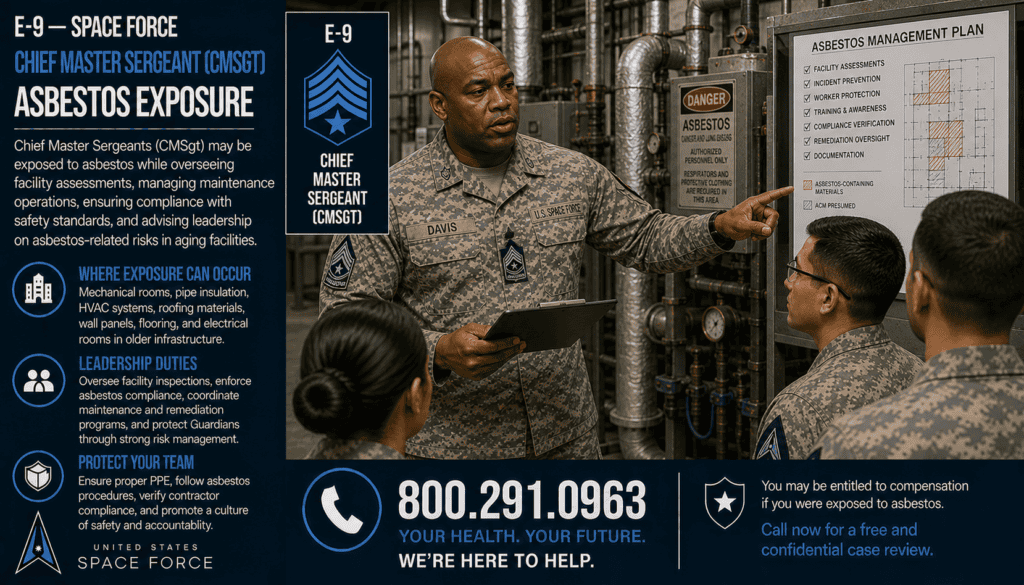
E-9 – Chief Master Sergeant of the Space Force (CMSSF)
🛠️ Senior enlisted leader for entire Space Force
Asbestos Exposure
⚠️ Exposure risks during inspections of older bases
⚠️ Legacy ACM flooring and ceiling materials
⚠️ Pre-1980 mechanical system insulation
Asbestos Exposure Risks for the Chief Master Sergeant of the Space Force (CMSSF)
The Chief Master Sergeant of the Space Force (CMSSF) is the highest-ranking enlisted member in the entire branch—responsible for advising the Chief of Space Operations, representing all enlisted Guardians, and touring bases worldwide to assess readiness, morale, and operational conditions. Because the Space Force still relies heavily on Air Force-era infrastructure, the CMSSF frequently enters older facilities that contain asbestos in insulation, flooring, panels, ducting, and mechanical systems.
During base visits, building inspections, facility walk-throughs, and meetings with unit leadership, the CMSSF is routinely exposed to deteriorating asbestos-containing materials (ACM). Even though the role is not hands-on, the breadth of facilities visited—many built before asbestos restrictions—creates long-term cumulative exposure risk.
The full scope of CMSSF leadership responsibilities
How older Air Force bases contain extensive asbestos materials
Why high-ranking enlisted leaders face cumulative exposure
Long-term health dangers
VA disability, asbestos trust fund eligibility, and legal options
The Service-Wide Leadership Role of the CMSSF
The CMSSF oversees enlisted standards, training, welfare, force development, and operational performance across the entire Space Force.
Typical Responsibilities of the CMSSF Include:
-
advising senior Space Force leadership on enlisted issues
-
touring Space Force and shared Air Force installations
-
inspecting living, training, and working conditions for Guardians
-
conducting facility walk-throughs during readiness evaluations
-
assessing environmental, infrastructure, and maintenance concerns
-
meeting with operational units inside secure facilities and hangars
-
reviewing issues related to building conditions and modernization
-
supporting policy decisions related to facility upgrades
These responsibilities require entering legacy structures where asbestos remains widespread.
Why the CMSSF Faced Asbestos Exposure
Exposure accumulated over years of base-wide inspections and facility evaluations, due to:
-
older bases built between the 1940s–1980s
-
worn flooring and ceiling materials containing asbestos
-
deteriorated mechanical system insulation
-
contaminated ventilation dust
-
access to mechanical rooms, hangars, dormitories, and radar stations
-
participation in renovation briefings inside pre-1980 buildings
Because the CMSSF tours every category of facility, exposure is significantly broader than that of most roles.
Exposure Source #1: Inspections of Older Bases
Many Space Force installations still occupy or share older Air Force buildings filled with ACM, including:
-
ceiling tiles
-
pipe insulation
-
HVAC duct linings
-
structural fireproofing
-
flooring adhesives
Risks to the CMSSF Include:
-
walk-throughs of aging buildings
-
inspections of work centers and mechanical rooms
-
meetings held in renovated or partially renovated spaces
-
exposure to airborne fibers from deteriorated materials
Even brief visits to multiple contaminated locations increase cumulative exposure levels.
Exposure Source #2: Legacy ACM Flooring and Ceiling Materials
Widely used asbestos materials include:
-
vinyl floor tile
-
linoleum backing
-
acoustic ceiling panels
-
sprayed structural coatings
-
drywall and joint compounds
How Exposure Occurs
-
cracked or lifting floor tiles releasing fibers
-
touches and vibrations disturbing brittle ceiling panels
-
dust accumulation inside occupied rooms
-
foot traffic agitating old flooring
The CMSSF enters far more facilities than typical enlisted members, expanding exposure odds.
Exposure Source #3: Pre-1980 Mechanical System Insulation
Mechanical and utility rooms—still used in many installations—contain:
-
asbestos pipe wrap
-
boiler insulation
-
steam line coverings
-
fireproof blankets
-
electrical component insulation
Risks for the CMSSF
-
overseeing environmental and safety inspections
-
entering restricted mechanical areas with leadership teams
-
exposure to dust from deteriorating insulation
-
proximity to aging equipment that vibrates and releases fibers
Mechanical rooms are among the highest asbestos-risk locations.
Long-Term Health Risks for CMSSF Personnel
Asbestos diseases often appear 20–50 years after exposure.
Major Conditions Include:
-
🫁 Mesothelioma
-
🫀 Asbestos-related lung cancer
-
🌫️ Asbestosis
-
🩻 Pleural plaques and fibrosis
Cumulative exposure at multiple bases significantly increases long-term risk.
VA Disability Benefits for the CMSSF
VA disability compensation is available for asbestos-related diseases linked to military service.
Evidence That Strengthens a CMSSF Claim:
-
records of installation visits and facility inspections
-
documentation of older Air Force facility use
-
renovation reports showing asbestos removal
-
statements from officers, NCOs, or facility managers
-
medical evidence linking disease to asbestos exposure
Mesothelioma automatically qualifies for 100% VA disability.
Asbestos Trust Fund & Legal Compensation
More than $30 billion remains in asbestos trust funds to compensate veterans exposed to ACM products—not the military.
Compensation Options Include:
-
💵 asbestos trust fund claims
-
⚖️ lawsuits against asbestos-product manufacturers
-
👨👩👧 survivor benefits for families
-
🎖️ VA disability benefits (separate from legal claims)
The CMSSF’s widespread exposure makes them eligible for multiple claims.
📞 Free Case Review for the Chief Master Sergeant of the Space Force
If you served as the CMSSF and later developed mesothelioma, asbestos lung cancer, or asbestosis, you may qualify for significant compensation.
📞 Call 800.291.0963 today for a free, confidential case review.
A specialist will review your inspection history, facility exposure patterns, and long-term service record to identify every compensation source available.