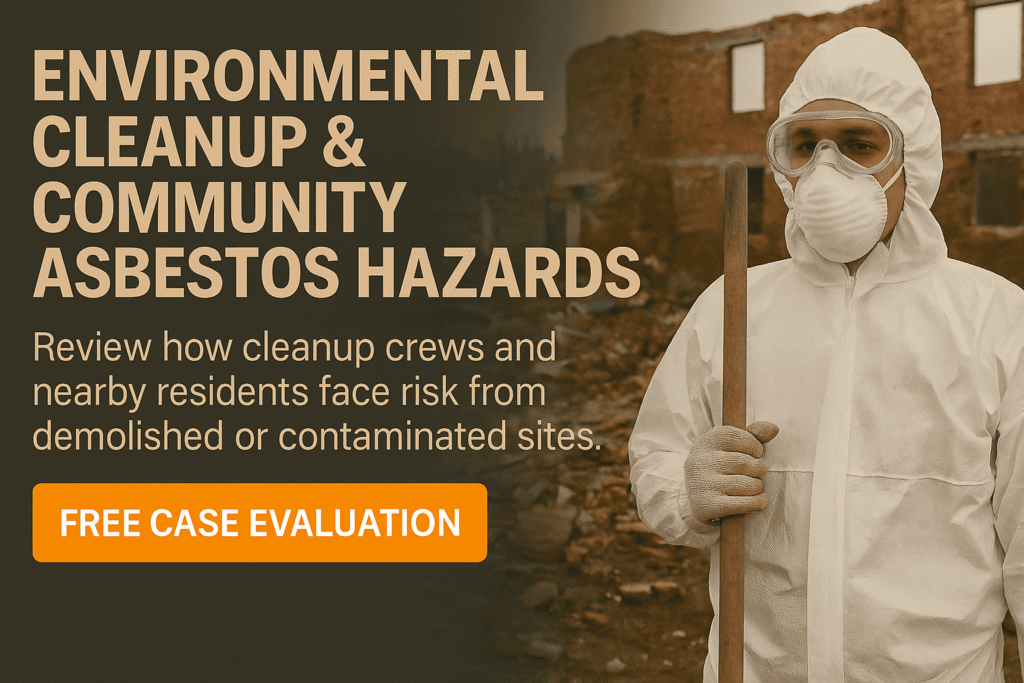
Environmental Cleanup & Community Asbestos Hazards
Asbestos exposure is not limited to industrial workers or people who handled insulation, boilers, or brake parts. Entire communities have been exposed to airborne fibers during environmental cleanup operations, building demolitions, natural disasters, mining activity, and abandoned industrial sites. Cleanup workers, volunteers, and even residents miles away can unknowingly inhale asbestos dust released from contaminated properties.
Understanding how these hazards occur—and how exposure affects both cleanup crews and surrounding neighborhoods—is essential for protecting your health and documenting potential claims.
If you or someone in your community may have been exposed, call 800.291.0963 for guidance and medical support.
🌍 Step 1: Why Community Asbestos Exposure Happens
Asbestos-containing materials (ACMs) were used in millions of buildings constructed before 1980. When these structures deteriorate, burn, collapse, or undergo demolition, asbestos fibers are released into surrounding air and soil.
📌 Common Causes of Community Exposure
-
Building demolitions
-
Natural disasters (fires, hurricanes, tornadoes, earthquakes)
-
Old industrial sites
-
Asbestos mines and processing plants
-
Landfills that accepted ACM waste
-
Renovations in public housing
-
School or municipal building abatement
-
Unregulated construction activity
Affected communities often see long-term exposure, especially when contaminated dust settles on vehicles, playgrounds, lawns, and window sills.
🏗️ Step 2: Environmental Cleanup Crews Face Extreme Exposure
Cleanup workers—both professional and volunteer—often enter unstable areas filled with dust and debris.
✔ High-Risk Cleanup Projects Include:
-
Demolishing old factories or power plants
-
Clearing debris after urban fires
-
Storm cleanup in older neighborhoods
-
Removing damaged schools or municipal buildings
-
Excavating contaminated soil
-
Restoring abandoned industrial land
-
Cleaning old naval bases or shipyards
These workers frequently disturb ACMs such as insulation, roofing, siding, gaskets, pipe coverings, and cement board—creating airborne fiber clouds.
🔥 Step 3: Natural Disasters Can Release Massive Amounts of Asbestos
Homes and buildings built before 1980 almost always contain some asbestos. During disasters, these materials break apart violently.
✔ Hurricane & Tornado Damage
-
High winds shred siding and roofing
-
Insulation scatters across yards and streets
-
Damaged water lines release asbestos pipe debris
✔ Wildfires
-
Heat fractures asbestos panels
-
Ash clouds carry fibers for miles
-
Firefighters and residents inhale airborne dust
✔ Earthquakes
-
Structural collapse sends asbestos dust into the air
-
Cracked ceilings, walls, and tiles release fibers
-
Rubble removal re-aerosolizes debris
These events often expose entire communities simultaneously.
🏚️ Step 4: Demolition Without Proper Controls Is Extremely Hazardous
Many older buildings contain asbestos in:
-
Floor tiles
-
Roofing shingles
-
Pipes and boilers
-
Drywall and joint compound
-
Acoustic ceiling tiles
-
Cement siding
-
HVAC duct insulation
-
Spray-on fireproofing
✔ When Demolition Is Done Incorrectly:
-
Heavy machinery pulverizes asbestos
-
Dust drifts into nearby neighborhoods
-
Fibers contaminate soil and vehicles
-
Residents breathe particles for days or weeks
Even a single unregulated demolition can contaminate multiple city blocks.
🌬️ Step 5: How Community Residents Become Exposed
People living near asbestos-contaminated sites may inhale fibers without ever stepping into the cleanup zone.
✔ Common Community Exposure Sources
-
Dust blowing from demolition sites
-
Contaminated soil tracked into homes
-
Old asbestos debris left in yards
-
Children playing near construction zones
-
Fibers entering ventilation systems
-
Nearby industrial sites releasing waste dust
-
Asbestos in older housing complexes undergoing repairs
Many residents are unaware that the dust settling on cars, porches, or clothing contains asbestos.
🧪 Step 6: Air Monitoring & Soil Testing Are Often Inadequate
Although EPA and state regulations require monitoring, many cleanup projects fail to meet standards.
Problems That Increase Exposure Risk
-
No perimeter air sampling
-
Delayed soil testing
-
Insufficient dust control measures
-
Untrained demolition contractors
-
Incomplete asbestos surveys
-
Failure to notify residents
-
Abandonment of contaminated lots
Communities may go months or years before realizing exposure occurred.
🚧 Step 7: Hidden Hazards at Abandoned Industrial & Military Sites
Abandoned factories, mills, shipyards, and military bases often contain huge quantities of asbestos.
✔ Common ACMs Left Behind Include:
-
Pipe insulation in boiler rooms
-
Damaged ceiling and wall panels
-
Old machinery covered in asbestos cloth
-
Underground asbestos cement pipes
-
Contaminated soil near disposal pits
Unauthorized entry—especially by children or teens—can result in exposure that goes unnoticed for decades.
👷 Step 8: Cleanup Workers Require Specialized Training
Professionals must follow strict asbestos-handling rules, but many contractors or volunteers lack this training.
✔ Proper Training Covers:
-
Identifying ACMs
-
Safe demolition practices
-
Respirator use
-
Wetting and encapsulation methods
-
HEPA vacuum cleanup
-
Decontamination procedures
-
Waste disposal regulations
When Training Is Lacking:
-
Cleanup dust becomes airborne
-
Workers spread fibers on clothing
-
Communities face increased contamination
Improper cleanup efforts are one of the biggest sources of community-wide exposure.
🧵 Step 9: Secondary Exposure Among Cleanup Crews & Families
Cleanup workers often track asbestos dust home on:
-
Boots
-
Gloves
-
Jeans
-
Jackets
-
Hair
-
Vehicle seats
Families Face Exposure When:
-
Workers enter the home before changing
-
Dust falls off clothing into carpets
-
Children hug dust-covered parents
-
Laundry machines release fibers into the air
Secondary exposure is a known cause of mesothelioma in spouses and children.
📁 Step 10: How Residents & Cleanup Workers Can Document Exposure
Documentation is critical for medical care and compensation.
✔ Keep Records Of:
-
Dates of cleanup or demolition
-
Photos of dust or debris
-
Notices from city officials
-
News reports or public warnings
-
Property addresses affected
-
Visible asbestos-containing materials
-
Contractors working the site
-
PPE used (or not used)
✔ Cleanup Workers Should Collect:
-
Pay stubs
-
Work orders
-
Training records
-
Crew logs
-
Project lists
-
Air monitoring reports
The more documentation available, the stronger the case.
🩺 Step 11: Medical Monitoring for Exposed Residents & Workers
Anyone potentially exposed should undergo long-term medical screening.
✔ Recommended Tests:
-
Baseline chest X-ray
-
Pulmonary function tests
-
CT scans if abnormalities appear
-
Mesothelioma biomarker tests
-
Annual follow-up exams
Diseases often appear decades after exposure, so ongoing monitoring is critical.
🏥 Where to Get Help
We help residents, community members, and cleanup workers by:
-
Documenting possible exposure
-
Identifying dangerous demolition or disaster zones
-
Connecting you with mesothelioma specialists
-
Supporting legal and environmental claims
-
Reviewing air testing and soil sampling records
-
Filing asbestos trust fund compensation claims
📞 Call 800.291.0963 to speak with an advocate who understands environmental asbestos hazards.
📝 Summary
Environmental cleanup sites—and the communities surrounding them—face serious asbestos risks during demolition, natural disasters, and industrial contamination. When older buildings or properties are disturbed, hazardous fibers can spread across neighborhoods and affect both workers and residents.
Key Takeaways
-
Cleanup workers face high exposure during demolition and disaster response
-
Residents can be exposed through airborne dust, soil, and building debris
-
Improper demolition spreads asbestos across communities
-
Natural disasters release huge amounts of asbestos fibers
-
Documentation and medical screening are essential
-
Both workers and residents may qualify for compensation
To begin documenting your exposure and protecting your health, call 800.291.0963 today.