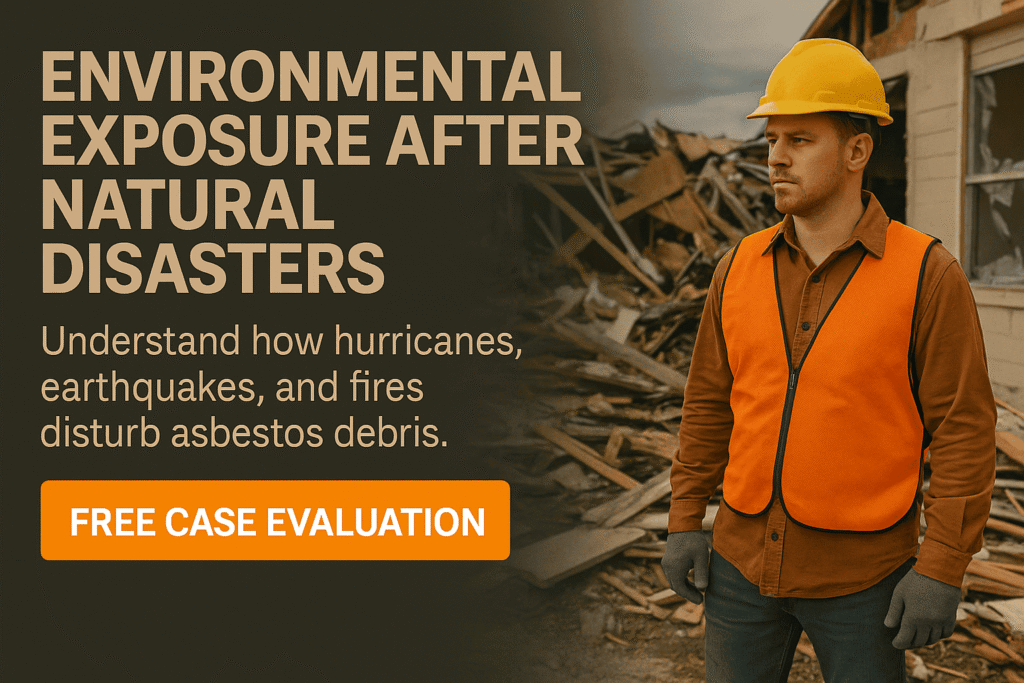
Environmental Exposure After Natural Disasters
Natural disasters—such as hurricanes, earthquakes, tornadoes, floods, and wildfires—can release dangerous asbestos fibers into the air by damaging older buildings, underground pipelines, industrial sites, and community structures. When walls collapse, roofing crumbles, or fire destroys insulation, asbestos-containing materials (ACMs) break apart and become airborne, creating severe exposure risks for residents, cleanup crews, emergency responders, and rebuilding workers.
These exposures are often unexpected, widespread, and unmonitored. Many people do not realize they inhaled asbestos until decades later—when symptoms of mesothelioma or lung disease appear.
If you or your community was impacted by a natural disaster, call 800.291.0963 to learn how to document environmental exposure and protect your health.
🌪️ Step 1: How Natural Disasters Release Asbestos
Asbestos was used heavily in construction from the 1920s through the 1980s. When disasters strike, brittle, aging building materials shatter and release fibers.
Asbestos-Containing Materials Commonly Disturbed During Disasters
-
Pipe and boiler insulation
-
Drywall joint compound
-
Roofing shingles
-
Siding and transite panels
-
Ceiling tiles
-
Floor tiles and mastic
-
HVAC duct insulation
-
Electrical cloth and wiring insulation
-
Cement water pipes
-
Fireproofing sprays
Once released, these fibers can linger in the air for days and settle on soil, debris, and personal belongings.
🔥 Step 2: Wildfires and Structural Fires — Extreme Asbestos Hazards
Fires are among the most destructive and dangerous asbestos events.
Why Fires Create Massive Exposure:
-
Extreme heat pulverizes asbestos insulation
-
Roofing and siding explode into airborne dust
-
Firefighters disturb debris during suppression
-
Winds carry fibers into surrounding neighborhoods
-
Burnt structures collapse, releasing insulation clouds
-
Ash piles contain concentrated asbestos particles
At-Risk Groups Include:
-
Residents living near fire zones
-
Firefighters and fire investigators
-
Cleanup volunteers
-
Insurance adjusters
-
Rebuilding contractors
-
Public-works crews
After major wildfires, entire communities can experience contaminated air, soil, and household debris.
🌊 Step 3: Hurricanes & Flooding — Hidden Asbestos in Debris Fields
Hurricanes and major storms create widespread destruction, breaking apart older homes, businesses, and industrial sites.
How Hurricanes Spread Asbestos:
-
Storm surge shreds drywall and flooring
-
High winds strip off asbestos roof shingles
-
Floodwaters break apart insulation and pipe wrap
-
Contaminated debris piles accumulate for miles
-
Cleanup crews remove debris without knowing what contains asbestos
Because flooding saturates materials, cleanup often requires tearing out:
-
Water-soaked carpet and tile
-
Damaged wallboard
-
Broken HVAC systems
-
Destroyed boilers and furnaces
-
Collapsed ceilings
Each step disturbs dust-filled ACMs.
🏚️ Step 4: Earthquakes & Tornadoes — Instant Structural Collapse
Earthquakes and tornadoes can tear buildings apart in seconds.
Asbestos Exposure Occurs When:
-
Walls collapse
-
Floors crumble
-
Piping cracks
-
Factories and refineries rupture
-
Electrical panels explode
-
Roofs shear off
This results in instant airborne contamination, often in densely populated areas.
Workers at Risk After These Events:
-
Search-and-rescue teams
-
Heavy-equipment operators
-
Municipal cleanup staff
-
Utility restoration crews
-
Construction workers
-
Volunteers handling debris piles
Without proper protective equipment, these workers inhale fibers stirred up by collapse zones.
🚧 Step 5: Disaster Debris Removal — The Highest Risk Phase
Cleanup operations involve huge amounts of broken materials.
Cleanup Tasks that Disturb Asbestos:
-
Using excavators to scoop debris
-
Pushing rubble with bulldozers
-
Cutting through collapsed walls
-
Demolishing unsafe structures
-
Sorting debris for disposal
-
Breaking apart flooring or roof remnants
The Danger:
Mechanical equipment creates massive dust clouds, and most debris is dry. Unless workers wear approved respirators and HEPA filtration is used, exposures can reach dangerously high levels.
👷 Step 6: Emergency Responders Face Repeated Exposure
Firefighters, EMTs, police officers, and volunteers often enter disaster scenes without knowing asbestos is present.
Repeated Risks Include:
-
Breathable dust during search-and-rescue
-
Entering partially collapsed buildings
-
Disturbing insulation while clearing access paths
-
Handling victims and equipment coated in dust
-
Setting up command centers in contaminated areas
After 9/11, thousands of first responders developed chronic illness due to airborne asbestos and toxic dust—showing how serious this risk can be.
🧪 Step 7: Environmental Testing After Disasters
After disaster events, governments often conduct large-scale testing.
Testing Methods Include:
-
Air sampling using pumps and filters
-
Soil sampling from yards and debris piles
-
Bulk testing of charred or damaged materials
-
Water testing (less common but required after industrial floods)
Common Post-Disaster Requirements:
-
EPA clearance testing
-
Asbestos air monitoring around demolition sites
-
Community warnings and safety bulletins
-
Rules for debris disposal at approved landfills
However, testing may be delayed or inconsistent—leaving many residents unaware of risk.
🏠 Step 8: Contamination of Homes, Clothing & Personal Items
After a hurricane or wildfire, asbestos fibers can settle on:
-
Furniture
-
Clothing
-
Children’s toys
-
Carpets
-
Air vents
-
Soil in yards
-
Vehicles
-
Sheds and garages
Disturbing these items during cleanup re-releases asbestos.
Important Warning:
Regular household vacuums cannot remove asbestos; they blow fibers back into the air.
Professional abatement is required.
🧰 Step 9: How Cleanup Teams Stay Safe — Best Practices
EPA and OSHA offer strict guidelines for disaster cleanup.
Required Safety Practices:
-
NIOSH-approved respirators (P100 or HEPA filters)
-
Disposable coveralls and gloves
-
Wet methods to suppress dust
-
HEPA vacuums for debris removal
-
Segregated debris piles for suspected ACMs
-
Avoiding dry sweeping or leaf blowers
-
Controlled demolition instead of brute-force removal
Proper training dramatically reduces exposure—but many volunteers don’t receive it.
📁 Step 10: Documenting Exposure After a Disaster
If you lived, worked, or participated in cleanup efforts after a disaster, documentation greatly strengthens future claims.
Collect:
-
Photos of property damage
-
Lists of buildings destroyed
-
Local government contamination reports
-
FEMA inspection documents
-
Air monitoring results
-
Hospital or clinic visits
-
Work orders (for firefighters or utility crews)
-
Volunteer logs
Attorneys can cross-reference this with known ACMs in your region.
🩺 Step 11: Medical Monitoring After Environmental Asbestos Exposure
Even low-level “one-time” exposure during a disaster can increase cancer risk.
Recommended Screening Includes:
-
Chest X-ray
-
HRCT scan (most sensitive test)
-
Pulmonary function tests
-
Blood biomarkers (mesothelin, fibulin-3)
-
Annual checkups for respiratory symptoms
Symptoms may not appear until 20–50 years later.
🏥 Where to Get Help
If you believe you inhaled asbestos after a natural disaster, we can help you:
-
Document exposure for future claims
-
Obtain local air and soil contamination reports
-
Connect with asbestos disease specialists
-
File trust-fund or disaster-related claims
-
Understand cleanup guidelines for your home
-
Access medical screening programs
📞 Call 800.291.0963 today to speak with an asbestos exposure advocate.
📝 Summary
Natural disasters can destroy older structures and industrial sites, releasing asbestos into the environment. Hurricanes, wildfires, earthquakes, and tornadoes disturb roofing, siding, insulation, flooring, and cement panels—sending microscopic fibers into the air. Cleanup crews, first responders, residents, and volunteers face the highest risk. Proper documentation, testing, and medical monitoring are essential for long-term health.
Key Takeaways
-
Disasters disturb asbestos-containing materials in older buildings
-
Wildfires and hurricanes create large airborne contamination zones
-
Emergency responders often face repeated exposure without protection
-
Cleanup operations generate high fiber levels
-
Testing and proper cleanup methods prevent re-contamination
-
Medical screening is essential for early detection
To document disaster-related asbestos exposure, call 800.291.0963 now.