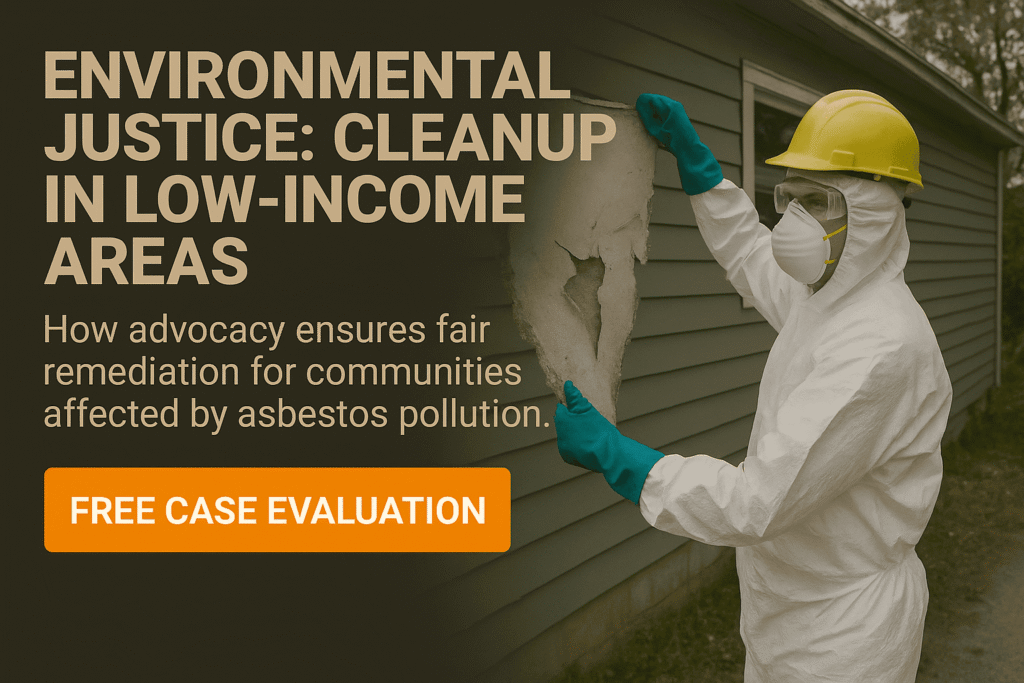
Environmental Justice: Cleanup in Low-Income Areas
Across the United States, low-income neighborhoods and historically marginalized communities are disproportionately affected by asbestos contamination. Old housing, abandoned industrial sites, aging public buildings, and unregulated demolitions often occur in areas where residents have fewer resources, weaker political influence, and limited access to healthcare. As a result, these communities face higher environmental burdens—but receive slower, less thorough cleanup efforts.
Environmental justice advocacy works to ensure fair, equal, and transparent remediation so every community receives safe living conditions and protection from asbestos exposure.
If you or your community has been affected by asbestos pollution, call 800.291.0963 for support, documentation help, and guidance.
⚖️ Step 1: Understanding Environmental Justice in Asbestos Cleanup
Environmental justice (EJ) refers to the fair treatment of all communities—regardless of income, race, or geographic location—when it comes to environmental protection and cleanup.
📌 Why Low-Income Communities Face Higher Asbestos Risks
-
Older housing stock built before 1980
-
More abandoned factories and industrial lots
-
Schools and public buildings overdue for renovations
-
Substandard landlord maintenance
-
Lack of political pressure on agencies
-
Fewer resources to challenge unsafe cleanup activities
These factors create long-term exposure risks that wealthier neighborhoods rarely face.
🏚️ Step 2: Why Asbestos Pollution Is More Common in Low-Income Areas
Asbestos was heavily used in industries—steel production, shipyards, textile mills, refineries, power plants—that were often located near low-income communities.
✔ Key Sources of Asbestos in These Neighborhoods
-
Crumbling apartment complexes
-
Public housing units
-
Abandoned industrial buildings releasing dust
-
Improper demolitions without containment
-
Burned-out buildings after fires
-
Old schools with damaged insulation
-
Factories converted into housing without proper abatement
✔ Environmental “Hot Spots” in Disadvantaged Areas
-
Former mines
-
Manufacturing zones
-
Industrial corridors
-
Railroad yards
-
Old shipyard-adjacent neighborhoods
Residents may live within blocks of contaminated land without knowing.
💨 Step 3: How Asbestos Exposure Impacts Residents
Once airborne, asbestos fibers can drift for long distances and settle on:
-
Porches
-
Window sills
-
Sidewalks
-
Yards
-
Playgrounds
-
Vehicles
-
School grounds
Health Risks Increase When:
-
Buildings crumble without abatement
-
Contractors skip protective measures
-
Residents do not receive evacuation notices
-
Landlords delay repairs
-
Local governments lack enforcement
Chronic, low-level exposure in community settings can still cause mesothelioma decades later.
🚧 Step 4: Improper Demolition Is a Major Driver of Inequity
In many low-income neighborhoods, demolitions occur at a faster rate due to aging housing stock and urban redevelopment efforts.
📌 Common Demolition Failures in Disadvantaged Areas
-
No asbestos inspection before demolition
-
Dry demolition without wetting materials
-
Use of unlicensed contractors
-
Dust plumes drifting into residential streets
-
Children walking through contaminated debris
-
Insufficient fencing around demolition zones
-
Improper disposal at illegal dumping sites
These failures can contaminate entire communities.
🌪️ Step 5: Natural Disasters Hit Vulnerable Communities Harder
When hurricanes, floods, or fires strike, rebuilding often happens slower in low-income neighborhoods—and asbestos from wreckage can sit for months.
✔ High-Risk Disaster Scenarios
-
Tornadoes ripping apart old homes
-
Urban fires destroying asbestos-laden buildings
-
Hurricanes flooding basements with asbestos tile
-
Earthquakes collapsing aging structures
-
Slow or underfunded cleanup efforts
In many cases, residents remain in contaminated environments while wealthier areas are cleaned first.
🧪 Step 6: Why Air & Soil Testing Is Often Insufficient
Regulatory agencies may fail to perform adequate testing in disadvantaged neighborhoods due to budget limitations or lack of enforcement.
✔ Common Problems
-
No perimeter air sampling
-
Delayed soil analysis
-
Limited community notification
-
No follow-up testing after demolition
-
Outdated equipment or insufficient staffing
-
Agencies relying on self-reporting from contractors
As a result, residents may live with contamination long after cleanup crews leave.
💼 Step 7: How Advocacy Makes Cleanup More Equitable
Community groups and environmental justice organizations work to ensure fair treatment.
✔ Advocacy Goals Include:
-
Mandatory asbestos inspections before demolition
-
Transparent air and soil monitoring
-
Public disclosure of contamination levels
-
Relocation support for residents during cleanup
-
Enforcement of EPA and OSHA rules
-
Penalties for noncompliant contractors
-
Funding for safer remediation in underserved communities
Grassroots advocacy is often the only reason contaminated sites receive proper attention.
📢 Step 8: How Residents Can Take Action
Residents can play a powerful role in ensuring safe cleanup practices.
✔ Steps Communities Can Take
-
Attend city council and zoning meetings
-
Request asbestos inspection reports
-
Document unsafe demolitions with photos/videos
-
File complaints with local health departments
-
Petition for EPA or state involvement
-
Organize neighborhood environmental groups
-
Reach out to legal and nonprofit support organizations
Sanctions Can Be Imposed When:
-
Contractors violate asbestos removal laws
-
Local governments skip required testing
-
Developers demolish without permits
Community pressure often leads to faster and safer cleanup.
🧾 Step 9: Documenting Exposure for Legal or Medical Claims
If asbestos contamination occurred in your neighborhood, documenting it is essential.
✔ Keep Records Of:
-
Demolition notices
-
Community complaint filings
-
Photos or videos of dust clouds
-
Testing reports
-
Addresses of contaminated buildings
-
Dates of exposure events
-
Evacuation notices (or lack of notices)
-
Symptoms or medical evaluations
Even small pieces of evidence can strengthen exposure claims.
🩺 Step 10: Medical Monitoring for Exposed Communities
Doctors recommend long-term monitoring for residents exposed to asbestos from environmental sources.
✔ Recommended Tests Include:
-
Baseline chest X-ray
-
Pulmonary function test
-
CT scan if abnormalities appear
-
Mesothelioma biomarker testing
-
Annual follow-up visits
Diseases like mesothelioma, lung cancer, and pleural thickening may not appear for decades—but early detection improves outcomes.
🏥 Where to Get Help
If your community believes it has been exposed to asbestos, we can help you:
-
Document neighborhood exposure
-
Review hazardous demolition practices
-
Request EPA or state testing reports
-
Support environmental justice advocacy
-
Connect residents to mesothelioma specialists
-
File community-based or individual claims
-
Explore asbestos trust fund compensation
-
Assist with relocation documentation if needed
📞 Call 800.291.0963 today to speak with an environmental exposure advocate.
📝 Summary
Low-income communities experience higher rates of asbestos contamination due to old buildings, industrial sites, improper demolitions, and delayed cleanup efforts. Environmental justice seeks to ensure all neighborhoods receive equal protection, transparent remediation, and fair treatment.
Key Takeaways
-
Older buildings and industrial zones in low-income areas release asbestos
-
Improper demolition and natural disasters increase risk
-
Many communities lack adequate testing and cleanup
-
Advocacy pushes agencies and contractors to follow safety laws
-
Residents can document exposure for legal and medical support
-
Medical monitoring is essential for long-term health protection
To begin documenting exposure or to advocate for safe cleanup in your community, call 800.291.0963 now.