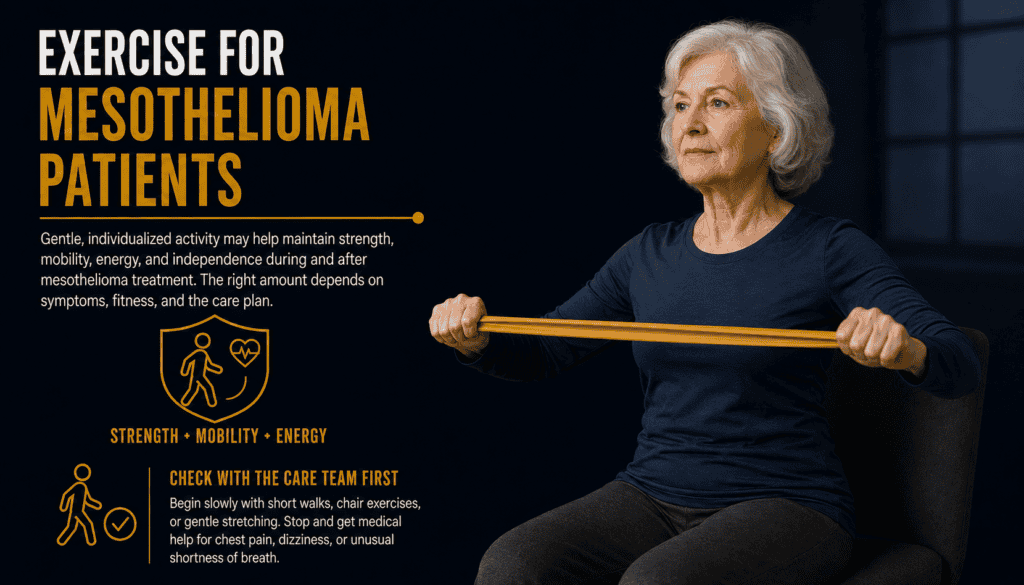
🏃 Exercise for Mesothelioma Patients
Regular, gentle exercise is one of the most effective ways to support your body and mind during mesothelioma treatment. When guided by your medical team, physical activity can help boost endurance, maintain muscle strength, reduce fatigue, and improve mood throughout every stage of care.
This guide provides safe, evidence-based fitness recommendations designed specifically for mesothelioma patients — helping you stay active, strong, and confident during treatment and recovery.
📞 Need help right now? Call 800.291.0963 for free answers and guidance today.
💪 Step 1: Why Exercise Matters During Treatment
Mesothelioma and its treatments can cause weakness, loss of muscle mass, and fatigue. Staying active helps offset these effects while supporting your immune system and overall recovery.
Key benefits of regular exercise include:
-
💨 Improved lung function and oxygen flow.
-
⚡ Reduced fatigue and increased daily energy.
-
💪 Preservation of muscle mass and flexibility.
-
🧠 Enhanced mood and mental focus.
-
❤️ Better sleep and stress management.
Goal:
To stay mobile and strong in a way that’s safe, comfortable, and consistent with your treatment plan.
🧑⚕️ Step 2: Working With Your Care Team
Before beginning any exercise program, speak with your oncologist or rehabilitation specialist. They’ll help determine your limits and design a routine based on your treatment type, surgery history, and energy levels.
Your care team may include:
-
🩺 Oncologist: Ensures exercise fits with your current treatment schedule.
-
🧘 Physical therapist: Guides safe stretching and strength exercises.
-
💨 Pulmonary rehabilitation specialist: Helps improve breathing capacity.
-
❤️ Occupational therapist: Rebuilds endurance for daily activities.
Pro Tip:
Always start slow — progress is measured in consistency, not intensity.
🦶 Step 3: Best Types of Exercise for Mesothelioma Patients
Not all exercises are suitable for everyone. The safest and most effective routines focus on low-impact, gradual movements that improve circulation and breathing.
Recommended exercises include:
-
🚶 Walking: Boosts stamina and strengthens legs and heart.
-
🧘 Yoga or stretching: Increases flexibility and calms the nervous system.
-
🧍 Tai chi: Combines slow motion with deep breathing to reduce stress.
-
🏋️ Light resistance training: Preserves muscle tone with small weights or bands.
-
💨 Breathing exercises: Expands lung capacity and improves oxygen delivery.
Pro Tip:
Alternate between strength, flexibility, and endurance activities to keep your body balanced.
🩺 Step 4: Breathing and Posture Exercises
Mesothelioma can make deep breathing more difficult, especially for patients with pleural involvement. Specific breathing exercises can help relieve tightness and improve lung expansion.
Try these simple techniques:
-
💨 Diaphragmatic breathing: Breathe deeply into your abdomen to strengthen the diaphragm.
-
🫁 Pursed-lip breathing: Exhale slowly through pursed lips to control airflow.
-
🧘 Chest expansion stretches: Open your rib cage gently by lifting arms and inhaling deeply.
-
🪑 Seated posture correction: Sit upright with shoulders relaxed to support lung function.
Why it helps:
Better breathing increases energy levels and reduces shortness of breath during daily activity.
🏋️ Step 5: Strength Training for Stability and Mobility
Chemotherapy and inactivity can cause muscle loss and weakness. Strength training helps maintain balance and physical confidence.
Safe muscle-building options:
-
🪑 Chair-based arm curls or leg lifts.
-
🧘 Light resistance bands for arms, shoulders, and chest.
-
🏋️ Small hand weights for upper-body strength.
-
🧍 Wall push-ups to build endurance without strain.
Pro Tip:
Perform slow, controlled movements and rest between sets. Stop immediately if you feel pain, dizziness, or shortness of breath.
🧘 Step 6: Gentle Aerobic Activity for Energy and Mood
Aerobic (cardio) exercises help your heart and lungs work more efficiently while reducing fatigue and anxiety.
Low-impact options include:
-
🚶 Short outdoor walks or treadmill strolls.
-
🧭 Stationary cycling on low resistance.
-
💃 Light dancing or movement to soft music.
-
🌅 Morning stretching routines to start the day energized.
Why it helps:
Aerobic movement releases endorphins — natural mood boosters that also improve circulation and oxygen supply to tissues.
🧠 Step 7: Managing Fatigue and Listening to Your Body
Fatigue is one of the most common side effects of mesothelioma treatment. The key is balancing rest with movement.
Tips for safe energy management:
-
🕒 Exercise at your strongest time of day (often morning).
-
🛋️ Rest between short sessions instead of pushing through exhaustion.
-
💧 Stay hydrated before and after activity.
-
🥗 Eat light, protein-rich snacks for sustained energy.
-
💤 Get 7–9 hours of quality sleep nightly.
Pro Tip:
Remember — even small movements count. Gentle consistency yields long-term benefits.
🌿 Step 8: Emotional and Mental Health Benefits
Exercise does more than strengthen the body — it also lifts the spirit. Regular activity helps release tension, reduces depression, and gives patients a sense of control during treatment.
Emotional benefits include:
-
❤️ Greater confidence and positivity.
-
🧘 Improved focus and relaxation.
-
🧠 Reduced anxiety and fear of treatment.
-
🌙 Better sleep and reduced insomnia.
Goal:
To make movement part of your emotional healing process as well as your physical one.
🤝 Where to Get Help
If you’re ready to begin exercising during treatment, our advocates can connect you with oncology rehabilitation specialists, certified physical therapists, and exercise physiologists who design safe, personalized plans for mesothelioma patients.
📞 Call 800.291.0963 to speak with a Mesothelioma Help Center advocate today.
🧭 Summary
Exercise for mesothelioma patients is a powerful tool for maintaining strength, energy, and emotional balance during treatment. With doctor-approved routines that focus on breathing, flexibility, and endurance, you can enhance recovery and improve your quality of life at every stage.
You are not alone — professional guidance and compassionate support are only one call away.
800.291.0963