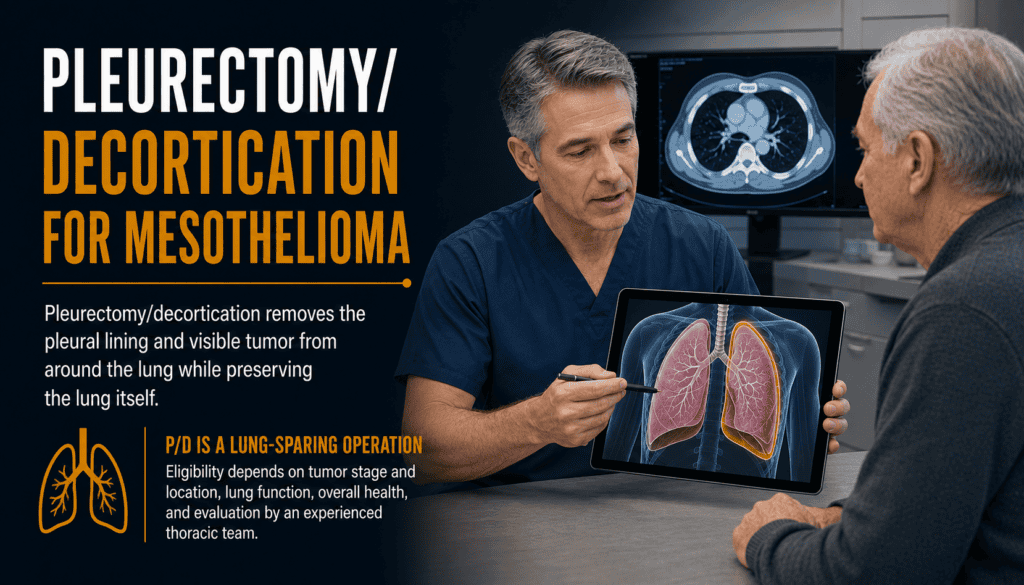
🫁 What Is Extrapleural Pneumonectomy (EPP)?
A Radical Surgery to Treat Advanced Pleural Mesothelioma
Extrapleural pneumonectomy (EPP) is an aggressive surgical procedure used to treat pleural mesothelioma by removing the affected lung and nearby tissues. It aims to eliminate all visible tumors and slow the progression of this aggressive cancer.
EPP is typically considered for younger, healthier patients with early-stage disease and epithelioid cell type, where the cancer is localized and has not spread to distant organs.
Source: National Cancer Institute
🪡 What Happens During EPP Surgery?
EPP is performed under general anesthesia and may take up to 10 hours. It includes:
-
Removal of the affected lung
Entire lung is removed along with its pleura (lining), which harbors mesothelioma cells. -
Removal of diaphragm and pericardium
If cancer has spread, these are also removed and reconstructed with surgical mesh. -
Lymph node dissection
Nearby lymph nodes are examined and often removed to assess cancer spread.
The goal is to achieve macroscopic complete resection — removing all visible tumor tissue.
🧬 Who Is Eligible for EPP?
EPP is typically reserved for:
-
Stage 1 or 2 pleural mesothelioma patients
-
Those with epithelioid mesothelioma (less aggressive type)
-
Patients in strong cardiovascular and respiratory health
-
Individuals without spread to other organs
-
Those who can tolerate lung removal
Extensive pre-surgical evaluations are required, including imaging, lung function tests, and cardiac clearance.
✅ Benefits of EPP
Although high-risk, EPP offers key advantages:
-
Removes all visible tumors in one surgery
-
May improve long-term survival in select patients
-
Helps reduce cancer recurrence in the chest cavity
-
Can be combined with heated chemotherapy (HITHOC) or radiation
-
May offer better disease control in aggressive cases
⚠️ Risks and Recovery
EPP is a major operation with significant risks:
-
Blood loss and infection
-
Heart or lung complications
-
Respiratory failure
-
Long recovery (3–6 months)
-
Reduced lung capacity (permanent)
Hospital stays typically last 10–14 days. Pulmonary rehabilitation is often required post-surgery.
📊 Survival Outcomes After EPP
Survival depends on stage, cell type, and other treatments:
-
Median survival with EPP + additional therapy: 18–24 months
-
3-year survival: ~30% for early-stage patients
-
Best outcomes seen in epithelioid cell type and when combined with chemotherapy or radiation
Some long-term survivors live 3–5+ years, especially when EPP is part of a multimodal treatment plan.
Source: Journal of Thoracic Surgery
🔬 EPP in Clinical Trials
New studies are improving EPP safety and outcomes:
-
Heated chemotherapy (HITHOC) post-EPP
-
Pre-surgery immunotherapy or radiation
-
Enhanced recovery protocols
-
Robotic-assisted techniques (in experimental phases)
Find ongoing studies at ClinicalTrials.gov.
💰 Cost and Financial Concerns
EPP is costly and often requires out-of-state specialists:
-
Surgery and hospitalization: $100,000–$250,000
-
Rehab, imaging, medications, and follow-up care
-
Travel and lodging if care is out-of-network
Legal compensation may ease financial strain.
👨⚖️ How a Mesothelioma Lawyer Can Help
An experienced mesothelioma attorney can:
-
Identify where asbestos exposure occurred
-
Help secure asbestos trust fund or lawsuit compensation
-
Fund travel, surgery, rehab, and long-term care
-
Assist with VA surgical claims for veterans
-
Charge no legal fees unless you win your case
📞 Free Legal Help for EPP Patients
If you or a loved one underwent EPP surgery for mesothelioma, legal help can cover costs and lost wages.
Call Now: 800.291.0963
• No upfront charges
• No legal cost unless you win
• Surgery-related travel and exposure review included
• Support for veterans, workers, and families
Or request help online 24/7