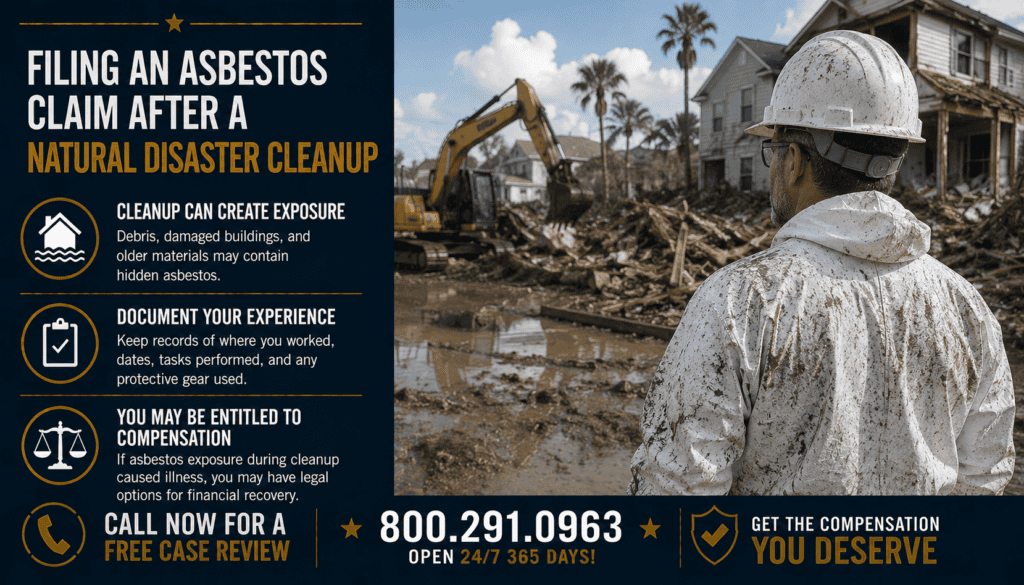
🌪️ Filing an Asbestos Claim After a Natural Disaster Cleanup
Learn legal protections for cleanup workers and volunteers exposed during storm or wildfire recovery projects.
Natural disasters — including hurricanes, tornadoes, wildfires, earthquakes, and floods — often destroy older buildings that contain asbestos. When walls collapse, roofs break apart, and insulation burns or crumbles, microscopic asbestos fibers are released into the air. Cleanup workers, volunteers, homeowners, firefighters, and community members can inhale these fibers during recovery efforts, even with short-term exposure.
This guide explains how asbestos exposure occurs after natural disasters, what legal protections apply to workers and volunteers, and how to pursue compensation if you later develop an asbestos-related disease.
For immediate help, call 800.291.0963.
🔥 How Natural Disasters Release Asbestos Into the Environment
When older structures fail during a disaster, asbestos-containing materials (ACMs) break apart, creating dangerous airborne dust clouds.
Common asbestos materials disturbed during disasters include:
-
Pipe insulation and boiler wrap
-
Vinyl flooring tiles
-
Popcorn ceilings
-
Roofing shingles and felt
-
Cement siding and backer board
-
HVAC duct insulation
-
Fireproofing sprays
-
Asbestos-containing wallboard and joint compound
Disasters most likely to trigger widespread asbestos release:
-
Wildfires — high heat burns asbestos materials, sending fibers into the air.
-
Hurricanes & tropical storms — flooding weakens structures and debris removal spreads dust.
-
Tornadoes — violent winds pulverize older buildings.
-
Earthquakes — collapsing structures release insulation and plaster dust.
-
Floods — water damage breaks down ACMs, making them friable.
When responders and volunteers enter the area to clean debris, rebuild, or assist families, they may unknowingly breathe in asbestos fibers.
🧹 Who Is Most at Risk During Post-Disaster Cleanup?
Asbestos exposure after natural disasters affects a wide range of individuals.
High-risk groups include:
-
Professional cleanup crews
-
Disaster-response volunteers
-
Homeowners clearing debris
-
Firefighters
-
Utility and power-grid workers
-
Construction contractors
-
Mold-remediation teams
-
Public-works employees
-
Emergency medical responders
-
National Guard personnel assisting recovery
Many of these individuals work without respiratory protection at the earliest stages of recovery — exactly when asbestos risk is highest.
⚠️ Why Asbestos Exposure Is So Dangerous During Cleanup
During normal building renovations, asbestos removal is regulated, contained, and performed by licensed abatement contractors.
During disasters, none of these controls may exist.
Exposure is especially dangerous because:
-
Buildings collapse without warning
-
Materials become friable (easily crumbled)
-
Large debris fields scatter fibers across communities
-
Wind spreads asbestos dust across blocks or miles
-
PPE may be unavailable or improperly fitted
-
Volunteers may have no safety training
-
No one knows which materials contain asbestos until after the disaster
Even low-dose exposure during short cleanup shifts has led to mesothelioma decades later.
📜 What Legal Protections Apply to Disaster Cleanup Workers and Volunteers?
The law recognizes that disaster cleanup carries unique risks. Multiple regulatory agencies oversee asbestos-safety rules.
Key protections include:
1. OSHA Emergency Response Standards
OSHA requires employers working in disaster zones to protect workers by providing:
-
Respiratory protection
-
Hazard training
-
Personal protective equipment (PPE)
-
Safe cleanup protocols
-
Air-monitoring (when feasible)
Even in emergencies, employers cannot ignore asbestos safety.
2. EPA Asbestos Regulations
The EPA may classify disaster areas as asbestos-contaminated zones and require:
-
Controlled debris handling
-
Segregation of hazardous waste
-
Transport and disposal rules
-
Wetting procedures to limit airborne dust
3. FEMA and Federal Disaster-Relief Standards
Federal recovery agencies require contractors to follow asbestos laws when funding cleanup efforts.
4. State and Local Environmental Codes
Most states mandate asbestos-handling procedures during disaster debris removal — even when homes are destroyed.
5. Volunteer Protection Laws (in limited cases)
Volunteers may be protected from liability — but not from exposure.
If they become sick, they still have rights to compensation.
⚖️ Can Cleanup Workers File Asbestos Claims?
Yes. Cleanup and recovery workers often qualify for asbestos claims through:
1. Lawsuits Against Negligent Parties
You may be able to sue:
-
Contractors ignoring asbestos safety
-
Building owners who failed to disclose hazards
-
Manufacturers of asbestos-containing materials
-
Waste-handling companies
-
Government agencies (in limited circumstances)
2. Asbestos Trust Funds
Many bankrupt asbestos companies created trusts that compensate anyone exposed to their products — including disaster-cleanup workers.
3. Workers’ Compensation Claims
If you were employed during cleanup, you may qualify for:
-
Medical coverage
-
Temporary or permanent disability
-
Death benefits for families
4. Veterans’ Claims
Many National Guard and military members assist disaster areas.
They may qualify for VA benefits if exposed to asbestos during service-related recovery operations.
📄 Evidence Needed for a Strong Post-Disaster Asbestos Claim
Even though exposure occurs in chaotic conditions, attorneys can reconstruct the event.
Evidence commonly used includes:
-
Debris-site records
-
OSHA or EPA violation reports
-
Federal disaster-relief logs
-
Eyewitness testimony
-
Photos of destroyed asbestos-containing buildings
-
Air-quality sampling (if available)
-
Work assignments and volunteer logs
-
Medical records confirming mesothelioma or asbestos disease
-
Maps showing older homes or industrial structures in the disaster zone
-
Official contamination reports from environmental agencies
Attorneys often connect exposure to well-documented asbestos products that were common in older homes before the disaster.
👨⚕️ Medical Considerations After Post-Disaster Exposure
Anyone who performed cleanup work — even briefly — should undergo medical screening.
Recommended evaluations include:
-
Baseline chest X-ray or CT scan
-
Pulmonary-function tests
-
Monitoring for early signs of pleural thickening
-
Annual imaging for high-risk individuals
-
Consultation with a mesothelioma specialist if symptoms appear
Most asbestos diseases do not show symptoms for 20–60 years, making ongoing monitoring critical.
💰 Compensation Available to Post-Disaster Exposure Victims
People exposed during disaster recovery may qualify for significant compensation.
Compensation may cover:
-
Medical treatment
-
Future cancer-care costs
-
Lost wages or reduced earning ability
-
Pain and suffering
-
Caregiving and home-care assistance
-
Travel for medical appointments
-
Wrongful-death damages for families
In some cases, courts award punitive damages for extreme negligence related to hazardous debris handling.
📅 Filing Deadlines for Disaster-Related Asbestos Claims
Each state imposes strict statutes of limitations, usually:
-
1–3 years after diagnosis for personal injury
-
1–3 years after death for wrongful-death claims
These deadlines begin after a diagnosis, not at the time of the disaster.
Cleanup workers should contact an asbestos attorney immediately if they have been diagnosed.
🛡️ What Cleanup Workers and Volunteers Should Do Now
If you worked in a disaster zone and worry about asbestos exposure, take the following steps:
Immediate actions:
-
Document the location and dates of cleanup
-
Write down the buildings or neighborhoods involved
-
Contact coworkers or volunteers who were there
-
Save photos, work records, or ID badges
-
Get a medical exam
-
Speak with an asbestos attorney for a free case evaluation
Even minimal exposure during disaster recovery can qualify for legal compensation.
📞 Get Legal Help After Natural Disaster Cleanup Exposure
Asbestos exposure during natural-disaster cleanup is more common than most people realize. Workers and volunteers who risk their health to help communities deserve protection — and compensation when exposure leads to illness.
If you or a loved one later developed mesothelioma after disaster recovery work, you have legal rights, and multiple compensation options may be available.
Call 800.291.0963 today for free legal help.