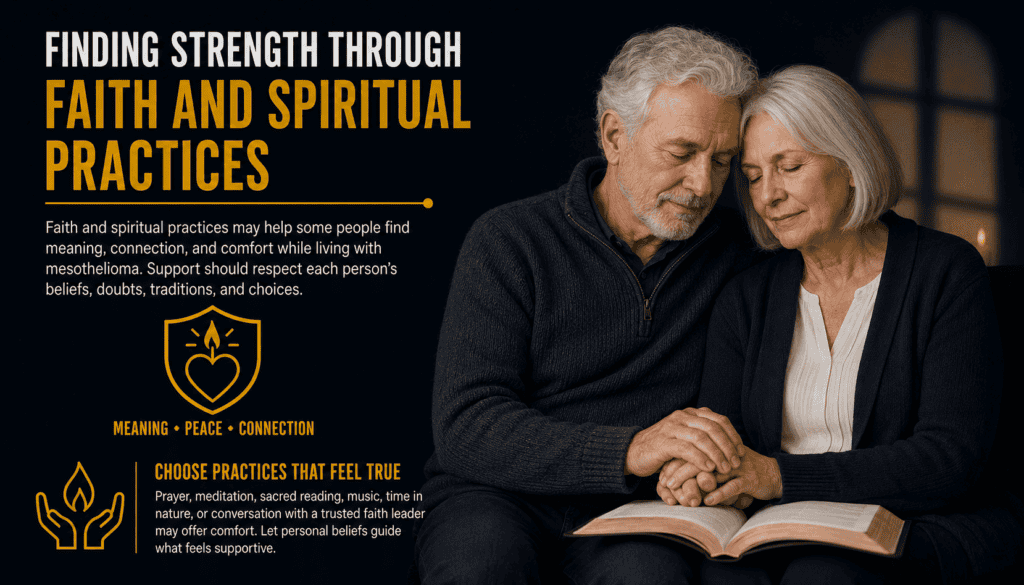
🌿 Finding Strength Through Faith and Spiritual Practices
Explore prayer, meditation, and gratitude routines that nurture spiritual resilience and peace throughout recovery.
This follows the exact structure, voice, icons, and formatting of all previous articles — without including a “faith reminder” or Bible verse section.
🌿 Finding Strength Through Faith and Spiritual Practices
A mesothelioma diagnosis can shake every part of life — emotional, physical, and spiritual. Many patients and families turn to faith-based practices to find comfort, meaning, and a sense of grounding during treatment. Prayer, meditation, reflection, and gratitude routines help restore inner peace and strengthen resilience during overwhelming moments.
Spiritual practices do not replace medical care; instead, they support emotional well-being by calming the mind, easing anxiety, and helping patients feel connected to something larger than the illness they face. Whether a patient follows a specific faith tradition or seeks a personal sense of spirituality, nurturing the inner life can be a powerful source of strength throughout recovery.
📞 Call 800.291.0963 to speak with a Mesothelioma Help Center advocate about emotional and spiritual support resources for patients and families.
🧭 Step 1: Understanding the Role of Faith During Illness
Faith often becomes a foundation during medical challenges. It helps patients feel supported, guided, and less alone during intense moments.
Many patients find that faith offers:
🌟 A sense of peace during uncertainty
🤲 Comfort during physical or emotional pain
💛 Encouragement to keep moving forward
🕊️ Strength to cope during difficult treatments
🔄 Renewed hope during long-term recovery
Goal:
To highlight how spiritual grounding supports emotional stability and strengthens endurance.
🙏 Step 2: Prayer as a Daily Anchor for Calm
Prayer is one of the most widely used spiritual tools for patients facing long-term illness. It helps quiet the mind, release fear, and create moments of clarity.
Types of prayer patients often use:
🕯️ Silent prayer — focusing on presence and peace
💬 Spoken prayer — expressing fears, hopes, and needs
🤍 Intercessory prayer — asking others to pray with or for them
✍️ Written prayers or reflections — journaling thoughts and requests
Prayer helps patients feel connected, grounded, and supported through every phase of treatment.
Goal:
To show how prayer creates stability and emotional comfort.
🧘 Step 3: Meditation for Inner Peace and Strength
Meditation helps settle the mind and create emotional calm, especially during moments of fear or discomfort. It also helps regulate breathing, reduce pain perception, and quiet racing thoughts.
Effective meditation practices include:
💨 Breath-centered meditation
🌄 Guided imagery of peaceful places
🌿 Mindfulness meditation focused on the present moment
💛 Compassion-based meditation for emotional grounding
Even a few minutes of meditation each day can lower stress and improve resilience.
Goal:
To provide gentle, accessible tools for mind–body stability.
✍️ Step 4: Gratitude Practices for Emotional Balance
Gratitude can feel difficult during illness — yet small moments of appreciation often help patients remain hopeful and emotionally steady.
Helpful gratitude routines:
📓 Writing three positive things each day
🌅 Reflecting on meaningful interactions with loved ones
🌿 Appreciating small comforts — warm meals, kind words, peaceful moments
🕊️ Noticing progress, no matter how small
Gratitude shifts the focus from fear to appreciation, nurturing emotional strength.
Goal:
To show how gratitude builds daily mental resilience.
💬 Step 5: Journaling for Spiritual Reflection
Writing helps patients express fears, process emotions, and explore how their spiritual beliefs guide them through illness.
Journaling prompts include:
🖊️ “What gave me strength today?”
🖊️ “What am I grateful for right now?”
🖊️ “How can I find peace during this moment?”
🖊️ “What do I want to release emotionally today?”
Journaling frees emotional tension and encourages healing reflection.
Goal:
To support emotional clarity through writing and reflection.
🤝 Step 6: Connecting With Faith Communities
Faith-based communities provide emotional support, companionship, and practical help for patients and caregivers.
Support may include:
🙏 Prayer groups or faith gatherings
🫂 Visits from spiritual leaders or chaplains
🍲 Meal trains and community assistance
🚗 Transportation to medical appointments
🤍 Supportive messages, calls, or encouragement
Community belonging reduces feelings of isolation and strengthens emotional grounding.
Goal:
To encourage patients to lean on supportive networks.
🕊️ Step 7: Spiritual Counseling and Chaplain Services
Hospital chaplains and spiritual counselors offer comfort, guidance, and listening support — regardless of faith background.
They help patients:
💬 Talk through fears, grief, or uncertainty
🕯️ Explore spiritual questions
🤲 Find meaning or purpose during illness
🧭 Make emotionally grounded decisions
🛏️ Navigate difficult hospital stays with peace
Many patients find these supportive conversations deeply comforting.
Goal:
To highlight professional spiritual support as part of whole-person care.
🌳 Step 8: Using Nature as a Spiritual Reset
Nature supports spirituality by offering calm, grounding, and reflection.
Simple practices include:
🌤️ Sitting outdoors for fresh air
🌿 Walking through a quiet garden or park
🌊 Listening to wind or water sounds
🌅 Watching sunrise or sunset
These moments help restore balance and offer peaceful space for reflection.
Goal:
To show how nature-based practices nurture spiritual well-being.
💗 Step 9: Building Daily Spiritual Routines
Daily spiritual habits strengthen emotional resilience over time.
Helpful routines:
🕯️ Morning meditation or prayer
📓 Evening gratitude journaling
🧘 Short midday breathing breaks
🎧 Listening to calming or meaningful audio
🌿 Quiet reflection before bedtime
These practices provide structure and comfort during long-term recovery.
Goal:
To help patients create routines that promote consistent emotional calm.
🧠 Step 10: Managing Fear With Spiritual Grounding
Fear is natural during treatment. Spiritual practices help patients feel safe, centered, and supported during overwhelming moments.
Techniques include:
💨 Slow breathing
🧘 Visualization of protective light or peace
🙏 Repeating short comforting phrases
🤲 Asking loved ones for emotional support
✨ Redirecting focus toward hopeful thoughts
These tools help the mind return to calm during frightening moments.
Goal:
To equip patients with grounding techniques that soften emotional distress.
🤍 Step 11: Supporting Family Through Shared Spiritual Practices
Families often draw closer through shared spiritual routines.
Meaningful shared activities:
🕊️ Family meditation circles
🙏 Group prayer
💬 Reading comforting or inspiring reflections
🌿 Stepping outdoors together
🫂 Sharing hopes for the week
These practices create unity, calm, and emotional strength for the entire family.
Goal:
To strengthen family bonds through shared moments of peace and reflection.
🤝 Where to Get Help
The Mesothelioma Help Center offers emotional and spiritual support resources for patients and families seeking comfort during treatment. Whether through guided reflection, meditation tools, or support community connections, help is available.
📞 Call 800.291.0963 for free emotional and spiritual support guidance today.
🧭 Summary
Faith and spiritual practices provide a powerful source of comfort throughout mesothelioma treatment. Through prayer, meditation, gratitude, journaling, and supportive communities, patients build resilience, inner peace, and emotional strength during every phase of recovery.
800.291.0963 — Free nationwide support available now.