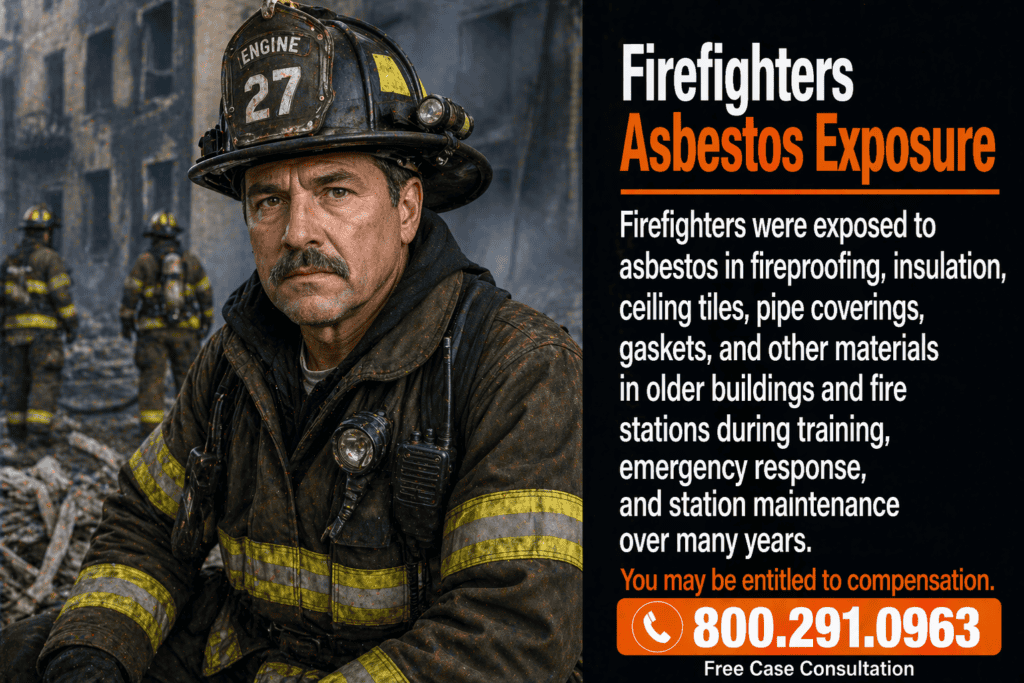
Firefighters Asbestos Exposure
Structural and wildland firefighters can encounter smoke, debris and damaged building materials under rapidly changing conditions. Firefighting itself does not prove asbestos exposure, but NIOSH confirms that asbestos can be released when materials in older buildings fall apart and has detected asbestos during area sampling at active structure fires.
The strongest firefighter asbestos history identifies the incident, building or debris source, age and materials of the structure, duties performed, respiratory protection, overhaul or cleanup activity and any asbestos survey or sampling evidence. This distinguishes asbestos from the many other gases, vapors, particulates and carcinogenic substances firefighters may encounter.
Firefighters and Occupational Asbestos Exposure
NIOSH states that firefighters face physical, chemical, biological and psychosocial hazards. At structure fires, exposure depends on factors including the building materials, materials stored inside, fire conditions and weather.
Asbestos is one potential hazard, not a universal feature of fire scenes. NIOSH’s recent firefighter research explains that hazardous substances may be released when building materials fall apart, specifically citing asbestos in older buildings.
NIOSH researchers sampling respiratory hazards at active structure fires have reported preliminary area measurements that included asbestos along with polycyclic aromatic hydrocarbons, dusts, formaldehyde and volatile organic compounds. This is strong evidence that asbestos can be present on firegrounds while also showing why each incident must be evaluated individually.
A firefighter’s opportunity for asbestos exposure can depend on whether asbestos-containing material was present, whether fire or firefighting damaged it, whether fibers became airborne, and where the firefighter worked during suppression, ventilation, overhaul and cleanup.
Related resources include public sector, government and institutional workers asbestos exposure, hazardous waste workers asbestos exposure, demolition workers asbestos exposure and asbestos exposure in buildings.
Structure Fires and Older Building Materials
Structural fires can damage walls, ceilings, floors, insulation, pipe systems and other building components. If a structure contains asbestos-containing material, fire damage and subsequent disturbance can create an exposure concern.
NIOSH states that structure-fire hazards vary with the building materials involved. Its 2026 firefighter-contamination guidance specifically notes that asbestos may be released when materials in older buildings fall apart.
Materials Worth Investigating
- Confirmed asbestos-containing pipe or boiler insulation
- Asbestos-containing surfacing or fireproofing material where documented
- Asbestos-containing flooring, roofing or cement products where confirmed
- Other building materials identified through surveys, laboratory testing or reliable records
The age of a building can help prioritize an investigation, but age alone does not prove asbestos was present. Fire reports, building records, asbestos surveys, abatement records, photographs and laboratory data can provide stronger evidence.
NIOSH’s emergency-response guidance lists asbestos among hazards that responders and recovery workers may encounter, alongside hazards such as carbon monoxide, silica, structural instability and heat stress.
Overhaul, Debris and Post-Fire Cleanup
Potential asbestos exposure can continue after visible flames are controlled. Overhaul may involve opening walls and ceilings, pulling damaged materials, moving debris and searching concealed spaces.
Post-fire cleanup can also disturb ash and structural debris. A NIOSH Health Hazard Evaluation specifically evaluated fire-debris cleanup employees for exposure to silica, asbestos, metals and polyaromatic hydrocarbons, demonstrating that asbestos is a recognized debris-cleanup concern.
Tasks That May Merit Investigation
- Pulling ceilings or walls containing confirmed asbestos materials
- Moving damaged asbestos-containing insulation or debris
- Opening concealed spaces containing asbestos thermal materials
- Sweeping, shoveling or handling contaminated post-fire debris
- Performing overhaul after respiratory protection was reduced or removed
- Returning to a fire scene for investigation or cleanup
- Handling equipment or gear contaminated at a documented asbestos fire scene
Dust, ash and soot are not automatically asbestos. The exposure history is stronger when asbestos was identified in the structure or debris and the firefighter’s task placed them near disturbed material.
Related cleanup resources include sanitation workers asbestos exposure and hazardous waste workers asbestos exposure.
Wildfires, Burned Structures and Asbestos
Wildland smoke and vegetation do not themselves establish asbestos exposure. The asbestos issue becomes more relevant when a wildland or wildland-urban-interface fire damages homes, commercial buildings or other structures containing asbestos materials.
NIOSH states that structural fires occurring during wildland fires can add hazardous contaminants from materials in homes and buildings and specifically identifies asbestos as a concern in older structures.
Current NIOSH wildfire-cleanup guidance says many homes and structures may contain hazardous materials including asbestos and notes that homes built before 1980 may contain asbestos and lead. NIOSH recommends trained professionals evaluate and clean up asbestos-containing materials.
For cleanup work where asbestos is known or suspected, NIOSH recommends an appropriately selected NIOSH-approved elastomeric half-mask respirator or higher level respirator with a particulate filter as part of a respiratory-protection program; filtering facepiece respirators do not provide adequate protection against asbestos dusts.
These recommendations concern cleanup activities and should not be interpreted to mean every firefighter at every wildfire experienced asbestos exposure.
Need help now? Call 800.291.0963
Live chat available 24/7, 365 days a year.
Submit Your Case
Contaminated Gear and Exposure Control
NIOSH’s 2026 firefighter guidance states that hazardous substances from fire incidents can contaminate turnout gear and transfer to skin, equipment, fire stations, vehicles and other locations. The guidance specifically includes asbestos released from older building materials among potential contaminants.
NIOSH recommends practices such as on-scene gross decontamination, proper gear removal, bagging contaminated gear for transport and keeping exposed gear out of personal vehicles and living areas.
Why Gear Records Can Matter
For a historical exposure investigation, department procedures may show when respiratory protection was used, how long firefighters remained in contaminated areas, whether gross decontamination was performed and how exposed gear was transported or cleaned.
Useful records can include self-contained breathing apparatus policies, fit-testing and training records, incident reports, turnout-gear cleaning logs, station procedures and occupational-health files.
Contaminated gear can carry many fireground substances. The presence of soot on gear does not prove asbestos contamination unless asbestos at the incident or on the gear is supported by reliable evidence.
Mesothelioma and Other Occupational Health Risks
NIOSH has studied cancer among firefighters for decades. In a study of nearly 30,000 career firefighters from Chicago, Philadelphia and San Francisco employed between 1950 and 2009, researchers reported about twice as many malignant mesothelioma cases as expected and identified occupational asbestos exposure in firefighting as the most likely explanation for the excess.
This population-level finding does not prove asbestos exposure or causation for an individual firefighter. An individual case still requires a worker-specific exposure and medical history.
Firefighters encounter many other known or suspected carcinogenic substances. NIOSH states that firefighting environments can contain gases, vapors and particulates associated with cancer risk. These exposures should be evaluated separately rather than attributed to asbestos.
NIOSH’s broader asbestos review recognizes asbestos as a carcinogenic occupational hazard associated with mesothelioma, lung cancer and asbestosis.
Medical questions about prior fireground asbestos exposure, symptoms, screening or diagnosis should be discussed with a qualified healthcare professional.
Documenting Firefighter Asbestos Exposure
A useful firefighter exposure history connects the individual to specific incidents, structures, asbestos-containing materials and duties.
- Employment: department, agency, fire district, dates, rank and assignments
- Incident history: structure fires, wildland-urban-interface fires, disasters and cleanup operations
- Building evidence: construction date, asbestos surveys, abatement files and inspection records
- Material evidence: laboratory results, photographs and documented asbestos-containing products
- Tasks: suppression, ventilation, overhaul, debris removal, investigation and cleanup
- Respiratory protection: SCBA use, respirator records, fit testing and department policies
- Contamination controls: decontamination, gear bagging, laundering and station procedures
- Witnesses: crew members, incident commanders, investigators, building officials and cleanup contractors
Fire department incident reports may identify the address, occupancy, fire conditions, assignments and personnel. Building-department records, asbestos surveys and demolition or cleanup files can then help determine whether asbestos-containing materials were documented at the location.
Questions That Can Strengthen the Exposure History
Which department and years? Which structure or incident? Was the building known to contain asbestos? What areas did the firefighter enter? Was overhaul performed? Was SCBA worn throughout? Was debris moved or cleaned? Were asbestos samples collected? Are incident reports, surveys, photographs or crew witnesses available?
Lawsuits, Trust Funds and Compensation
A firefighter diagnosed with mesothelioma or another asbestos-related disease may have potential legal or compensation options when evidence supports occupational asbestos exposure and applicable requirements are met.
Firefighter employment alone does not establish asbestos exposure, causation, civil liability, trust eligibility or compensation. Public employees may also be subject to jurisdiction-specific workers’ compensation, occupational-disease, governmental-claim or procedural rules.
Separate claims may involve responsible asbestos-product companies, contractors, premises-related parties or asbestos bankruptcy trusts when their requirements are met. Compensation is not guaranteed.
Related Public-Sector and Exposure Resources
Public sector: Public Sector, Government & Institutional Workers Asbestos Exposure
Cleanup: Hazardous Waste Workers Asbestos Exposure · Demolition Workers Asbestos Exposure
Buildings: Asbestos Exposure in Buildings · Building Inspectors Asbestos Exposure
Authoritative Sources
This page was researched using NIOSH government evidence. Current federal research directly confirms asbestos as a potential firefighter contaminant when older building materials deteriorate, reports asbestos in preliminary area sampling at active structure fires, and provides specific guidance for asbestos hazards during post-fire and wildfire cleanup.
- NIOSH — Firefighter Safety and Health
- NIOSH — Protecting Firefighters from Contaminated Gear
- NIOSH — Emergency Responder Research and Structure-Fire Sampling
- NIOSH — Hazards During Wildland Fire Cleanup
- NIOSH — Fire Debris Cleanup Exposure Evaluation
- NIOSH — Workplace Exposure to Asbestos: Review and Recommendations
Firefighters Asbestos Exposure FAQ
Were all firefighters exposed to asbestos?
No. Firefighting involves many hazards, and asbestos exposure depends on the structure, materials, incident, duties and conditions.
Can a structure fire release asbestos fibers?
Potentially. NIOSH states that asbestos can be released when materials in older buildings fall apart and has reported asbestos among preliminary area-sampling findings at active structure fires.
Can overhaul create an asbestos exposure concern?
Potentially, when firefighters open walls, ceilings or other areas containing documented asbestos materials or disturb contaminated debris.
Can wildfire response involve asbestos?
Wildland vegetation itself is not asbestos, but fires that damage older homes and other structures can create asbestos concerns in debris and cleanup areas.
Can firefighter turnout gear become contaminated with asbestos?
Potentially. NIOSH states that hazardous substances, including asbestos released from older building materials, can contaminate firefighter gear and transfer to other surfaces or locations.
What did NIOSH find about firefighters and mesothelioma?
In a large study of career firefighters, NIOSH reported about twice as many malignant mesothelioma cases as expected and identified occupational asbestos exposure in firefighting as the most likely explanation for that excess.
What records can help document firefighter asbestos exposure?
Incident reports, building asbestos surveys, abatement records, crew assignments, SCBA records, photographs, sampling data, gear-cleaning records and witness statements can help reconstruct exposure.
Can firefighters qualify for asbestos trust fund claims?
Some may qualify if they meet a trust’s medical and exposure requirements and can connect their exposure to a covered asbestos company, product, site or qualifying period. Firefighter employment alone does not establish eligibility.
Get Help Reviewing Firefighter Asbestos Exposure
Call 800.291.0963
Live chat is available 24/7, 365 days a year.
Prior firefighting, overhaul or fire-debris cleanup work does not automatically prove asbestos exposure, disease causation, liability, claim eligibility or compensation. Each situation depends on the department, incidents, buildings, asbestos-containing materials, duties, respiratory protection, exposure evidence, medical evidence and applicable legal requirements. Compensation is not guaranteed.
⚕️ Legal & Medical Information Disclaimer
This page provides general educational information and is not medical or legal advice. The information does not establish asbestos exposure, diagnosis, causation, liability, claim eligibility or compensation. Medical concerns should be discussed with a qualified healthcare professional, and legal questions should be reviewed with a qualified attorney.