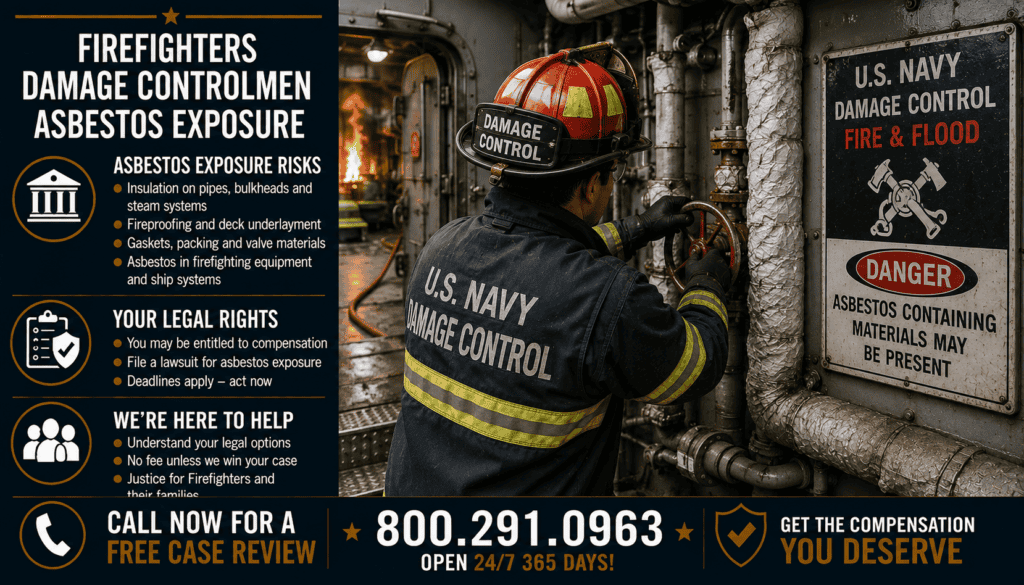
🔥 Firefighters & Damage Controlmen
Protective Gear & Ship Insulation — How Heroic Crews Faced Hidden Asbestos Dangers
Every fire aboard a Navy vessel or base was a race against time — and against heat that could melt steel.
Navy Firefighters (DCs) and Damage Controlmen wore protective suits, gloves, and masks made with asbestos, believing these materials kept them safe.
But each training exercise, firefighting drill, and real emergency filled the air with asbestos fibers released from fireproof clothing, pipe insulation, and shipboard bulkheads.
These brave men who risked their lives to save others were unknowingly breathing a deadly dust that decades later caused mesothelioma, asbestosis, and other fatal asbestos-related illnesses.
📞 If you served as a Navy Firefighter or Damage Controlman before 1990, call 800.291.0963 for free asbestos exposure guidance and VA claim assistance.
🧭 Step 1 – Why Asbestos Was Used in Firefighting Gear
For much of the 20th century, asbestos was considered the ultimate fireproof material.
It could withstand extreme temperatures and was woven into protective gear to shield sailors from flash fires and explosions.
Why asbestos was chosen:
-
🔥 Could resist temperatures above 1,200°F.
-
⚙️ Provided insulation against flames and radiant heat.
-
🧱 Lightweight and flexible for protective clothing.
-
💨 Used to line compartments and bulkheads to prevent fires from spreading.
Goal: Understand that asbestos was used to save lives — long before its health dangers were widely known.
⚙️ Step 2 – Common Asbestos Products Firefighters & Damage Controlmen Handled
Every aspect of firefighting aboard ships or bases involved asbestos-containing materials.
Frequent asbestos sources:
-
🧤 Firefighting suits, gloves, and helmets made from asbestos cloth.
-
💨 Insulated breathing gear hoses and heat-resistant masks.
-
🧱 Pipe and bulkhead insulation surrounding engine and boiler rooms.
-
⚙️ Fire blankets used to smother flames and seal hatches.
-
🪖 Asbestos lagging and sprays used during ship construction and repair.
-
🧰 Protective curtains and shields for welding and hot work.
Goal: Recognize that the materials meant to protect firefighters and Damage Controlmen also exposed them to asbestos dust and fibers.
🪖 Step 3 – Military Roles with the Highest Asbestos Exposure
While all service branches used asbestos to fight and contain fires, the Navy’s confined ship environments created the most extreme conditions.
High-risk occupations:
-
⚓ Navy Damage Controlmen (DC): Responsible for firefighting, flooding control, and repair during emergencies.
-
🔥 Shipboard Firefighters & Fire Marshals: Operated in engine rooms and combat information centers.
-
💨 Aviation Firefighters (Crash & Salvage Crews): Used asbestos gloves and blankets on flight decks.
-
🧱 Marine and Coast Guard Fire Units: Trained with asbestos-coated protective gear.
-
🛠️ Base Fire Brigades and Repair Crews: Worked around asbestos-insulated heating and power systems.
Goal: Identify your military role or duty station to verify occupational asbestos exposure.
💬 Step 4 – How Asbestos Exposure Occurred During Firefighting
Even brief firefighting drills could fill the air with asbestos dust.
When heat, flame, or damage disturbed asbestos insulation or gear, fibers became airborne and were inhaled or lodged in protective suits.
Common exposure activities:
-
🔩 Fighting fires in boiler or engine rooms lined with asbestos insulation.
-
🧱 Training with asbestos-coated fire blankets.
-
💨 Cutting through bulkheads or pipe lagging during emergency response.
-
🧰 Cleaning or reusing asbestos fire gear without decontamination.
-
⚙️ Removing damaged asbestos insulation during post-fire repair work.
Goal: Recognize that asbestos exposure occurred both in emergencies and routine training aboard every ship and base.
⚓ Step 5 – Where Exposure Happened
Navy ships were filled with asbestos — not just in machinery but in walls, floors, and ceilings.
Every shipboard fire released fibers into the air, putting firefighters and Damage Controlmen at direct risk.
Typical exposure environments:
-
🚢 Boiler and engine rooms filled with asbestos lagging.
-
💨 Aviation hangars and flight decks with asbestos heat barriers.
-
⚙️ Living quarters and damage-control lockers storing asbestos blankets and suits.
-
🧱 Repair stations and base training facilities.
-
🛠️ Shipyards where firefighting gear and insulation were replaced.
Goal: Determine which ships, bases, or yards you served in to confirm service-related asbestos exposure.
🩺 Step 6 – Health Effects of Firefighting Asbestos Exposure
Asbestos exposure doesn’t cause immediate symptoms — it silently damages the lungs for decades before diseases appear.
Diseases linked to asbestos exposure:
-
🫁 Mesothelioma: Cancer of the lung or abdominal lining caused solely by asbestos.
-
💨 Asbestosis: Chronic scarring of the lungs that restricts breathing.
-
🩺 Lung Cancer: Risk multiplied by smoking or prolonged exposure.
-
🧠 Pleural Plaques: Thickened tissue in the lung lining signaling prior asbestos injury.
Goal: Seek early medical testing if you served in firefighting or shipboard damage control roles and experience breathing problems.
🧾 Step 7 – VA Recognition of Firefighting and Damage Control Exposure
The Department of Veterans Affairs (VA) recognizes shipboard firefighting and damage control as high-probability asbestos exposure occupations within the military.
Official VA references:
-
⚖️ M21-1 Adjudication Manual, Part IV, Subpart ii, Chapter 2, Section C.
-
🧱 Job titles “Firefighter,” “Damage Controlman,” and “Ship Repair” marked “High Exposure Probability.”
-
💬 VA medical opinions directly linking mesothelioma to shipboard firefighting.
-
🏛️ Acknowledged 10–45-year latency period for asbestos-related diseases.
Goal: Use these VA references to strengthen your asbestos-related disability or dependency claim.
💼 Step 8 – Evidence Needed for a VA Claim
A successful VA asbestos claim requires proof of both diagnosis and verified exposure.
Essential documentation:
-
🪖 DD-214 and service records listing DC or firefighting duties.
-
⚙️ Ship assignment or base fire brigade logs.
-
🩺 Medical diagnosis of mesothelioma or asbestosis.
-
💬 Statements from shipmates confirming asbestos-based gear or conditions.
-
🧾 Medical nexus letter connecting illness to service duties.
Goal: Combine medical and occupational proof to establish clear service connection.
⚖️ Step 9 – Civil Legal Options for Firefighters and Damage Control Veterans
Veterans can’t sue the government, but they can pursue claims against manufacturers that made asbestos gear and ship materials.
Common asbestos product manufacturers:
-
🧱 Johns-Manville (fireproof insulation and cloth).
-
⚙️ Owens-Corning and Armstrong (lagging and panels).
-
💨 Raybestos-Manhattan (asbestos gloves and blankets).
-
🧰 Eagle-Picher and Unarco (thermal sprays and adhesives).
-
🪖 Fibreboard and Garlock (pipe insulation and gasket materials).
Goal: Hold companies accountable that knowingly sold asbestos products to the U.S. military for decades.
🤝 Step 10 – How Attorneys and VSOs Assist Firefighting Veterans
Coordinating both VA benefits and civil asbestos compensation takes experienced legal and veteran service coordination.
A qualified advocate can:
-
🧾 Retrieve ship logs and maintenance records proving asbestos use.
-
⚙️ Identify asbestos-containing gear and ship materials.
-
💬 Obtain expert medical and historical opinions.
-
🏛️ File VA, trust-fund, and private claims while preserving your VA eligibility.
Goal: Let professionals handle the complex claims process while you focus on your health and recovery.
🌈 Summary
Firefighters and Damage Controlmen risked everything to protect their ships and shipmates — but asbestos hidden in their gear and ship insulation left many battling deadly diseases decades later.
These heroes faced the highest exposure levels during fires, training drills, and ship repairs.
Today, both the VA and the courts recognize their sacrifices and offer avenues for compensation and justice.
📞 Call 800.291.0963 today for free help verifying asbestos exposure, gathering service records, and filing VA or private asbestos claims.