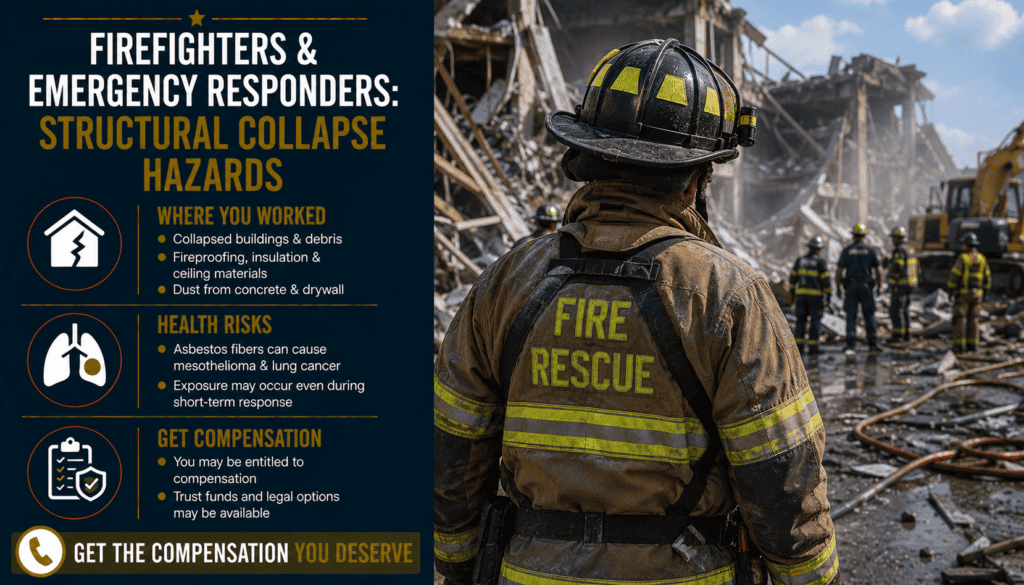
Firefighters & Emergency Responders: Structural Collapse Hazards
Firefighters and emergency responders face some of the most extreme and unpredictable asbestos exposure of any profession. When older homes, factories, schools, and commercial buildings burn, millions of asbestos fibers are released into the air. Structural collapse, roof failure, and the destruction of asbestos-containing materials (ACMs) create deadly clouds of dust that responders breathe in during rescue, suppression, and overhaul operations.
Even short-term, high-intensity exposure can lead to mesothelioma, lung cancer, and asbestosis decades later.
If you or a loved one served as a firefighter or first responder, call 800.291.0963 for help documenting exposure and arranging medical screening.
🔥 Step 1: Why Fires in Older Buildings Are Extremely Dangerous
Buildings constructed before 1980 almost always contain asbestos in:
-
Roofing shingles
-
Floor tiles
-
Insulation
-
Pipes & steam systems
-
Boilers & furnaces
-
Cement boards & siding
-
HVAC duct systems
-
Fireproofing sprays
-
Plaster & joint compound
-
Electrical insulation
📌 When these materials burn or collapse, asbestos becomes airborne instantly.
Older ACMs become brittle with age. When exposed to heat, flames, or structural failure, they release massive amounts of microscopic fibers—often invisible and odorless.
🏚️ Step 2: How Structural Collapse Releases Millions of Asbestos Fibers
A burning building is one of the most significant asbestos-release events possible. Collapse increases exposure by:
✔ Breaking apart fireproofing & pipe insulation
Pressure, heat, and impact shatter old insulation into dust clouds.
✔ Crumbling plaster, drywall & ceiling tiles
Popcorn ceilings and joint compound release fibers when they fail.
✔ Crushing HVAC ducts & electrical insulation
Electrical chases and duct systems can discharge fibers during collapse.
✔ Dispersing floor tile and mastic
Tiles explode or disintegrate under extreme heat.
✔ Pulverizing roofing materials
Hot spots in attics or upper floors release asbestos as shingles burn.
✔ Re-aerosolizing fibers during overhaul
Even after flames are out, dust lingers during debris clearing.
Firefighters often inhale fibers simply by walking through or working near a collapse zone.
🚒 Step 3: Firefighters Face Multiple Exposure Events in a Single Call
Asbestos exposure does not happen only once during a fire—it happens repeatedly at different stages.
✔ Entry Phase:
Breaking through walls, doors, or ceilings releases fibers on impact.
✔ Suppression Phase:
Heat and forced ventilation drive asbestos back toward responders.
✔ Overhaul Phase:
Removing debris and searching hotspots stirs up fibers trapped in ash.
✔ Cleanup Phase:
Debris piles, tools, turnout gear, and vehicles all collect asbestos.
Because exposure accumulates over a career, firefighters experience some of the highest lifetime risk.
🏗️ Step 4: Emergency Responders Other Than Firefighters Are Also at Risk
Not just firefighters—but also:
-
EMTs
-
Law enforcement officers
-
Disaster-response teams
-
Search-and-rescue crews
-
Public-works personnel
-
Utility workers
-
Volunteers assisting during structural collapse
Any responder entering or working near an older damaged structure may inhale airborne fibers.
⚠️ Step 5: Highest-Risk Scenarios for Asbestos Exposure
Some emergency operations present extremely elevated exposure levels.
✔ High-Temperature Building Fires
Heat breaks down insulation, roofing, flooring, and HVAC components.
✔ Collapse of Pre-1980 Structures
Structural failure sends debris airborne.
✔ Basement or Attic Fires
These areas contain high amounts of asbestos insulation.
✔ School & Hospital Fires
Large facilities used sprayed-on asbestos fireproofing.
✔ Industrial Fires
Boilers, turbines, and chemical facilities contain massive asbestos amounts.
✔ Post-Fire Overhaul and Rekindles
Disturbed debris exposes responders again and again.
🌫️ Step 6: Why Overhaul Is the Most Dangerous Phase
Studies show firefighters face the highest asbestos exposure during overhaul because:
-
SCBA (air tanks) are often removed
-
Debris is disturbed while searching for hotspots
-
Dust remains suspended long after flames are gone
-
The structure is unstable and materials keep crumbling
-
Ventilation systems may circulate fibers
-
Water suppression mud dries into a dust layer workers walk through
Overhaul often exposes responders at levels far above OSHA limits.
🧪 Step 7: Modern Protocols First Responders Must Follow
Fire departments today have strict asbestos protocols—far stricter than those used in the 1970s–1990s.
✔ Mandatory SCBA Use During ALL Phases
Responders must wear full respiratory protection even during overhaul.
✔ On-Scene Decontamination Procedures
-
Gear rinsing stations
-
Gross decon wipes
-
Bagging of contaminated PPE
✔ Clean Cab Rules
Turnout gear cannot be worn in the cab of the firetruck.
✔ Encapsulation & Wetting of Debris
Prevents airborne fiber release.
✔ HEPA Filtration Fans
Reduce dust in overhaul zones.
✔ Incident Command Safety Officers
Monitor air quality and structural integrity.
These protocols significantly reduce—though do not eliminate—exposure.
🧵 Step 8: Turnout Gear Can Hold Asbestos Fibers
Fire-resistant gear is designed to protect against heat, but not microscopic fibers.
✔ Where Asbestos Accumulates in Gear
-
Coat fabric
-
Cuffs and collar
-
Helmet padding
-
Gloves
-
Boot linings
-
SCBA harness straps
Without proper decon, responders bring fibers back to the station—and home.
📁 Step 9: How Firefighters Can Document Exposure History
Thorough documentation helps with future medical monitoring and compensation.
✔ Keep a Record Of:
-
Stations served
-
Dates and years in service
-
Fires in pre-1980 buildings
-
Collapse events worked
-
Overhaul operations performed
-
PPE used (and any gear failures)
-
Witnesses and fellow responders present
✔ Request Copies Of:
-
Incident reports
-
Fire investigation summaries
-
Training logs
-
Worker exposure records
-
Safety data from major fire scenes
Documentation is crucial for future VA, workers’ compensation, or asbestos trust claims.
🩺 Step 10: Medical Monitoring for Firefighters & Responders
Because diseases appear 20–50 years after exposure, ongoing medical surveillance is essential.
✔ Recommended Tests Include:
-
Baseline chest X-ray
-
Pulmonary function tests
-
High-resolution CT scans
-
Mesothelioma biomarker bloodwork
-
Annual occupational health evaluations
Firefighters with repeated exposure are at significantly increased risk for:
-
Mesothelioma
-
Lung cancer
-
Asbestosis
-
COPD
-
Other occupational lung diseases
🏥 Where to Get Help
If you served as a firefighter or first responder and suspect asbestos exposure, we can help you:
-
Document historical exposures
-
Locate major asbestos-containing building fires you responded to
-
Connect with mesothelioma specialists
-
File VA claims (for military firefighters)
-
Explore workers’ compensation and trust fund options
-
Access medical testing and monitoring programs
📞 Call 800.291.0963 today to speak with an asbestos exposure advocate who understands the unique risks firefighters face.
📝 Summary
Firefighters and emergency responders have long been forgotten victims of asbestos exposure. Burning older buildings release fibers during structural collapse, overhaul, and cleanup—leading to some of the highest occupational disease rates in the nation.
Key Takeaways
-
Older buildings contain asbestos that becomes airborne during fires
-
Collapse events create intense fiber release
-
Overhaul is the most dangerous phase
-
Mandatory SCBA use and decontamination are essential
-
Turnout gear can hold asbestos for years
-
Responders should document exposure and undergo medical monitoring
To document your exposure and explore your health options, call 800.291.0963 now.