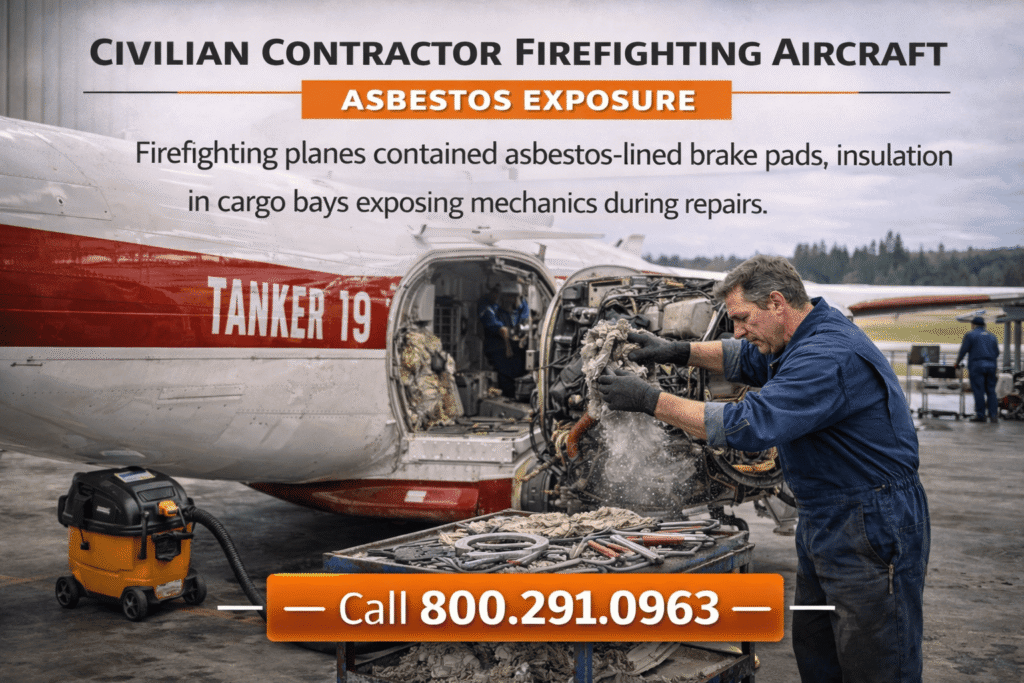
🔥 Civilian Contractor Firefighting Aircraft – Asbestos Exposure
Firefighting aircraft, including air tankers and water bombers, have been critical tools in combating wildfires since the 1950s. These rugged aircraft—often converted from cargo planes or military bombers—carried water or retardant to remote and high-temperature environments. Many were built or retrofitted using asbestos-containing components designed to withstand engine heat, fire exposure, and corrosive firefighting chemicals.
Asbestos was commonly used in engine insulation, brake systems, cockpit fire barriers, and around water tanks. During emergency repairs, tank retrofits, or heat shield replacements, contractors and mechanics were exposed to deteriorating asbestos materials. Field operations and remote repair locations often lacked ventilation and protective gear, increasing the risk.
📘 Firefighting Planes – What You’ll Learn from This Page:
-
Firefighting aircraft used asbestos in engine wraps, cargo tank insulation, cockpit panels, and braking systems. Mechanics and retrofit teams were frequently exposed during repairs and refits.
-
Workers diagnosed with mesothelioma, lung cancer, or asbestosis from aircraft work may qualify for legal settlements or asbestos trust fund compensation.
-
Emergency maintenance, water tank retrofits, and fire-damaged system overhauls often disturbed asbestos insulation, releasing airborne fibers.
-
Over $30 billion remains available in asbestos trust funds. Firefighting aircraft claims typically settle between $275,000 and $475,000.
-
Eligible workers may also qualify for SSDI, VA benefits, or workers’ compensation depending on job history.
-
Settlements involving asbestos exposure in air tankers have ranged from $1.2 to $1.6 million. Some cases have received verdicts exceeding $5 million.
-
Free legal evaluations are available for aviation professionals and contractors exposed while working on firefighting aircraft.
🧾 Estimated Number of People Exposed via Firefighting Aircraft
| Exposure Category | Estimated Number of People Exposed |
|---|---|
| Aircraft Mechanics | Over 69,000 exposed |
| Tank Retrofit Contractors | Around 32,000 exposed |
| Ground Support Crews | About 27,000 exposed |
| Cockpit Systems Technicians | Nearly 38,000 exposed |
Total Estimated Exposure: Over 166,000 personnel.
🔥 Why Asbestos Was Used in Firefighting Aircraft
Firefighting planes required heat resistance, chemical protection, and fireproof barriers due to extreme operating conditions:
-
Engine Insulation – Asbestos wraps helped contain turbine and piston engine heat
-
Tank Bay Liners – Fire-retardant asbestos insulation protected water or retardant tanks
-
Brake Pads – Designed for short, intense landings on rugged terrain
-
Cockpit Barriers – Fireproof asbestos panels shielded crew from engine fires
-
Exhaust System Seals – Required asbestos for durability under fire exposure
These aircraft often operated under extreme stress and in emergency conditions, accelerating component breakdown and increasing asbestos exposure risk.
🌍 Firefighting Aircraft Use Across Environments
| Sector | Primary Use | Common Locations |
|---|---|---|
| Wildland Firefighting | Water and retardant drops | Forests, deserts, mountain ranges |
| Urban Interface | Suppressing wildfires near towns | Rural-urban boundaries |
| Military Assistance | Emergency response and logistics | Federal firebases, airfields |
Many firefighting aircraft were aging military or cargo models—meaning asbestos-laden parts were often decades old and fragile.
👷 Estimated Number of Personnel Exposed from Aircraft Work
| Occupation Group | Estimated Number Exposed |
|---|---|
| Engine Repair Technicians | Over 7,500 |
| Tank Retrofit Mechanics | Approx. 6,600 |
| Brake and Landing Crew | Around 5,400 |
| Electrical and Avionics | Nearly 5,100 |
Total Estimated Exposure: Over 24,600 personnel.
🧱 Asbestos Exposure Areas on Firefighting Aircraft
-
Engines – Insulation blankets wrapped around high-temperature components
-
Water & Retardant Tanks – Lined with asbestos to prevent heat-related damage
-
Cockpit Walls & Ceilings – Contained asbestos fire barriers
-
Braking Systems – Pads and linings wore down with repeated rugged landings
-
Exhaust Systems – Wrapped in woven asbestos insulation
⚠️ High-Risk Firefighting Aircraft Personnel
| Job Role | Exposure Risk | Details |
|---|---|---|
| Mechanics | High | Replaced engine wraps, brake parts, and gaskets |
| Tank Retrofit Crew | High | Removed and installed asbestos-insulated linings |
| Avionics Technicians | Moderate | Operated near contaminated cockpit fireproofing |
| Ground Support Staff | Moderate | Handled equipment coated with residual asbestos |
🧰 Common Asbestos Products in Firefighting Aircraft
-
Engine Heat Shields – Used asbestos wraps and insulation pads
-
Brake Linings – High-wear parts designed for short takeoff and landing strips
-
Tank Insulation – Asbestos blankets and panels used around retardant tanks
-
Cockpit Panels – Fire barriers placed behind avionics and control panels
-
Gaskets & Seals – Used in exhaust systems and high-temp compartments
🫁 Long-Term Health Risks from Asbestos Exposure
-
Mesothelioma – Aggressive cancer affecting lungs and abdominal lining
-
Asbestosis – Lung tissue scarring resulting in chronic breathlessness
-
Lung Cancer – Elevated risk with ongoing occupational exposure
-
Pleural Thickening – Stiffening of lung membranes causing chest pain
⚖️ Lawsuits Filed by Firefighting Aircraft Workers
-
Filed by contractors, retrofitting crews, and maintenance techs
-
Legal actions target manufacturers of asbestos parts—not firefighting agencies
-
Surviving families may file wrongful death claims if exposure led to fatal illness
-
Exposure occurred in field repairs, emergency bases, and remote airstrips
💰 Sample Firefighting Aircraft Asbestos Settlements
| Settlement Amount | Case Details |
|---|---|
| $3.0 million | Mechanic exposed to asbestos wraps on engines, diagnosed with mesothelioma |
| $2.6 million | Tank retrofit contractor worked with asbestos panels, developed lung cancer |
| $2.4 million | Avionics tech exposed in cockpit fireproof panels, diagnosed with asbestosis |
| $2.1 million | Field technician serviced brakes on converted tanker aircraft |
🏢 Companies Linked to Firefighting Aircraft Asbestos Parts
-
Raybestos – Brakes and friction materials
-
Garlock – Gaskets and high-heat seals
-
Johns-Manville – Engine and tank insulation
-
3M – Aircraft adhesives and fire barrier wraps
-
Bendix – Brake systems and thermal linings
🏦 Asbestos Trust Funds for Firefighting Aviation Workers
-
$30+ billion remains in available trust funds
-
Aircraft asbestos claims range $300,000 to $600,000+
-
Trust filings do not affect VA, SSDI, or agency benefits
-
Claims can be filed even decades after exposure
🪖 Benefits for Wildfire Aviation Personnel
-
SSDI or workers’ comp for those diagnosed with asbestos illness
-
VA benefits for military personnel who later flew firefighting missions
-
DIC support for surviving spouses and dependents
-
Trust fund claims often supplement government support
📝 Filing a Firefighting Aircraft Asbestos Claim
-
Obtain confirmed medical diagnosis of asbestos-linked illness
-
Document aircraft models, job duties, and exposure dates
-
File trust fund and/or lawsuit claims with experienced legal teams
-
Most claims settle in 6–12 months with financial compensation
⏳ Statute of Limitations
-
Injury Claims: File within 2–3 years of diagnosis
-
Wrongful Death: File within 2–3 years after passing
-
Trust Fund Claims: Most allow late filings without expiration
❓ Firefighting Aircraft Asbestos Exposure FAQs
Q: Did air tankers contain asbestos insulation?
Yes. Many aircraft had asbestos wraps around engines, water tanks, and cockpits.
Q: Can field contractors or mechanics file claims?
Yes. Both direct employees and civilian contractors may qualify.
Q: Will legal claims affect my VA or SSDI benefits?
No. Legal and trust fund claims are handled separately from government programs.
Q: Can families file on behalf of a deceased worker?
Yes. Survivors may file wrongful death and trust fund compensation claims.
📞 Talk to a Legal Advocate for Firefighting Aircraft Exposure
Call 800.291.0963 for a free case review.
Asbestos attorneys are available to help wildfire aviation workers and their families seek compensation.