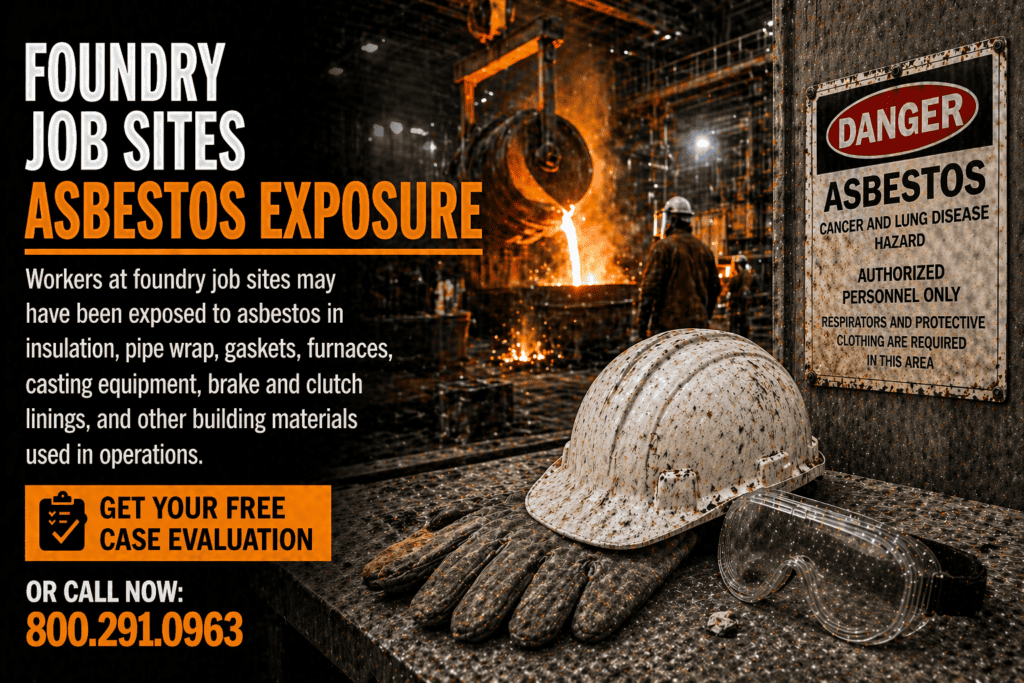
Foundry Job Site Asbestos Exposure
From the 1930s through the late 1980s, foundries across the United States used asbestos extensively in furnaces, molds, piping systems, and protective equipment. Asbestos was highly valued for its heat resistance and durability in high-temperature metal casting environments—but long-term exposure proved deadly.
Foundry workers who operated, maintained, or repaired equipment often came into contact with asbestos-laden materials. Insulation on furnaces, hot piping, and even workwear released hazardous fibers when damaged, cut, or disturbed. Prolonged or repeated exposure placed workers at serious risk.
List of Foundry Asbestos Exposure Articles.
🏗️ Foundry Job Sites – What You’ll Learn From This Page:
🔥 Foundry workers handled asbestos molds, linings, and blankets used for casting molten metals.
🛠️ Pouring, grinding, and cleaning disturbed asbestos-containing materials, sending fibers into the air.
🧤 Gloves and protective gear were often made with asbestos, adding exposure through daily handling.
🏭 Dusty environments with poor airflow made exposure constant, especially during maintenance and mold changes.
💰 Foundry workers diagnosed with asbestos illness may be eligible for trust fund payouts or settlements.
🧰 Facts About Foundry Workers
• Over 90,000 workers were employed in U.S. foundries during the peak industrial years (1950s–1980s).
• Asbestos Exposure: Common from 1935–1985, especially in furnace operations and maintenance roles.
• Asbestos-Related Disease Risk: Extremely High due to intense heat, confined spaces, and poor ventilation.
• Research shows foundry workers had mesothelioma rates several times higher than the general population.
• Similar Occupations: Furnace operators, molders, casters, maintenance technicians, metal pourers
🏭 History of Asbestos Use on Job Sites
In metal foundries, asbestos was applied everywhere heat, fire, and molten metals created risk. It coated furnaces, lined ladles and crucibles, and wrapped steam pipes. Workers used asbestos blankets to handle red-hot castings and wore gloves and aprons made from asbestos fibers.
Because these materials deteriorated over time, asbestos became airborne during routine work. Many foundries lacked proper ventilation, making the exposure even more intense and widespread over time.
Number of People Exposed to Asbestos in Foundries in the U.S.
Foundries relied on asbestos materials for thermal resistance and safety for decades.
| Exposure Category | Estimated Number of People Exposed |
|---|---|
| Occupational Exposure (Casters, molders, grinders) | Approximately 580,000 workers exposed |
| Secondary Exposure (Family via contaminated gear) | Estimated 75,000 exposed |
| Environmental Exposure (Casting pits, mold rooms) | Around 130,000 people exposed |
👉 Total Estimated Exposure:
Over 785,000 people in the U.S. were exposed through foundry job site asbestos materials.
⚠️ Mesothelioma Risk for Foundry Workers
Several medical studies have documented the extreme health risks faced by foundry employees:
• A CDC study found elevated death rates from mesothelioma and lung cancer among foundry furnace crews.
• A European study concluded that foundry workers were 4 to 6 times more likely to die of asbestos-related disease than other industrial workers.
• Maintenance and refractory workers were especially vulnerable due to direct handling of insulation and firebrick materials.
Asbestos dust was often invisible—and deadly. The effects typically appear 30 to 50 years after initial exposure, often when it’s too late for prevention.
🔩 Asbestos Products Used in Foundries
Asbestos was embedded in dozens of materials used every day in the foundry industry. From insulation to equipment linings, nearly every area of the facility posed potential exposure hazards.
🔥 Furnace and Kiln Insulation
Lined melting furnaces, cupolas, and annealing ovens; fibers released during maintenance and relining.
🚿 Pipe and Duct Insulation
Wrapped around steam, exhaust, and cooling lines; damage released microscopic fibers into the air.
🧱 Firebricks and Refractory Materials
Used inside furnaces and ladles; chipped or replaced during shutdowns and cleaning cycles.
🧰 Gaskets and Valve Seals
Sealed pumps and high-pressure equipment; fibers released when scraped or replaced.
🧤 Protective Gear
Asbestos gloves, aprons, and leggings worn during casting; shed fibers after repeated use.
🚿 Spray-On Fireproofing
Applied to ceilings and structures; broke down with vibration and heavy equipment use.
⚡ Electrical Panel Insulation
Used in switchgear and control cabinets; drilling and upgrades released asbestos particles.
♨️ Crucible and Ladle Linings
Used in metal transport and pouring; damaged linings scattered asbestos in the air.
🧵 Heat Shields and Blankets
Draped over molds and castings; fibers escaped as blankets frayed and aged.
🚜 Brake Linings
Shop forklifts and hoists used asbestos brake pads; emitted dust during braking and repair.
🩹 Adhesives and Binders
Used in mold construction and insulation; aged materials released asbestos dust.
🧱 Cement and Wall Panels
Fire-resistant boards in casting rooms; cutting or breaking released airborne debris.
🛠️ How Foundry Workers Were Exposed
Asbestos exposure happened every day inside foundries, especially during melt-downs, cleaning, repairs, and maintenance. Few workers had respiratory protection or received any formal hazard warnings.
🔧 Furnace Operators
Handled insulation and refractory materials directly; fibers released during cleanouts and relining.
♨️ Kiln and Oven Workers
Exposed during high-heat operations involving asbestos-lined ovens and heat treatment chambers.
🛠️ Maintenance Technicians
Cut and replaced asbestos insulation, gaskets, and seals during equipment repair.
🔩 Pipefitters and Plumbers
Worked on steam and exhaust systems lined with asbestos; exposure during sealing or removal.
🏗️ Molders and Casters
Used asbestos blankets and gear near molten metal; daily wear released airborne particles.
⚡ Electricians
Modified asbestos-backed panels and conduit insulation; frequent drilling disturbed fibers.
🌀 Machinists
Used tools on asbestos-lined equipment and dealt with contaminated surfaces.
🔥 Pourers and Tenders
Wore asbestos aprons and gloves; exposure occurred through repeated contact.
⚙️ Refractory Bricklayers
Handled asbestos bricks and mortars for furnace linings; exposure during demolition and rebuilds.
🌬️ HVAC and Ventilation Crews
Serviced air ducts lined with asbestos wrap; exposure occurred while cutting and sealing joints.
🧍 Supervisors and Foremen
Walked through active work zones without PPE; exposure occurred during oversight.
📦 Laborers and Cleanup Staff
Swept, moved, and discarded debris that often included asbestos insulation or dust.
🧱 Types of Foundries With Asbestos Exposure
🔥 Gray Iron Foundries
Produced cast iron components using cupola furnaces. Asbestos lined ladles, ducts, and molds; exposure occurred during relining, sand handling, and furnace maintenance.
⚙️ Ductile Iron Foundries
Created stronger iron castings with added magnesium. Asbestos was used in protective gear and furnace linings; daily operations released fibers into poorly ventilated work areas.
🔩 Steel Foundries
Cast molten steel into heavy components. Asbestos lined melting furnaces and flasks; workers faced exposure during mold prep, refractory repairs, and crane brake maintenance.
🧪 Nonferrous Foundries
Worked with aluminum, brass, and copper. Asbestos-insulated crucibles, furnaces, and exhaust systems; exposure occurred during pouring, cleaning, and metal extraction tasks.
🏗️ Jobbing Foundries
Handled custom and small-batch castings. Maintenance workers disturbed asbestos in kilns, ovens, and pipe insulation during frequent setup changes and equipment shifts.
🛠️ Automotive Foundries
Cast engine blocks, brake parts, and chassis components. Asbestos was in molds, gloves, and brake linings; exposure common on production lines and maintenance floors.
💨 Shell Mold Foundries
Used heated patterns and resin-coated sand. Asbestos insulation surrounded curing ovens and heat chambers; handling cracked linings released airborne fibers near operators.
🚧 Green Sand Foundries
Used wet sand molds with binders. Asbestos was mixed into some binders and furnace insulation; exposure happened during mixing, shaping, and de-molding tasks.
🔌 Precision Foundries
Created detailed parts for aerospace and electronics. High-temperature equipment was asbestos-lined for accuracy; workers faced exposure during calibration, refractory upkeep, and mold stripping.
🧯 Maintenance Foundries
Supported repairs for industrial machinery. Rebuilt worn parts using asbestos-laced molds and heat treatments; exposure during grinding, coating, and thermal work was widespread.
❓ Common Questions About Foundry Asbestos Claims
Can I still file a claim if the foundry shut down?
✅ Yes — lawsuits are filed against asbestos manufacturers, not employers.
What if I was exposed decades ago?
✅ Most states allow 1–3 years to file after diagnosis, regardless of exposure year.
Do I need to know specific asbestos products?
✅ No — attorneys use site records and blueprints to trace exposure.
What if I worked through a contractor or union?
✅ You still qualify if you were on-site around asbestos-containing materials.
What compensation can I receive?
✅ Many claims yield six-figure settlements or trust fund awards.
Can family file a claim if the worker passed away?
✅ Yes — surviving relatives may file wrongful death or trust claims.
⚖️ How a Mesothelioma Attorney Can Help Foundry Workers
An asbestos attorney can help navigate complex legal claims and maximize your compensation by:
• Reviewing your job history and likely exposure roles
• Collecting union logs, site records, and medical documentation
• Filing asbestos trust fund claims or personal lawsuits
• Naming liable manufacturers and suppliers
• Meeting legal deadlines under your state’s laws
• Ensuring families receive full benefits
Most attorneys charge nothing unless they win your case.
📞 Free Legal Help for Foundry Workers & Families
If you or a loved one worked in a foundry and developed mesothelioma, lung cancer, or asbestosis, financial compensation may be available. Whether you were a furnace operator, laborer, or supervisor, we’re here to help.
Call Now: 800.291.0963
• No upfront fees
• No payment unless we win
• Exposure investigation included
• Trust fund & lawsuit filing available
• Help for surviving spouses and dependents
Or request help online 24/7