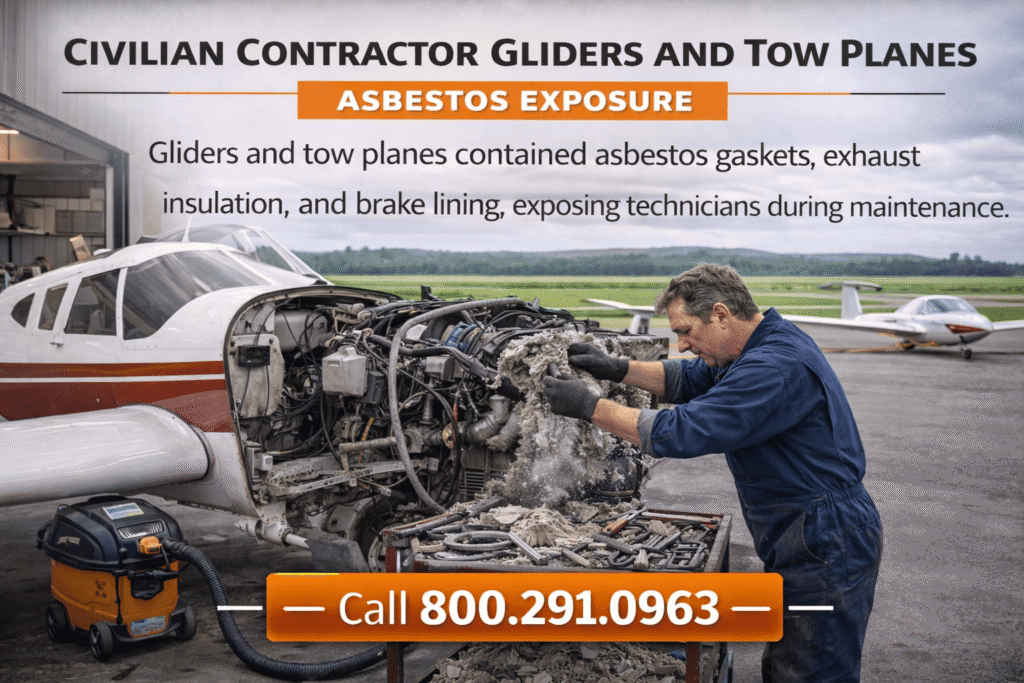
Civilian Contractor Gliders and Tow Planes – Asbestos Exposure
Gliders, known for their engine-less, silent flight, were frequently towed by powered aircraft—tow planes—especially during training, military operations, and recreational use. While gliders themselves rarely contained asbestos, the tow planes used between the 1940s and 1980s did. These aircraft relied on asbestos components for heat resistance and durability in their braking and engine systems.
Tow planes contained asbestos in brake linings, firewall insulation, engine gaskets, exhaust wraps, and cockpit heat shielding. Ground crews, mechanics, and refurb technicians were often exposed during maintenance. Tasks like brake replacement, engine repairs, or insulation upgrades disturbed friable asbestos materials and released hazardous fibers into confined maintenance hangars and cockpit spaces.
Gliders & Tow Planes – What You’ll Learn from This Page:
Tow aircraft used for glider launches contained asbestos in brakes, firewalls, and engine insulation. Mechanics and retrofit teams working on these aircraft faced high exposure risks.
Aircraft mechanics, hangar staff, and refurb crews later diagnosed with mesothelioma or lung diseases may qualify for legal compensation or trust fund payouts.
Common repair jobs like brake replacement, engine seal changes, or firewall patching disturbed asbestos and exposed workers to airborne fibers.
Over $30 billion remains in asbestos trust funds. Claims related to tow aircraft exposure often settle for $250,000 to $450,000.
Affected workers may also qualify for SSDI, workers’ compensation, or VA benefits, depending on employment and service history.
Lawsuits linked to asbestos in tow planes have settled for over $1.8 to $3.2 million, with some verdicts even higher.
Free legal case reviews are available for anyone exposed to asbestos while maintaining or retrofitting tow aircraft.
Estimated Number of People Exposed via Tow Aircraft
| Exposure Category | Estimated Number of People Exposed |
|---|---|
| Aircraft Mechanics | Over 76,000 exposed |
| Ground Crew & Hangar Staff | Around 38,000 exposed |
| Refurb & Retrofit Technicians | About 23,000 exposed |
| Flight Instructors & Tow Pilots | Nearly 19,000 exposed |
Total Estimated Exposure: Over 150,000 personnel.
Why Asbestos Was Used in Tow Planes
Tow aircraft operated in demanding environments and required durable, fire-resistant parts:
-
Brake Linings – Asbestos ensured strong friction and heat absorption
-
Engine Gaskets – Sealed engine systems exposed to extreme vibration and heat
-
Firewall Panels – Protected cockpits from potential engine fires
-
Exhaust Wrapping – Reduced fire hazards and contained heat emissions
-
Cockpit Insulation – Maintained cabin temperature and shielded components
Aging aircraft made asbestos materials brittle, increasing friability and risk during maintenance and teardown.
Glider & Tow Aircraft Use Across Sectors
| Sector | Primary Use | Common Locations |
|---|---|---|
| Military Flight Training | Training missions with gliders | Bases and airstrips |
| Civilian Aviation Schools | Launching glider students | Private airfields, academies |
| Recreational Soaring Clubs | Hobby gliding operations | Gliderports and rural airstrips |
Frequent maintenance and retrofitting on tow planes increased asbestos exposure, especially for aircraft built before 1985.
Estimated Number of Personnel Exposed from Tow Aircraft Work
| Occupation Group | Estimated Number Exposed |
|---|---|
| Aircraft Maintenance Crews | Over 9,200 |
| Brake System Technicians | Approx. 6,300 |
| Engine Overhaul Mechanics | Around 5,400 |
| Hangar Support Staff | Nearly 4,800 |
Total Estimated Exposure: Over 25,700 personnel.
Asbestos Exposure Areas on Tow Aircraft
-
Brake Assemblies – Contained asbestos linings and pads
-
Firewall & Cockpit Shields – Included asbestos heat barriers
-
Engine Compartments – Gaskets and seals insulated with asbestos
-
Exhaust Systems – Wrapped in asbestos thermal material
-
Cabin Panels – Occasionally lined with asbestos-containing insulation
High-Risk Tow Aircraft Maintenance Personnel
| Job Role | Exposure Risk | Details |
|---|---|---|
| Brake Mechanics | High | Replaced asbestos-laden brake parts |
| Engine Repair Techs | High | Removed asbestos gaskets and heat shields |
| Hangar Crews | Moderate | Worked in dusty, enclosed maintenance areas |
| Cockpit Insulators | High | Handled asbestos panels near instrument panels |
Common Asbestos Products in Tow Aircraft
-
Brake Pads & Linings – Designed to resist friction and overheating
-
Engine Gaskets – Durable, heat-resistant seals with asbestos cores
-
Firewall Panels – Asbestos-filled to prevent cockpit heat transfer
-
Exhaust Insulation Wraps – Maintained temperature regulation
-
Adhesives & Sealants – Bonded cockpit and engine components securely
Long-Term Health Risks from Asbestos Exposure
-
Mesothelioma – Aggressive, incurable cancer linked to asbestos
-
Asbestosis – Fibrosis of lung tissue, worsens with time
-
Lung Cancer – Elevated risk from chronic asbestos exposure
-
Pleural Thickening – Compromised lung capacity, causes discomfort
Lawsuits Filed by Tow Aircraft Workers
-
Filed by mechanics, hangar staff, and aviation school workers
-
Named manufacturers and part suppliers—not employers—as defendants
-
Family members can file wrongful death suits for asbestos-related deaths
-
Exposure documented during overhaul, brake work, and panel replacements
Sample Tow Aircraft Asbestos Settlements
| Settlement Amount | Case Details |
|---|---|
| $3.2 million | Mechanic exposed while replacing asbestos brake pads |
| $2.9 million | Instructor’s aide diagnosed after decades of exposure |
| $2.2 million | Engine tech serviced WWII-era tow planes in reserve |
| $2.0 million | Aviation school worker handled insulation materials |
Companies Linked to Tow Aircraft Asbestos Parts
-
Raybestos – Aircraft brake linings and clutch pads
-
Johns-Manville – Fireproofing materials in cockpits
-
Garlock – Engine gaskets and thermal seals
-
Owens Corning – Aircraft insulation products
-
3M – Adhesives used in panel bonding
Asbestos Trust Funds for Tow Aircraft Workers
-
Over $30 billion still available for qualified asbestos claims
-
Tow aircraft cases often resolve between $250,000 and $450,000
-
Trust claims do not affect SSDI or retirement income
-
Claims valid even decades after exposure took place
Benefits for Civilian Tow Aircraft Workers
-
SSDI or workers’ comp for workers too ill to continue work
-
Survivor benefits available for spouses or dependents
-
Military tow plane service may qualify for VA benefits
-
Legal claims can enhance existing benefit programs
Filing a Tow Aircraft Asbestos Claim
-
Confirm diagnosis of an asbestos-related disease
-
Gather history of aircraft serviced and work performed
-
Work with a skilled asbestos attorney to file claim or lawsuit
-
Many claims resolve in 6–12 months with full compensation
Statute of Limitations
-
Injury Claims: File within 2–3 years of confirmed diagnosis
-
Wrongful Death: File within 2–3 years of family member’s passing
-
Trust Claims: No time limit for most asbestos trust submissions
Tow Aircraft Asbestos Exposure FAQs
Q: Did tow aircraft contain asbestos?
Yes. Brakes, gaskets, firewalls, and insulation often included asbestos until the early 1980s.
Q: Can civilian aviation school workers file a claim?
Yes. Workers in both private and public sectors are eligible to file.
Q: Does a trust claim affect government benefits?
No. Filing a claim will not impact SSDI, VA, or workers’ comp benefits.
Q: Can a family member file on behalf of someone who died?
Yes. Surviving family can pursue wrongful death or trust fund compensation.
Talk to a Legal Advocate for Aircraft Asbestos Exposure
Call 800.291.0963 for a free consultation.
Trusted asbestos attorneys are available to help former aircraft workers and their families file successful claims.