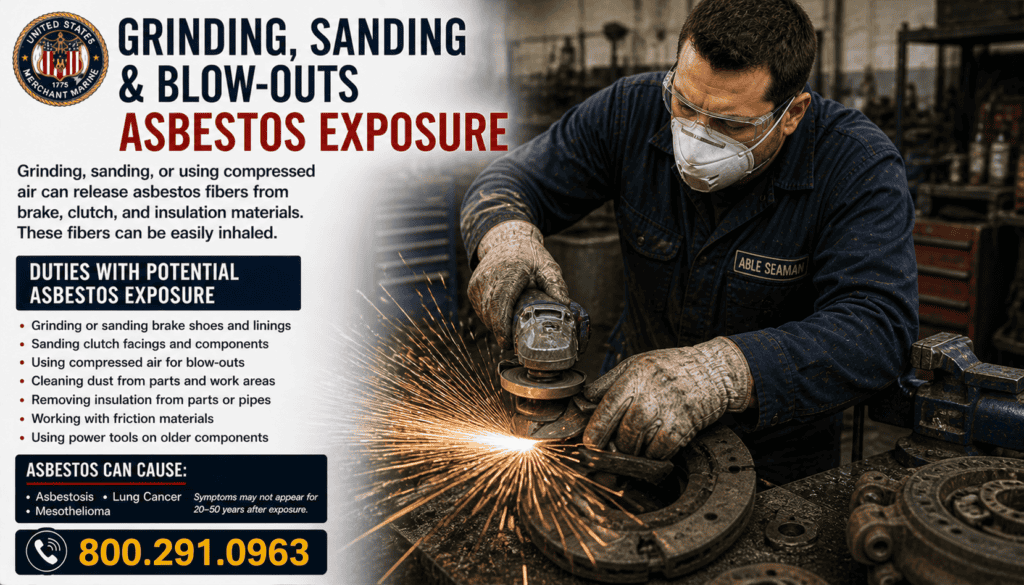
🌬️ Grinding, Sanding & Blow-Outs Asbestos Exposure
Grinding components, sanding friction materials, and using compressed air blow-outs re-aerosolized asbestos dust throughout automotive repair shops.
Grinding, sanding, and blow-outs asbestos exposure was one of the most hazardous and far-reaching sources of asbestos contamination in automotive repair shops. These practices were common, routine, and often encouraged as “standard shop procedures” throughout much of the 20th century.
Auto mechanics regularly used grinders, sandpaper, wire wheels, and compressed air to clean, resurface, and prepare automotive components. When those components contained asbestos—such as brake linings, clutch facings, gaskets, and insulation materials—these actions released large quantities of airborne asbestos fibers.
Unlike exposure limited to one mechanic, grinding, sanding, and blow-outs spread asbestos dust throughout entire repair bays, contaminating tools, workbenches, floors, clothing, and ventilation systems. This made asbestos exposure widespread, persistent, and unavoidable for nearly everyone inside the shop.
🔥 Why Grinding and Sanding Were Common in Auto Repair Shops
Grinding and sanding were standard practices because they helped mechanics:
-
Ensure proper fit of brake pads and shoes
-
Remove glazing from friction materials
-
Clean gasket surfaces and engine parts
-
Resurface clutch components
-
Speed up repairs and improve performance
Compressed air blow-outs were widely used to “clean” assemblies quickly, despite the fact that they violently dispersed asbestos fibers into the air.
At the time, most mechanics were never warned that these tasks could expose them to deadly asbestos fibers.
🧪 How Asbestos Exposure Occurred During Grinding, Sanding & Blow-Outs
These tasks released asbestos fibers through several common repair activities.
🔧 Grinding Brake and Clutch Components
Grinding brake linings, shoes, and clutch facings reduced asbestos-containing materials into fine dust that became airborne instantly.
🛠️ Sanding Friction Surfaces
Hand-sanding brake pads, clutch discs, and gaskets released fibers directly into mechanics’ breathing zones.
🌬️ Compressed Air Blow-Outs
Using compressed air to clean brake assemblies, bell housings, and engine parts re-aerosolized settled asbestos dust and spread it across the entire shop.
⚙️ Power Tool Use
Bench grinders and wire wheels pulverized asbestos materials at high speeds, creating microscopic fibers that remained airborne for extended periods.
🧹 Shop Cleanup and Sweeping
Dry sweeping floors and work areas stirred up asbestos dust repeatedly throughout the day.
👷 Workers Commonly Exposed to Grinding & Blow-Out Asbestos
Because these activities spread asbestos throughout the shop, exposure affected nearly everyone onsite, including:
-
Auto mechanics
-
Brake and clutch specialists
-
Apprentices and helpers
-
Fleet garage workers
-
Shop foremen and supervisors
-
Parts clerks and handlers
-
Service writers and office staff
-
Cleanup and maintenance workers
Even workers not directly performing repairs inhaled asbestos fibers circulating in the air.
🫁 Diseases Linked to Grinding, Sanding & Blow-Out Asbestos Exposure
Inhaled asbestos fibers lodged deep in the lungs and pleura, leading to severe diseases decades later.
Common asbestos-related illnesses include:
-
Mesothelioma
-
Asbestos-related lung cancer
-
Asbestosis
-
Pleural plaques and thickening
Mesothelioma is particularly associated with repeated airborne exposure, such as that caused by grinding and blow-out practices.
⏳ Long Latency Period and Delayed Diagnosis
Most automotive workers exposed through grinding, sanding, and blow-outs were diagnosed 20 to 50 years after exposure. Because asbestos dust was invisible and considered part of normal shop conditions, most workers were unaware of the danger.
This long delay often prevented early detection and treatment.
⚖️ Legal Options for Grinding & Blow-Out Asbestos Exposure
Workers exposed to asbestos through grinding, sanding, and blow-outs may qualify for compensation through:
-
Personal injury lawsuits
-
Asbestos trust fund claims
-
Wrongful death lawsuits (for surviving families)
Claims are filed against manufacturers of asbestos-containing automotive components, not against auto repair shop employers.
📄 Evidence Used in Grinding & Blow-Out Asbestos Claims
Successful claims often rely on:
-
Medical records confirming asbestos-related disease
-
Employment history in automotive repair shops or garages
-
Job duties involving grinding, sanding, or compressed air use
-
Identification of asbestos-containing brake, clutch, and gasket products
-
Coworker testimony describing shop practices
Experienced asbestos attorneys use automotive exposure databases to identify responsible manufacturers.
💰 Compensation Available for Grinding & Blow-Out Asbestos Exposure
Compensation may include:
-
Medical treatment and ongoing care costs
-
Lost wages and reduced earning capacity
-
Pain and suffering
-
Travel and caregiving expenses
-
Loss of quality of life
Because exposure affected entire shops, these cases often involve multiple exposure sources and result in significant settlements.
🏦 Asbestos Trust Funds and Shop-Wide Exposure
Many manufacturers whose products released asbestos during grinding and blow-outs filed for bankruptcy and established asbestos trust funds. Workers may qualify for multiple trust fund claims, often in addition to lawsuits.
Trust fund claims allow compensation without going to trial and are frequently processed more quickly.
⏱️ Statute of Limitations for Grinding & Blow-Out Claims
Deadlines vary by state and generally begin on:
-
The date of diagnosis, or
-
The date the illness was linked to asbestos exposure
Strict enforcement makes early legal review essential.
⚖️ Why Grinding & Blow-Out Asbestos Claims Are Strong
These claims are often successful because:
-
Grinding and blow-outs are well-documented shop practices
-
Asbestos use in brakes, clutches, and gaskets is proven
-
Exposure was widespread and repeated
-
Medical causation is clearly established
-
Manufacturers failed to warn workers
Courts consistently recognize grinding and blow-outs as high-risk asbestos exposure practices.
🧑⚖️ Role of Experienced Automotive Asbestos Attorneys
These cases require attorneys who understand:
-
Automotive repair shop environments
-
Historical repair practices
-
Asbestos-containing automotive products
-
Multi-defendant asbestos litigation
-
Trust fund coordination
Strategic representation often results in substantially higher compensation.
📞 Legal Help for Grinding, Sanding & Blow-Out Asbestos Exposure
If you worked in an automotive repair shop where grinding, sanding, or compressed air blow-outs were used and were later diagnosed with mesothelioma or another asbestos-related disease, legal help may be available.
📞 Call 800-291-0963 for a free case review
✔ No upfront costs
✔ Nationwide representation
✔ Complete automotive exposure investigation
✔ Help with lawsuits and asbestos trust fund claims