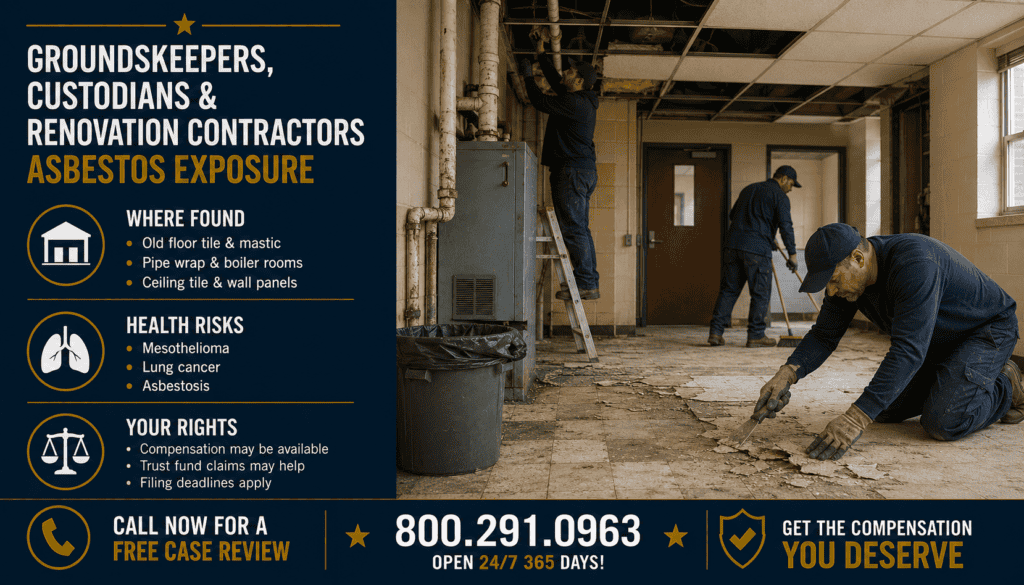
🏠 Groundskeepers, Custodians & Renovation Contractors
Secondary Dust Asbestos Exposure on Bases
Across U.S. military bases, groundskeepers, custodians, and renovation crews faced significant secondary asbestos exposure while maintaining and cleaning aging facilities. As older buildings, schools, and barracks deteriorated or underwent repairs, asbestos dust from insulation, flooring, roof panels, and pipe systems spread throughout work areas. Many support staff inhaled these fibers daily—often without realizing they were being exposed.
📞 Were you or a loved one exposed to asbestos while maintaining military property? Call 800.291.0963 for free claim guidance today.
🧭 Step 1 – Where Secondary Asbestos Exposure Occurred
Asbestos contamination extended far beyond construction sites, exposing maintenance and custodial staff who cleaned or repaired older base buildings.
Common exposure areas:
-
⚙️ Boiler rooms and mechanical basements.
-
🧱 Barracks, classrooms, and housing units with aging insulation.
-
💨 Roofs, floor tiles, and ceiling panels during renovations.
-
🔩 Old hospitals, laundries, and kitchens with asbestos ducts or flooring.
-
🪖 Office buildings containing asbestos ceiling and wall materials.
Goal: Identify which base facilities you worked in that contained asbestos products.
📁 Step 2 – Who Was Exposed
Exposure was common among both military and civilian support personnel.
High-risk groups:
-
🧰 Groundskeepers cleaning or mowing near asbestos roof debris.
-
⚙️ Custodians and Janitors sweeping dust from deteriorating floor tiles and ceilings.
-
💨 Renovation and Maintenance Workers removing old insulation or tiles.
-
🪖 Painters and Electricians cutting through asbestos wallboard or duct seals.
-
🧾 Civilian base contractors handling routine maintenance and repair projects.
Goal: Connect your role or job description to maintenance or renovation areas known for asbestos contamination.
🏗️ Step 3 – How Secondary Exposure Happened
Even without handling asbestos directly, routine cleaning or repair tasks released fibers into the air.
Typical exposure activities:
-
🔧 Sweeping or vacuuming floors coated in asbestos dust.
-
⚙️ Removing damaged tiles, insulation, or drywall.
-
💨 Cleaning air vents and ducts coated in asbestos debris.
-
🧱 Mowing or trimming near old asbestos siding or roofing.
-
🧾 Handling contaminated rags, uniforms, or equipment.
Goal: Record daily maintenance activities that disturbed asbestos materials.
💼 Step 4 – The Hidden Danger of Secondary Dust Exposure
Many custodial and maintenance workers were not informed about asbestos hazards.
High-risk conditions included:
-
⚙️ Poor ventilation in enclosed maintenance rooms.
-
💨 Sweeping dry asbestos dust without wet cleaning methods.
-
🧱 Working without protective masks or gloves.
-
🧾 Cleaning contaminated laundry or work clothing.
Goal: Document unsafe working conditions that contributed to chronic asbestos inhalation.
🩺 Step 5 – Health Risks of Secondary Asbestos Exposure
Even low-level, long-term exposure can cause serious and fatal diseases decades later.
Common illnesses:
-
💀 Mesothelioma (pleural and peritoneal).
-
🫁 Asbestosis and lung fibrosis.
-
💬 Pleural plaques and chronic cough.
-
🩺 Lung, throat, and gastrointestinal cancers.
Goal: Obtain diagnostic imaging and pathology reports confirming asbestos-related illness.
⚖️ Step 6 – VA Disability & Civilian Compensation Options
Veterans and civilian base employees diagnosed with asbestos disease may qualify for VA disability, trust-fund settlements, or civil claims.
Available benefits:
-
💰 100% VA tax-free disability payments for service-related exposure.
-
🏥 Access to VA and private mesothelioma treatment programs.
-
🕊️ Dependency and Indemnity Compensation (DIC) for survivors.
-
⚖️ Trust-fund and lawsuit compensation for asbestos product exposure.
Goal: File all available claims for full financial recovery.
🧱 Step 7 – Civilian & Family Member Exposure
Secondary exposure also affected those living or working near contaminated buildings.
Eligible claimants include:
-
⚙️ Civilian base maintenance contractors.
-
💵 Family members exposed through contaminated clothing or laundry.
-
🧾 School and hospital staff working in asbestos-lined buildings.
-
🕊️ Surviving relatives of deceased custodians or repairmen.
Goal: Include household or indirect exposure evidence where applicable.
🧠 Step 8 – Evidence That Strengthens Your Claim
Key documentation:
-
🧾 Base work orders or job descriptions listing maintenance duties.
-
⚙️ Facility inspection reports or EPA abatement records.
-
💬 Witness statements from coworkers.
-
🧱 Photographs or blueprints showing asbestos materials.
Goal: Correlate your service or employment history with documented asbestos exposure locations.
🌈 Step 9 – Asbestos Abatement & Modernization Efforts
The Department of Defense began removing asbestos from bases in the late 1980s.
Cleanup milestones:
-
🏗️ EPA-mandated asbestos abatement in base housing, schools, and offices.
-
⚙️ Asbestos-free materials used in new construction.
-
🧾 Public documentation of base cleanup projects under DoD supervision.
Goal: Use abatement reports to prove your exposure occurred before material removal.
💬 Step 10 – Filing Your Claim
Next steps:
-
🧭 Confirm where and when your maintenance work occurred.
-
⚙️ Gather medical and exposure records.
-
🧾 File VA, trust-fund, or civil claims as soon as possible.
-
📞 Call 800.291.0963 for free assistance from an asbestos exposure advocate.
Goal: File quickly to protect your eligibility before deadlines or records are lost.
🤝 Where to Get Help
Our advocates assist custodians, maintenance staff, and contractors who worked in asbestos-contaminated military buildings.
📞 Call 800.291.0963 to speak with a Mesothelioma Help Center representative today.
🧭 Summary
From sweeping asbestos dust to repairing old insulation, custodians and groundskeepers across U.S. bases were unknowingly exposed to toxic fibers. These hardworking support personnel now face mesothelioma and other asbestos diseases many years later. Filing VA disability, trust-fund, and civil claims provides the justice and compensation they rightfully deserve.
You maintained the places others called home — now let us help protect yours.
800.291.0963