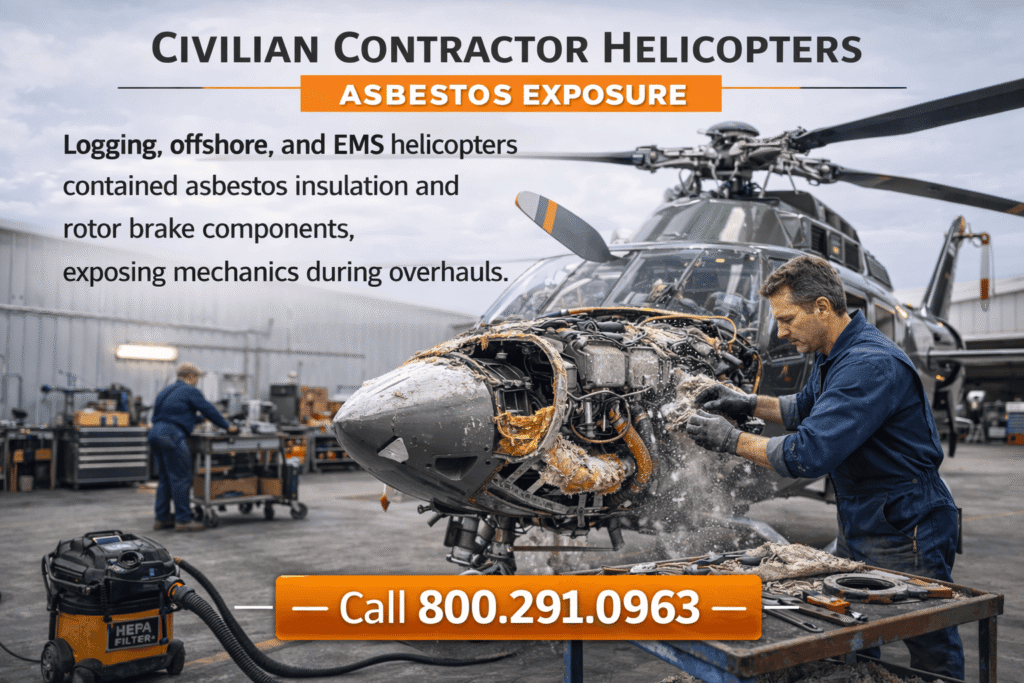
🚁 Civilian Contractor Helicopters Asbestos Exposure
Helicopters have been essential to U.S. military and civilian operations since the 1950s, serving in combat, transport, search and rescue, and industrial sectors like logging and offshore work. To handle high engine heat, vibration, and friction-heavy rotor systems, manufacturers relied on asbestos-based materials in several helicopter components.
Asbestos was used in rotor brake linings, engine insulation, firewall panels, gaskets, and cockpit heat shields. Maintenance crews and field mechanics were frequently exposed during system overhauls, especially in confined compartments with poor airflow. Civilian EMS, forestry, and oil rig operations also faced high exposure risks.
📘 Helicopters – What You’ll Learn from This Page:
-
Helicopters used asbestos in rotor brakes, insulation, gaskets, fireproof panels, and exhaust systems. Mechanics and crew were exposed during maintenance, brake replacement, and overhauls.
-
Veterans and civilian workers with mesothelioma, lung cancer, or asbestosis may qualify for financial compensation.
-
Removal of old insulation, gasket scraping, and brake servicing released airborne asbestos fibers into enclosed aircraft and hangars.
-
Over $30 billion remains available in asbestos trust funds. Helicopter-related claims often settle between $275,000 and $475,000.
-
VA disability compensation for service-related mesothelioma tied to helicopter work can exceed $3,800/month, tax-free.
-
Legal settlements for helicopter asbestos exposure have reached $1.2 to $1.6 million. Some verdicts have topped $5 million.
-
Free case evaluations are available for veterans, contractors, and civilians exposed while servicing helicopters.
🧾 Estimated Number of People Exposed via Helicopters
| Exposure Category | Estimated Number of People Exposed |
|---|---|
| Helicopter Mechanics | Over 93,000 exposed |
| Crew Chiefs & Technicians | Around 48,000 exposed |
| Rotor System Specialists | About 29,000 exposed |
| Depot & Hangar Workers | Nearly 54,000 exposed |
Total Estimated Exposure: Over 224,000 personnel.
🔥 Why Asbestos Was Used in Helicopters
Helicopters demanded heat and vibration-resistant materials for high-performance and safety:
-
Rotor Brake Linings – Asbestos provided reliable friction in emergency stops
-
Engine Compartment Insulation – Prevented overheating in tight engine bays
-
Firewall & Cabin Panels – Used asbestos for fireproofing between systems
-
Exhaust Gaskets – Withstood extreme heat and engine stress
-
Cockpit Heat Shields – Protected electronics from engine compartment heat
The constant vibration and temperature changes accelerated the breakdown of asbestos components, raising exposure risks during replacements and inspections.
🌍 Helicopter Use Across Military & Civilian Missions
| Deployment Area | Primary Use | Common Locations |
|---|---|---|
| Combat & Evacuation | Medical evacuation & troop lift | Jungle bases, combat zones |
| Industrial Operations | Logging, offshore, EMS | Forest camps, oil rigs |
| SAR & Transport | Rescue, utility, and VIP missions | Mountain bases, disaster zones |
Frequent landings, flight hours, and rugged operations led to high maintenance frequency and repeated asbestos exposure.
👷 Estimated Number of Personnel Exposed from Helicopter Work
| Occupation Group | Estimated Number Exposed |
|---|---|
| Airframe Mechanics | Over 8,400 |
| Rotor System Technicians | Approx. 6,700 |
| Engine Overhaul Crew | Around 5,800 |
| Civilian Helicopter Techs | Nearly 6,200 |
Total Estimated Exposure: Over 27,100 personnel.
🧱 Asbestos Exposure Areas on Helicopters
-
Rotor Brake Systems – Pads shed dust during wear and replacement
-
Engine Compartments – Heat shields and insulation released fibers
-
Firewall Panels – Degraded asbestos protected cabin from fire hazards
-
Cabin Interiors – Fireproofing and insulation around controls and electronics
-
Exhaust Systems – Wrapped with asbestos cloth or tape near turbines
⚠️ High-Risk Helicopter Personnel
| Job Role | Exposure Risk | Details |
|---|---|---|
| Mechanics | High | Worked on engines, rotors, and exhaust systems |
| Crew Chiefs | Moderate | Operated in proximity to asbestos parts |
| Rotor Techs | High | Replaced brake and clutch linings |
| Depot Staff | High | Performed full system overhauls in hangars |
🧰 Common Asbestos Products in Helicopters
-
Rotor Brake Pads & Linings – Heavy-wear parts containing woven asbestos
-
Engine Gaskets – Seals in high-compression, high-heat systems
-
Heat Shields – Wrapped around turbines, manifolds, and mufflers
-
Insulation Blankets – Lined engine bays and firewall sections
-
Fireproof Panels – Near avionics and fuel systems
🫁 Long-Term Health Risks from Asbestos Exposure
-
Mesothelioma – Cancer affecting lining of lungs and abdomen
-
Asbestosis – Lung disease causing chronic shortness of breath
-
Lung Cancer – Significantly elevated in exposed aviation workers
-
Pleural Thickening – Hardening of chest lining limiting lung capacity
⚖️ Lawsuits Filed by Helicopter Mechanics & Crew
-
Filed by military and civilian workers exposed during helicopter service
-
Manufacturers—not military—are liable in asbestos claims
-
Surviving family members may file wrongful death lawsuits
-
Exposure documented at hangars, offshore sites, and base depots
💰 Sample Helicopter Asbestos Settlements
| Settlement Amount | Case Details |
|---|---|
| $3.0 million | Rotor tech exposed to asbestos brake dust, diagnosed with mesothelioma |
| $2.7 million | Mechanic working in offshore helicopter bays, developed lung cancer |
| $2.3 million | Civilian EMS helicopter crew exposed to degraded insulation |
| $2.0 million | Base technician replaced fireproofing panels, later diagnosed |
🏢 Companies Linked to Helicopter Asbestos Parts
-
Raybestos – Rotor and brake systems
-
Bendix – Friction parts for aviation
-
Johns-Manville – Heat and fireproofing insulation
-
Garlock – Gaskets and pressure seals
-
Owens Corning – Aviation panel insulation
🏦 Asbestos Trust Funds for Helicopter Workers
-
Over $30 billion in approved funding remains
-
Helicopter claims typically range $300,000–$600,000+
-
Trust fund claims do not affect VA benefits
-
Claims can be filed decades after retirement or exposure
🪖 VA Benefits for Helicopter Veterans
-
$3,800+/month tax-free for mesothelioma disability
-
Full treatment access at VA cancer specialty centers
-
VA DIC for spouses and dependents of deceased veterans
-
Priority processing for all asbestos-linked illness claims
📝 Filing a Helicopter Asbestos Claim
-
Obtain a medical diagnosis of asbestos-related illness
-
Gather records of helicopter duties, MOS, or technician logs
-
File legal and trust claims with qualified asbestos attorneys
-
Most cases resolve within 6–12 months from filing
⏳ Statute of Limitations
-
Injury Claims: File within 2–3 years of diagnosis
-
Wrongful Death: Within 2–3 years of passing
-
Trust Fund Claims: No expiration date for most asbestos trusts
❓ Helicopter Asbestos Exposure FAQs
Q: Did helicopters contain asbestos components?
Yes. Rotor brakes, engine insulation, and panels used asbestos until the 1980s.
Q: Can I still file if I worked as a civilian helicopter tech?
Yes. Civilian workers frequently qualify for asbestos compensation.
Q: Will a legal claim impact my VA disability?
No. Asbestos lawsuits are independent from VA disability benefits.
Q: Can families file if the worker has passed away?
Yes. Loved ones may seek wrongful death compensation and VA survivor benefits.
📞 Talk to a Legal Advocate for Helicopter Asbestos Exposure
Call 800.291.0963 for a free case review.
Skilled legal professionals are ready to help helicopter veterans and aviation workers file claims.