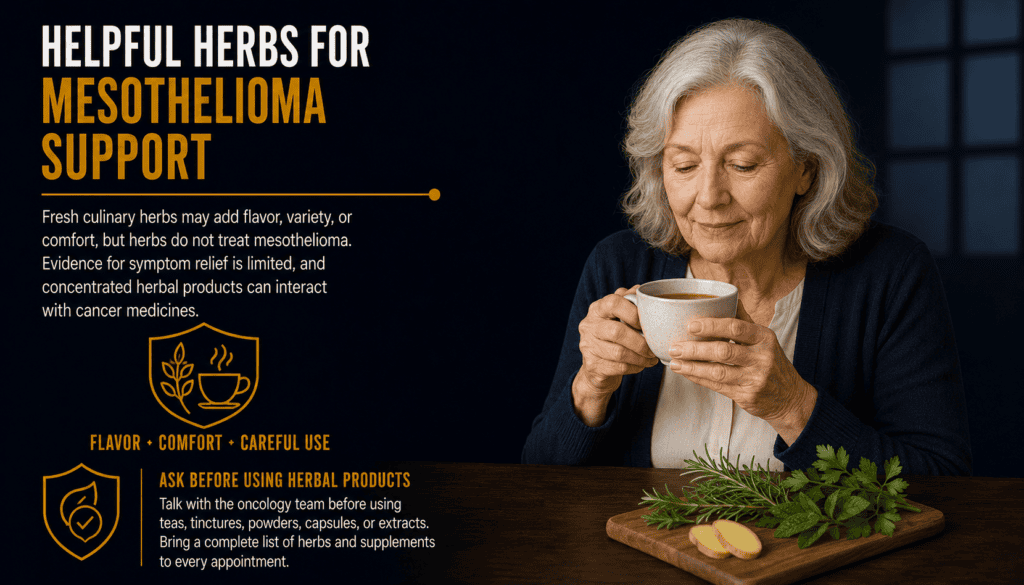
🌿 Helpful Herbs for Mesothelioma Support
(1,200+ words • Icons Included • Medical + Legal Tone)
Herbal remedies can provide gentle support for mesothelioma patients by easing nausea, calming anxiety, soothing the throat, improving sleep, and supporting digestion. While herbs cannot treat or cure mesothelioma, they may improve day-to-day comfort when used alongside — never instead of — standard medical care.
Because herbs are biologically active, some can interfere with chemotherapy, immunotherapy, radiation, blood thinners, steroids, and pain medications. That’s why every herb, tea, capsule, or extract must be discussed with the oncology team before use.
This guide offers an educational overview of commonly used herbs, what they may help with, safety cautions, and how families can incorporate them responsibly — plus why documenting symptom management can also support legal claims.
🌱 Why Herbs Are Used for Mesothelioma Symptom Support
Many mesothelioma patients look to herbal support to help manage:
-
Nausea and vomiting
-
Digestive upset and bloating
-
Poor appetite
-
Anxiety and stress
-
Trouble sleeping
-
Throat or esophageal irritation
-
General discomfort and inflammation
Used appropriately, herbs can:
-
Complement anti-nausea medications
-
Support relaxation and sleep
-
Ease mild digestive issues
-
Provide comforting rituals (warm teas, aromatic steam, etc.)
However, herbs are supportive only. They do not replace:
-
Surgery
-
Chemotherapy
-
Immunotherapy
-
Radiation
-
Prescription pain and symptom-control medications
⚠️ Critical Safety Warning (Required)
Herbs are not harmless just because they are natural.
Some can:
-
Reduce chemotherapy effectiveness
-
Interfere with immunotherapy response
-
Increase bleeding risk (especially with blood thinners)
-
Strain the liver or kidneys
-
Change how drugs are broken down in the body
-
Overstimulate or suppress the immune system
👉 Rule #1: Never start or stop an herb without your oncology team’s approval.
This page is for education only. It is not medical advice and does not recommend specific products, doses, or treatment plans.
🍃 Ginger — Nausea & Digestive Relief
Icon: 🫚
Ginger is one of the most widely used natural options to help ease nausea, including chemotherapy-related nausea.
Potential Benefits
-
Reduces nausea and vomiting
-
Helps settle a sensitive stomach
-
May support appetite by making eating more comfortable
How Patients Commonly Use It
-
Ginger tea (fresh slices or tea bags)
-
Ginger chews or candies
-
Small amounts of grated ginger in hot water, broth, or soup
Safety Notes
-
Generally well tolerated in food/tea amounts
-
Large doses may irritate reflux or sensitive stomachs
-
Capsules or concentrated extracts should only be used if approved by the oncologist
🌕 Turmeric / Curcumin — Inflammation Support
Icon: 🌕
Turmeric contains curcumin, a plant compound known for anti-inflammatory properties.
Potential Benefits
-
May help reduce general inflammation
-
Can support joint and soft-tissue comfort
-
Sometimes used in warm drinks (“golden milk” with milk and honey)
How Patients Commonly Use It
-
Light seasoning in rice, soups, vegetables, or eggs
-
Turmeric tea or golden milk
Safety Notes (High Caution)
-
Concentrated curcumin supplements can interact with chemotherapy and blood thinners
-
High doses may alter how the liver processes medications
-
For most patients, food-level use only, unless an oncologist specifically approves a supplement
🍃 Peppermint — Digestive Comfort & Nausea Relief
Icon: 🍃
Peppermint can calm the digestive tract and ease mild nausea.
Potential Benefits
-
Reduces bloating and gas
-
Helps soothe stomach cramps
-
May relieve mild nausea and motion-like queasiness
How Patients Commonly Use It
-
Peppermint tea
-
Light peppermint candies
-
Peppermint in a diffuser for scent only
Safety Notes
-
Avoid swallowing concentrated peppermint essential oil
-
Tea and mild candies are usually safe, but ask the care team if reflux is an issue
🌼 Chamomile — Sleep, Anxiety & Relaxation
Icon: 🌼
Chamomile is a gentle herb often used to encourage relaxation before sleep.
Potential Benefits
-
Helps reduce mild anxiety and tension
-
Supports falling asleep more easily
-
May ease mild digestive discomfort
How Patients Commonly Use It
-
Evening chamomile tea
-
Warm compresses infused with chamomile for comfort
Safety Notes
-
Generally safe for most patients
-
Avoid if the patient has known allergies to ragweed, daisies, or related plants
🌿 Holy Basil (Tulsi) — Stress & Emotional Support
Icon: 🌿
Holy basil (tulsi) is an “adaptogenic” herb traditionally used for stress balance.
Potential Benefits
-
May help the body cope with stress
-
Supports mood stability
-
May have mild anti-inflammatory and immune-modulating properties
How Patients Commonly Use It
-
Tulsi tea
Safety Notes
-
Can affect blood sugar and interact with certain medications
-
Should be used only with oncologist approval
🧘 Ashwagandha — Fatigue, Stress & Sleep Support
Icon: 🧘
Ashwagandha is another adaptogen often used to help with stress, anxiety, and sleep.
Potential Benefits
-
May improve sleep quality
-
May reduce perceived stress and anxiety
-
Sometimes used to support energy in chronic illness
How Patients Commonly Use It
-
Powders or capsules mixed into warm milk or food
Safety Notes (Caution)
-
Can stimulate or modulate the immune system
-
May interfere with immunotherapy
-
Should only be used under direct oncology supervision or avoided altogether during active treatment
🍶 Marshmallow Root — Throat & Esophagus Comfort
Icon: 🍶
Marshmallow root (the plant, not the candy) coats and soothes irritated mucous membranes.
Potential Benefits
-
Eases sore or irritated throat
-
May help with swallowing discomfort
-
Can soothe mild esophageal irritation
How Patients Commonly Use It
-
Marshmallow root tea
-
Syrup or lozenges containing marshmallow
Safety Notes
-
Generally gentle
-
Can slow absorption of certain medicines — take it at a different time than prescription drugs (with doctor guidance)
🍬 Licorice Root — Throat Support & Cough Relief (High Caution)
Icon: 🍬
Licorice root is sometimes used to soothe cough and throat irritation, but it carries significant risks in cancer care.
Potential Benefits
-
Coats and calms irritated throat tissue
-
May reduce coughing and dryness
Safety Notes (High Caution / Often Avoided)
-
Can raise blood pressure
-
Can disturb potassium levels and strain the heart
-
Interacts with many heart medications and steroids
-
May interfere with some cancer drugs
👉 In most mesothelioma cases, licorice root should not be used unless an oncologist specifically approves it.
🥛🌿 Milk Thistle — Liver Support (Caution)
Icon: 🥛🌿
Milk thistle is widely promoted for “liver detox,” but in cancer care the picture is more complex.
Potential Benefits
-
May help support liver cells exposed to multiple medications
Safety Notes
-
Can change how the liver metabolizes chemotherapy, hormonal therapies, and other drugs
-
May interfere with immunotherapy
Milk thistle should never be started without oncology clearance.
🍵 Green Tea — Gentle Antioxidant Support (Tea Only)
Icon: 🍵
Green tea provides mild antioxidant support and can be soothing to sip.
Potential Benefits
-
Provides antioxidants
-
Supports hydration
-
May gently improve alertness
How Patients Commonly Use It
-
Lightly brewed green tea (1–2 cups per day, if approved)
Safety Notes
-
Regular brewed tea is usually safe if the oncologist agrees
-
Avoid concentrated green tea extracts or pills unless directly prescribed — they can interact with chemotherapy and affect the liver
🚫 Herbs Commonly Avoided During Mesothelioma Treatment
The following herbs have frequent, serious interactions with cancer therapies and are usually not recommended:
❌ St. John’s Wort
-
Strongly interferes with chemotherapy metabolism
-
Alters pain medication and antidepressant levels
❌ Echinacea
-
Stimulates the immune system
-
May conflict with immunotherapy mechanisms
❌ Ginkgo Biloba
-
Increases bleeding risk
-
Dangerous with blood thinners or low platelets
❌ High-Dose Turmeric/Curcumin Supplements
-
Affects clotting and drug metabolism
❌ Kava
-
Can cause serious liver damage
If a supplement is not clearly approved, the safest assumption is “check first, don’t start.”
🍵 Safe Ways Caregivers Can Incorporate Herbal Support
Caregivers can help patients use herbs in low-risk, gentle forms once the oncology team has approved them:
✔️ Mild Herbal Teas
-
Ginger, chamomile, peppermint, tulsi, and marshmallow root (if approved)
-
Start with small amounts and monitor tolerance
✔️ Aromatherapy & External Use
-
Peppermint or chamomile in a diffuser for calming scent
-
Warm herbal compresses for comfort on the chest or neck
✔️ Herbal Broths
-
Lightly seasoned broths with small amounts of ginger, turmeric, and garlic for warmth and hydration (food-level, not supplement-level)
⚠️ Avoid:
-
High-dose capsules or extracts without explicit approval
-
Mixing multiple herbal supplements at once
🩺 When Herbs Become Unsafe — Red Flag Symptoms
Stop all new herbs and contact the medical team immediately if the patient develops:
-
Fast or irregular heartbeat
-
New or increased bleeding or bruising
-
Worsening nausea or vomiting
-
Sudden rise in blood pressure
-
Trouble breathing or chest tightness
-
New swelling of the face, legs, or abdomen
-
Confusion, agitation, or unusual fatigue
-
Any possible allergic reaction (rash, hives, throat tightness)
These may signal drug–herb interactions, toxicity, or infection that needs urgent evaluation.
👩⚕️ When to Involve an Oncology Dietitian
An oncology-trained dietitian can help safely coordinate herbal use with nutrition and medications, especially when:
-
Appetite is very low
-
Nausea or vomiting is hard to control
-
Weight loss is accelerating
-
The patient takes multiple prescription medications
-
There are liver, kidney, or heart concerns
-
Immunotherapy is part of the treatment plan
Dietitians can:
-
Review every tea, capsule, and supplement
-
Suggest gentler alternatives if a chosen herb is risky
-
Help balance herbal support with high-calorie, high-protein nutrition
⚖️ Legal Importance of Documenting Herbal & Symptom Support
From a legal perspective, tracking herbal use and symptom management helps show the full impact of mesothelioma on a patient’s life.
Well-kept records can:
-
Demonstrate the severity of symptoms (nausea, pain, insomnia, anxiety)
-
Show the extent of efforts needed to feel even partially comfortable
-
Support claims for pain and suffering, reduced quality of life, and treatment hardship
-
Help attorneys show how far-reaching the consequences of asbestos exposure truly are
Herbs do not replace medical or legal action — but when used safely and documented well, they become part of the broader story of how mesothelioma has affected the patient’s daily life, comfort, and dignity.
📞 🚨 Urgent: Get Legal Help for Mesothelioma or Asbestos Lung Cancer
If you or a loved one is losing sleep, struggling to breathe, or suffering because of mesothelioma or asbestos-related lung cancer, do not wait.
You may qualify for significant financial compensation — but deadlines apply.
⚖️ What Our Legal Team Can Do Right Now
- 🏭 Pinpoint where asbestos exposure occurred
- 🧾 File asbestos trust fund claims worth millions
- 💼 Pursue lawsuits against responsible companies
- 🚀 Fast-track your case due to severe symptoms
- 💰 Recover compensation for treatment, bills & pain
⏳ Time matters. Your rights may depend on acting quickly.
📞 Call Now for Immediate Legal Help: 800.291.0963
Your case review is free, confidential, and available 24/7.
🛑 Disclaimer:
This mesothelioma guide provides general information only. It should not be used as medical or legal advice. If you suspect mesothelioma or have related symptoms, seek medical evaluation right away. For legal concerns, including asbestos exposure and compensation, consult a licensed attorney.