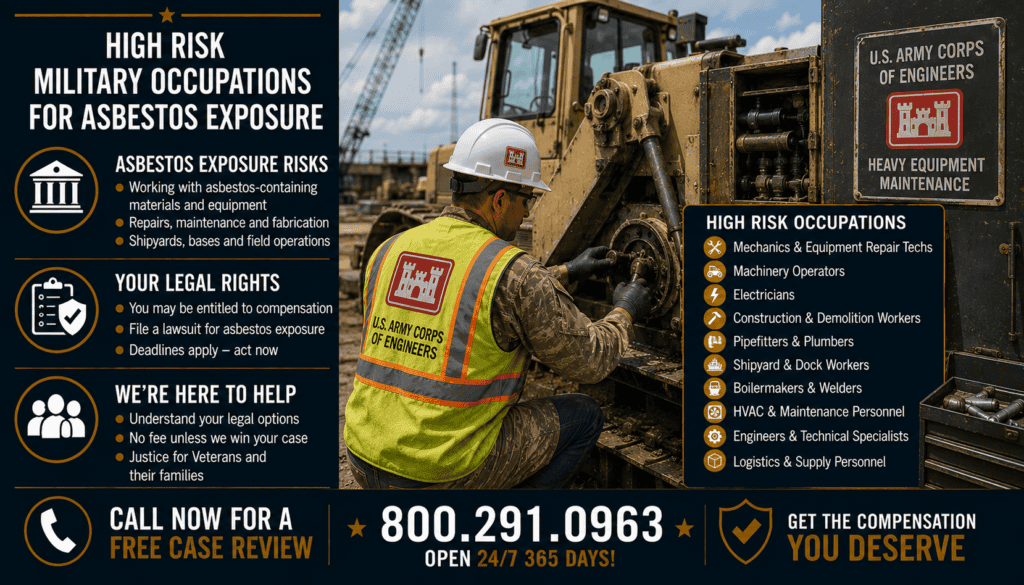
High-Risk Military Occupations for Asbestos Exposure
High-risk military occupations for asbestos exposure include several work categories identified by VA, such as shipyard work, insulation work, demolition of old buildings, carpentry, construction, mining, milling, manufacturing or installing certain building products, and servicing friction products such as clutch facings and brake linings. Actual exposure depends on the veteran’s duties, locations, materials, and service period.
Veterans can strengthen an occupational exposure history with DD214 and personnel records, military specialty and training files, duty stations, ship or facility assignments, technical manuals, maintenance records, parts catalogs, construction or renovation files, procurement documents, manufacturer information, and specific witness statements. A job title alone does not establish asbestos exposure, so task-, material-, product-, proximity-, location-, and date-specific evidence is important.
High-Risk Military Occupations for Asbestos Exposure
VA identifies several military occupations and work activities in which veterans may have encountered asbestos, including shipyard work, insulation work, demolition of old buildings, carpentry, construction, mining, milling, and manufacturing or installing products such as flooring and roofing. VA also identifies work involving friction products such as clutch facings and brake linings as a potential exposure circumstance.
An occupation or military specialty does not by itself prove asbestos exposure. A stronger exposure history identifies the service branch, duty stations, units, service dates, occupation or specialty, specific tasks, ships or facilities, equipment or products, materials disturbed, proximity to the work, and supporting personnel, technical, maintenance, procurement, facility, or witness records.
Military Occupations VA Identifies for Possible Exposure
VA specifically identifies several occupations or work categories in which veterans may have been exposed to asbestos. These categories provide useful starting points for research but should be connected to the veteran’s actual assignments and tasks.
- Shipyard work
- Insulation work
- Demolition of old buildings
- Carpentry and construction
- Mining and milling
- Manufacturing and installation of flooring, roofing, cement sheet, and pipe products
- Servicing friction products such as clutch facings and brake linings
Shipyard and Shipboard Occupations
VA’s Veterans Health Library identifies Navy shipyards and older ships as military settings where asbestos-containing materials were historically used, including engine and boiler rooms and other below-deck areas. Pipe fitters, welders, boiler operators, and personnel handling damaged asbestos-containing material are among the service members VA identifies as potentially at risk.
Research should identify the ship or shipyard, dates, compartment or shop, occupation, maintenance activity, product or system, and records showing whether asbestos-containing material was present and disturbed.
Construction, Carpentry and Demolition
VA identifies construction, carpentry, demolition of old buildings, and building renovation work among activities associated with possible military asbestos exposure. These duties could involve older facilities where asbestos-containing building materials were present.
Useful evidence may include installation maps, building numbers, construction specifications, asbestos surveys, renovation or demolition files, work orders, contractor records, and detailed witness statements.
Mechanical and Friction-Product Work
VA identifies servicing friction products such as clutch facings and brake linings as a possible asbestos-exposure circumstance. Veterans who maintained military vehicles or other equipment may need to investigate the specific model, component, manufacturer, replacement part, procedure, and service period.
Mechanical occupation alone is not proof of asbestos exposure. Parts catalogs, technical manuals, procurement files, maintenance records, manufacturer documents, and part numbers can help determine whether a particular component contained asbestos.
Insulation and Pipe-Related Work
VA identifies insulation work and pipe products among potential military asbestos-exposure circumstances. Veterans who installed, removed, repaired, or worked near documented asbestos-containing insulation may have experienced greater opportunity for airborne fiber exposure when the material was damaged or disturbed.
Exposure research should identify the facility, ship, system, insulation type, task, condition of the material, tools, ventilation, frequency, duration, and proximity to disturbed material.
Documenting a High-Risk Military Occupation
- DD214 and Official Military Personnel File records
- MOS, rating, AFSC, specialty, unit, and duty-station records
- Training and qualification records
- Ship, base, facility, vehicle, aircraft, or equipment assignments
- Technical manuals, parts catalogs, and maintenance records
- Construction, renovation, demolition, and facility records
- Procurement, manufacturer, and contractor records
- Specific firsthand coworker or witness statements
National Archives states that OMPFs can contain duty stations, assignments, training, qualifications, performance, and other personnel information. DD214 information can include a veteran’s last duty assignment, rank, military job specialty, military education, and service information.
Mesothelioma and Medical Follow-Up
Veterans concerned about possible occupational asbestos exposure should tell their health-care provider about their service branch, military specialty, duty stations, ships or facilities, equipment, products, tasks, and approximate exposure dates. VA states that symptoms associated with asbestos-related diseases often do not appear until 20 to 50 years after exposure.
Persistent shortness of breath, coughing, chest pain, unexplained weight loss, or other concerning symptoms should be evaluated by a qualified medical professional. A high-risk occupation or specialty alone cannot diagnose disease.
VA Benefits and Exposure Evidence
VA states that veterans may be eligible for disability compensation when they have a health condition caused by asbestos exposure during military service. VA says evidence includes medical records stating the condition, service records listing the veteran’s job or specialty, and a doctor’s statement connecting military asbestos exposure with the condition.
Exposure itself is not automatically service connected as a disability. VA evaluates asbestos compensation claims based on the evidence and circumstances of the individual veteran.
Frequently Asked Questions
Which military occupations does VA associate with possible asbestos exposure?
VA identifies mining, milling, shipyard work, insulation work, demolition of old buildings, carpentry, construction, manufacturing and installation of products such as flooring and roofing, and servicing friction products such as clutch facings and brake linings.
Does having a high-risk military occupation prove asbestos exposure?
No. Occupation is an important lead, but exposure research should identify the veteran’s actual tasks, locations, products or materials, dates, and proximity to disturbed asbestos-containing material.
What records can document military occupation and assignments?
National Archives states that OMPFs may contain duty stations, assignments, training, qualifications, performance, and other personnel information. DD214 records can also document military job specialty and service information.
Can shipyard and shipboard work be relevant?
Yes. VA identifies shipyard work as a potential exposure occupation and describes historical asbestos use aboard older Navy ships and in shipyard environments.
Can veterans seek VA disability compensation for asbestos-related conditions?
VA states that veterans may be eligible when they have a health condition caused by asbestos exposure during military service and submit the required supporting evidence.
Confirmed Sources
Review Your Military Occupation and Exposure History
Write down the service branch, military specialty, units, duty stations, ships, bases, facilities, service dates, equipment, products, construction or maintenance activities, materials, contractors, and coworkers you remember. Preserve available personnel, training, technical, maintenance, facility, procurement, manufacturer, and medical records and clearly distinguish documentation from recollection.
Call 800.291.0963 for a no-obligation case evaluation and to speak with a real person 24/7, 365 days a year. Mesothelioma Help Center is not a law firm or medical provider and does not determine VA eligibility.
Disclaimer: General information only—not legal or medical advice. This website is not a law firm. Exposure, VA eligibility, liability and deadlines vary by case and jurisdiction. Do not disturb suspected asbestos. Past results do not guarantee future outcomes.