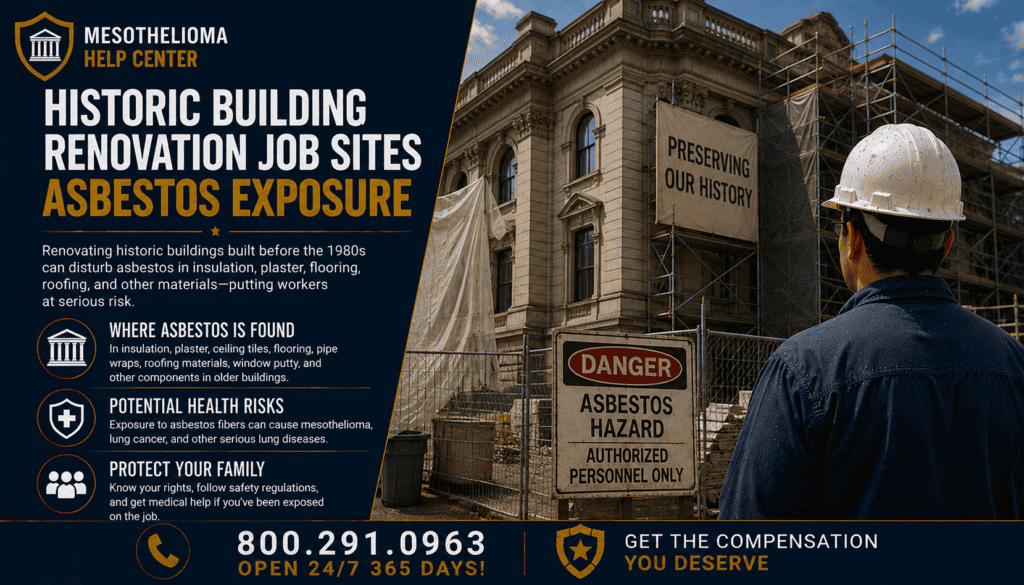
Historic Building Renovation Job Sites Asbestos Exposure
Historic buildings across the U.S.—including theaters, hotels, churches, government offices, and residential complexes—were often constructed with asbestos-containing materials before the 1980s. During renovation and restoration projects, asbestos in insulation, flooring, ceiling tiles, roofing, boilers, and piping systems was frequently disturbed. This released dangerous fibers into the air, creating high exposure risks for construction crews, contractors, custodians, and even building occupants.
Carpenters, masons, electricians, plumbers, painters, and general laborers involved in historic building renovations were exposed to asbestos on a regular basis. Visitors and residents were also at risk when asbestos dust spread into occupied areas. Inhaled asbestos fibers can remain in the body for decades, causing serious diseases such as:
• Mesothelioma
• Asbestos-related lung cancer
• Asbestosis
Historic Building Renovation Job Sites – What You’ll Learn From This Page:
-
Asbestos was widely used in insulation, flooring, roofing, and adhesives.
-
Renovation workers faced exposure when disturbing asbestos products.
-
Custodians and visitors were also at risk during ongoing projects.
-
Many historic landmarks still contain asbestos materials.
-
Workers diagnosed with asbestos illnesses may qualify for compensation.
Estimated Number of People Exposed to Asbestos in U.S. Historic Renovations
| Exposure Category | Estimated Number of People Exposed |
|---|---|
| Occupational Exposure (renovation crews, contractors, tradesmen) | Around 350,000 workers exposed |
| Secondary Exposure (families of workers) | Estimated 120,000 exposed |
| Environmental Exposure (visitors and residents) | Around 250,000 people exposed |
Total Estimated Exposure:
Over 720,000 people were exposed at historic building renovation job sites.
Facts About Asbestos in Historic Building Renovations
• Nearly all pre-1980 buildings contained asbestos in structural and mechanical systems.
• Asbestos Exposure: Flooring, roofing, plaster, boilers, HVAC ducts, and wall panels.
• Asbestos-Related Disease Risk: Highest among renovation and demolition crews.
• In historic districts, asbestos hazards often persist without abatement.
• Similar Occupations: Demolition workers, restoration specialists, and general contractors.
History of Asbestos Use in Historic Buildings
From the late 19th century through the 1970s, asbestos was widely incorporated into building products for fireproofing and insulation. Historic properties—including famous hotels, theaters, government offices, and factories—were constructed with asbestos tiles, insulation, plaster, and adhesives.
Renovation projects on these properties frequently disturbed asbestos without proper containment. Tourists, visitors, and residents of historic districts also risked exposure when fibers spread into open spaces. Even today, many landmark buildings contain asbestos hazards if preservation projects have not removed them.
Mesothelioma Risk in Historic Building Renovation Job Sites
Exposure risks included:
• Removing or sanding asbestos flooring and ceiling tiles
• Cutting into asbestos-insulated boilers and piping systems
• Roofing projects disturbing asbestos shingles and cement
• Demolition of asbestos plaster, drywall, and wallboard
• HVAC and electrical upgrades disturbing asbestos insulation
• Cleaning asbestos dust in occupied buildings during renovations
These exposures endangered both workers and the public.
Asbestos Materials Found in Historic Buildings
-
Floor and Ceiling Tiles – Contained asbestos adhesives and fibers.
-
Roofing and Siding Panels – Made with asbestos cement.
-
Plaster and Drywall – Manufactured with asbestos for fireproofing.
-
Piping and Boilers – Insulated with asbestos wraps and gaskets.
-
HVAC Systems – Used asbestos duct insulation.
-
Fireproofing Sprays – Applied to beams and ceilings.
-
Adhesives and Cements – Contained asbestos binders.
Who Was Exposed in Historic Building Renovations
-
Carpenters and Masons – Removed or replaced asbestos-laden structures.
-
Electricians and Plumbers – Disturbed asbestos during rewiring and pipe repairs.
-
Roofers and Painters – Worked on asbestos roofing and adhesives.
-
Demolition Crews – Released asbestos during wall and flooring removal.
-
Custodians – Cleaned asbestos dust during ongoing renovations.
-
Visitors and Residents – Exposed in occupied historic buildings.
Types of Historic Renovation Sites With Asbestos Risk
-
Hotels and Resorts – Built with asbestos flooring and boilers.
-
Theaters and Opera Houses – Contained asbestos fireproofing and insulation.
-
Government Buildings – Relied on asbestos in roofing, HVAC, and flooring.
-
Churches and Cathedrals – Constructed with asbestos tiles and adhesives.
-
Factories and Warehouses – Used asbestos insulation in machinery and walls.
-
Residential Complexes – Built with asbestos shingles, siding, and drywall.
Common Questions About Historic Renovation Asbestos Exposure
Can renovation workers file a claim?
Yes — contractors and tradesmen exposed during renovations may qualify.
Are visitors and residents at risk?
Yes — asbestos dust often spread into occupied historic buildings.
Do families of workers face risks?
Yes — asbestos fibers carried home on clothing caused secondary exposure.
Do I need proof of asbestos exposure?
No — attorneys can confirm asbestos use with historic building records.
Can families pursue wrongful death lawsuits?
Yes — survivors of workers lost to asbestos disease may qualify.
How a Mesothelioma Attorney Can Help
An experienced lawyer can:
• Investigate historic renovation job history and contractor records
• Identify asbestos exposure sources in old buildings
• File asbestos trust fund claims or lawsuits
• Assist families with wrongful death and personal injury cases
• Work on contingency (no fee unless you win)
Free Legal Help for Historic Renovation Workers and Families
If you or a loved one worked on historic building renovations and now face a mesothelioma or asbestos-related diagnosis, help is available.
Call Now: 800.291.0963
• No upfront costs
• No legal fees unless we win
• Exposure investigation included
• Support for families, retirees, and secondhand victims
Or request help online 24/7