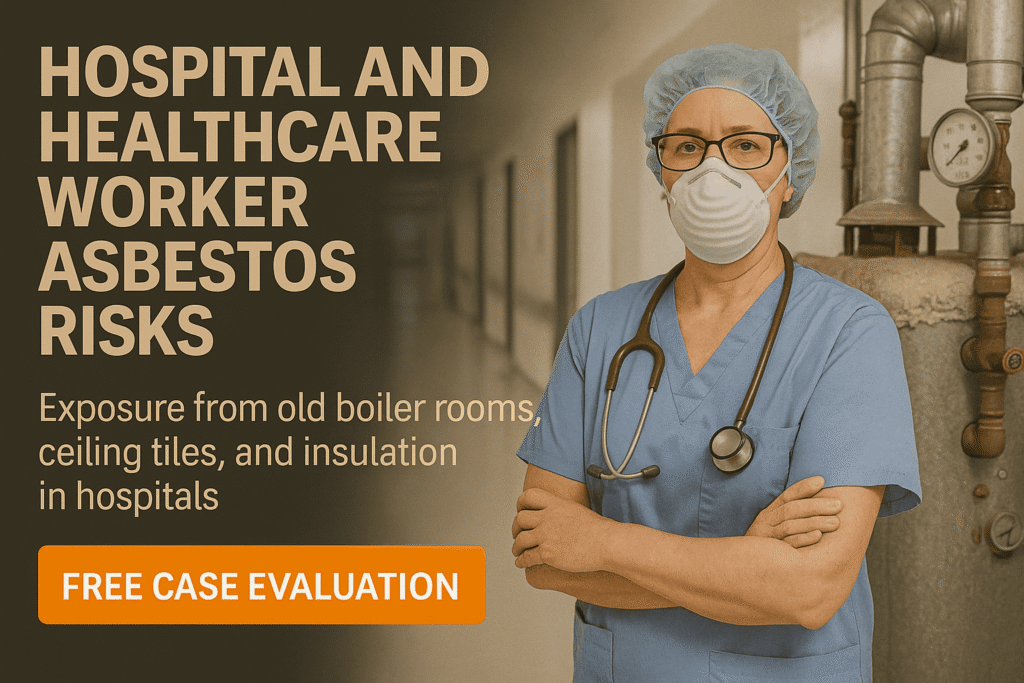
Hospital and Healthcare Worker Asbestos Risks
Hospitals, clinics, nursing homes, and medical campuses built before the 1990s often contain significant amounts of asbestos in structural and mechanical components. For decades, healthcare workers—nurses, doctors, maintenance staff, custodians, radiology technicians, lab personnel, and administrative staff—worked daily inside buildings with aging boiler rooms, deteriorating pipe insulation, damaged ceiling tiles, and old equipment containing asbestos-based heat protection.
Because hospitals operate 24/7, renovations and mechanical repairs often occur while staff and patients are still inside the building. This creates a hidden but serious risk of fiber exposure that many healthcare employees never knew existed.
If you’ve worked in healthcare and suspect asbestos exposure, call 800.291.0963 to document your work history and access recommended medical screening resources.
🏥 Step 1: Why Hospitals Historically Used So Much Asbestos
Hospitals require fireproof, sterile, noise-dampened, and heat-resistant environments. Between 1940 and 1990, asbestos offered exactly what medical facilities needed:
-
Durability
-
Fire resistance
-
Heat insulation for boilers and medical equipment
-
Soundproofing for patient rooms and operating areas
-
Electrical insulation for imaging and diagnostic machines
As a result, asbestos materials were installed throughout hospitals, from basement mechanical rooms to ceiling tiles in patient wings.
Common Hospital Locations Containing Asbestos
-
Boiler rooms
-
Pipe tunnels
-
Mechanical and utility rooms
-
Radiology and imaging departments
-
Laboratory facilities
-
Operating rooms
-
Pharmacy ceilings
-
Cafeteria floors
-
Stairwells and sub-basements
Many of these materials remain today, especially in older or underfunded hospital systems.
🔥 Step 2: Old Boiler Rooms and Mechanical Spaces
Boiler rooms are one of the highest-risk areas within hospitals.
Asbestos Found In:
-
Boiler insulation
-
Steam pipe insulation
-
Pump gaskets and valve packing
-
High-heat refractory cement
-
Turbine insulation
-
Fireproofing around mechanical equipment
-
Exhaust system insulation
Boiler rooms often leak heat or moisture, causing old insulation to crack, crumble, and shed dust. Workers most at risk include:
-
Maintenance engineers
-
Stationary engineers
-
Janitorial crews
-
HVAC technicians
-
Plumbers
-
Electricians
Many hospitals built before 1980 still rely on aging boiler systems wrapped in asbestos.
🧱 Step 3: Ceiling Tiles & Floor Tiles in Patient Areas
Hospitals installed asbestos-containing ceiling and flooring materials because they were durable, moisture-resistant, and easy to sanitize.
Common ACMs in Healthcare Buildings
-
Acoustic ceiling tiles
-
Vinyl asbestos flooring (VAT)
-
Mastic adhesive beneath tiles
-
Wallboard behind medical equipment
-
Thermal insulation in ceiling cavities
-
Sound-dampening panels in hallways
Exposure occurs when:
-
Ceiling tiles are moved to access wiring
-
Water leaks damage tiles and cause collapse
-
Floor tiles crack under heavy equipment
-
Custodians strip and buff old flooring
-
Renovations disturb hidden asbestos
Because healthcare staff work long shifts, they spend more total time inside contaminated buildings than workers in most industries.
🩻 Step 4: Radiology & Medical Equipment Containing Asbestos
Older medical machines produced intense heat and required thermal insulation.
Asbestos-Containing Equipment May Include:
-
X-ray machines
-
CT and MRI equipment from the 1970s–1980s
-
Sterilizers and autoclaves
-
Laboratory ovens
-
Heating and drying units
-
Electrical control panels
-
Imaging-room shielding materials
Technicians, biomedical engineers, and equipment-repair staff often handled internal components without knowing asbestos was present.
🧪 Step 5: Laboratories & Pathology Departments
Labs created additional risks due to high-heat equipment and older building materials.
Common Asbestos Sources in Labs:
-
Heat-resistant mats
-
Burner shields
-
Fume hood insulation
-
Sink backing boards
-
Chemical-resistant tiles
-
Ceiling panels
-
Underground pipe chases
Lab renovations—common in hospitals—often expose workers to hidden asbestos layers.
🚧 Step 6: Renovations Inside Active Hospitals
Hospitals rarely shut down entire wings for repairs. Instead, remodeling happens:
-
At night
-
On weekends
-
Behind temporary barriers
-
Only one room at a time
This means:
-
Ceiling openings
-
Pipe replacements
-
Wall demolition
-
HVAC work
-
Flooring removal
…may occur with staff and patients nearby.
If asbestos surveys are skipped—or if contractors disturb hidden ACMs—airborne fibers can spread into patient rooms, hallways, and nurses’ stations.
🧹 Step 7: Custodians, Maintenance, and Environmental Services (EVS) Staff
EVS workers handle building materials more than any other hospital employees.
Tasks That Risk Disturbing Asbestos:
-
Moving ceiling tiles for electrical access
-
Cleaning water-damaged areas
-
Stripping old vinyl flooring
-
Buffing damaged tile
-
Unclogging pipes wrapped in asbestos
-
Working in sub-basements
-
Cleaning mechanical rooms
-
Handling broken insulation
Custodians often received no asbestos training, especially before the 1990s.
🌬️ Step 8: HVAC & Ventilation Systems Spread Fibers
Hospital ventilation runs continuously throughout all wings—which means a single disturbed material can spread fibers widely.
Common HVAC Risks:
-
Duct insulation containing asbestos
-
Joint tape around air handlers
-
Damaged insulation inside ceiling spaces
-
Negative pressure rooms pulling in contaminated air
-
Dust movement during filter changes
HVAC technicians are at elevated risk, and contaminated ducts can expose entire hospital wings.
🚑 Step 9: Nurses, Doctors & Frontline Healthcare Staff
Most healthcare workers never enter boiler rooms or mechanical spaces—but they still face exposure when building materials deteriorate.
Healthcare Staff Risks Include:
-
Cracked floor tiles in patient rooms
-
Water-damaged ceiling tiles in hallways
-
Renovations occurring nearby
-
Dust from mechanical repairs
-
Moving heavy equipment across brittle tiles
-
Working in older wings awaiting upgrades
Because healthcare workers spend years or decades in the same hospital, prolonged low-level exposure becomes significant.
📂 Step 10: How Healthcare Workers Can Document Exposure
Documentation is critical for legal and medical support.
Collect Information About:
-
The hospital’s construction year
-
Renovation history
-
Job titles and departments worked
-
Boiler-room or mechanical access logs
-
Water-damage reports
-
AHERA inspection documents
-
Maintenance work orders
-
Witness statements from coworkers
-
Photos of damaged tiles, insulation, or ceiling materials
Attorneys can match these records to known hospital asbestos products and manufacturers.
🩺 Step 11: Medical Monitoring for Hospital & Healthcare Employees
Healthcare employees frequently experience repeated low-level exposure for many years.
Recommended Screenings:
-
High-resolution CT scan
-
Chest X-ray
-
Pulmonary function testing
-
Mesothelioma biomarker testing
-
Annual occupational-health exams
Symptoms like chronic cough, shortness of breath, chest tightness, or fatigue should never be ignored.
🏥 Where to Get Help
If you worked in a hospital, clinic, or long-term-care facility built before 1990, you may have been exposed to hidden asbestos materials without ever being warned.
We can help you:
-
Document asbestos exposure in your workplace
-
Access hospital building records and inspection files
-
Connect with mesothelioma treatment centers
-
File trust-fund or legal claims
-
Arrange medical screening and early-detection tests
📞 Call 800.291.0963 today to speak with an exposure specialist who understands hospital environments.
📝 Summary
Hospital and healthcare workers face unique asbestos hazards due to aging medical buildings, outdated equipment, and continuous renovation activities. Older hospitals often contain asbestos in boiler rooms, mechanical spaces, flooring, ceiling cavities, and equipment insulation—putting nurses, physicians, technicians, custodians, and maintenance workers at risk.
Key Takeaways
-
Hospitals built before 1990 frequently contain asbestos
-
Boiler rooms, pipe tunnels, and ceilings pose major hazards
-
Renovations inside active facilities can spread fibers
-
Medical equipment and lab tools often contained asbestos
-
Healthcare workers should document exposure and seek medical screening
To begin documenting your hospital-related asbestos exposure, call 800.291.0963 now.