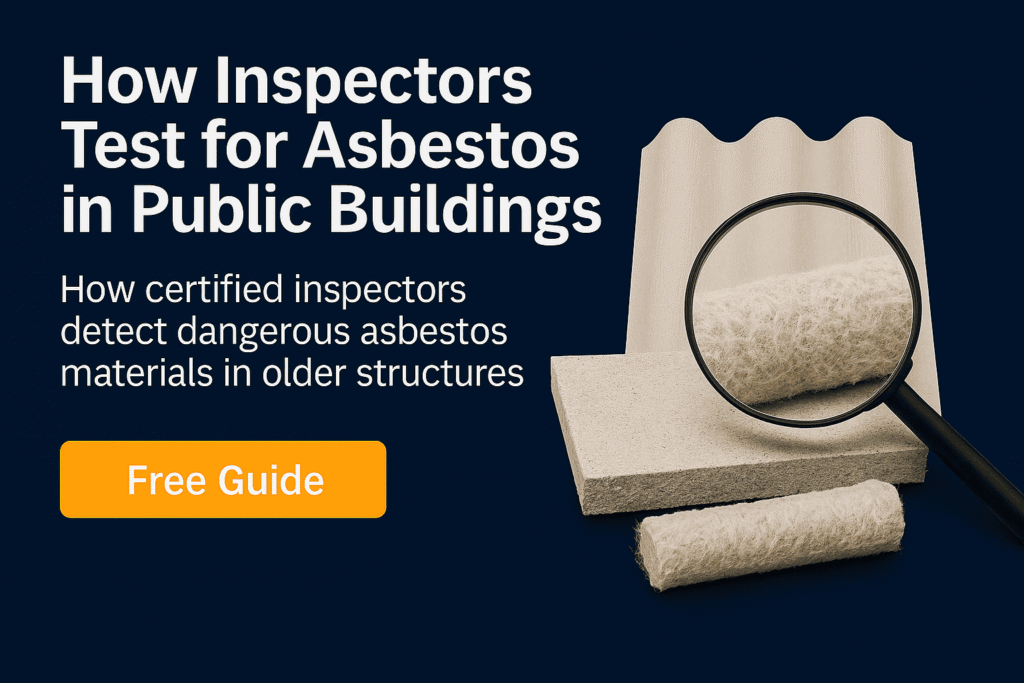
How Inspectors Test for Asbestos in Public Buildings
See how certified inspectors detect dangerous asbestos materials in older structures.
Asbestos remains hidden inside thousands of schools, courthouses, government buildings, hospitals, military facilities, and office complexes built before the 1980s. Detecting these hazardous materials requires a strict, highly regulated inspection process performed by certified asbestos inspectors.
Families, maintenance teams, and building occupants often have no idea where asbestos might be located—or whether it poses an immediate risk. A professional inspection is the only safe way to confirm the presence of asbestos and determine whether abatement, encapsulation, or monitoring is required.
If you believe a public building contains hazardous asbestos, call 800.291.0963 today for guidance on inspections, testing procedures, and safety requirements.
📘 Step 1: Why Asbestos Testing Is Required in Older Public Buildings
Before renovation, demolition, or even routine maintenance, federal and state laws require asbestos inspections in most public structures built before the 1980s.
✔ Why Testing Is Mandatory
-
Asbestos materials become dangerous when disturbed
-
Renovations can release millions of microscopic fibers
-
Airborne fibers can remain in buildings for decades
-
Public facilities must protect employees and the public
-
EPA and OSHA impose strict inspection requirements
Testing prevents accidental exposure to workers, students, patients, and visitors.
🧱 Step 2: What Inspectors Look for During an Initial Walkthrough
Certified asbestos inspectors begin with a visual assessment, reviewing building age, construction methods, and areas most likely to contain asbestos.
✔ High-Risk Building Materials Identified
-
Pipe insulation and boiler coverings
-
Floor tiles and adhesives
-
Ceiling tiles and acoustic panels
-
HVAC duct insulation
-
Cement sheets and siding
-
Sprayed fireproofing
-
Plaster and joint compound
-
Roofing felt, shingles, and mastics
Inspectors must note every material that may contain asbestos, even if it appears intact.
🔍 Step 3: How Inspectors Take Samples Without Releasing Fibers
Sampling must follow strict containment procedures to avoid contaminating the building.
✔ Safe Sampling Includes:
-
Sealing off work areas
-
Using HEPA-filtered tools and vacuums
-
Lightly misting materials to prevent fiber release
-
Wearing protective clothing and respirators
-
Using specialized knives or coring equipment
-
Sealing samples in airtight, labeled containers
Each material sample is handled under OSHA and EPA guidelines.
🧪 Step 4: Laboratory Testing Using PLM and TEM Microscopy
After sampling, materials are sent to accredited laboratories for analysis.
✔ Testing Methods Include:
1. Polarized Light Microscopy (PLM)
Determines asbestos type and approximate concentration.
2. Transmission Electron Microscopy (TEM)
Used for extremely fine fibers not visible under PLM.
3. Gravimetric Reduction
Used for samples with heavy debris, such as floor tiles or roofing materials.
✔ What Labs Measure:
-
Type of asbestos (chrysotile, amosite, crocidolite, etc.)
-
Percentage of asbestos by weight
-
Fiber structure and morphology
-
Presence of multiple asbestos materials in layered products
Final lab reports help determine whether remediation is needed.
📂 Step 5: Air Testing During and After Renovation
If asbestos is disturbed—or may have been disturbed—inspectors perform air monitoring.
✔ Types of Air Tests:
1. Background Air Samples
Collected before work begins.
2. Daily Air Monitoring
Required while asbestos-containing materials are removed.
3. Clearance Testing
Performed after abatement to confirm the building is safe to reenter.
Air samples are also tested using TEM for precise fiber counts.
🏗️ Step 6: Inspectors Identify Friable vs. Non-Friable Asbestos
The condition of materials determines the severity of risk.
✔ Friable Asbestos
Crumples easily and releases fibers into the air.
Examples:
-
Pipe insulation
-
Sprayed fireproofing
-
Acoustic ceiling materials
✔ Non-Friable Asbestos
More stable but can become hazardous when damaged, drilled, or sanded.
Examples:
-
Floor tiles
-
Roofing materials
-
Cement siding
This classification determines whether immediate action is required.
🛠️ Step 7: Creating the Official Asbestos Inspection Report
A completed report must include:
-
Full list of materials sampled
-
Location of each sample
-
Laboratory results
-
Maps and diagrams
-
Photos of materials
-
Assessment of friability and condition
-
Recommendations for abatement or monitoring
This document is legally required before any demolition or renovation in public buildings.
🧭 Step 8: Understanding the Inspector’s Recommended Safety Options
Depending on material condition, inspectors may recommend:
✔ 1. Encapsulation
Sealing asbestos materials with a protective barrier.
✔ 2. Enclosure
Building airtight containment structures around asbestos.
✔ 3. Removal (Abatement)
Physically removing asbestos materials under strict EPA rules.
✔ 4. Ongoing Monitoring
Used for stable, undamaged materials that pose minimal risk.
The safest option depends on the building’s age, use, and material condition.
⚖️ Step 9: Legal Requirements for Public Buildings
Inspectors ensure compliance with:
-
EPA AHERA rules (schools)
-
OSHA workplace standards
-
State asbestos regulations
-
NESHAP demolition rules
-
Local environmental health codes
Failure to follow proper inspection protocols can result in:
-
Fines
-
Construction shutdowns
-
Liability for asbestos exposure
-
Lawsuits from sickened workers or occupants
📞 Where to Get Help
Asbestos testing in public buildings protects workers, students, and the community. Certified inspectors use highly regulated methods to locate, sample, and confirm the presence of asbestos—and to ensure safety before any construction or maintenance occurs.
We help families, building managers, and workers understand:
-
How the inspection process works
-
What materials may contain asbestos
-
What to do if test results are positive
-
How to schedule certified inspections
-
How to plan safe remediation
-
How exposure affects legal rights
📞 Call 800.291.0963 today for help understanding asbestos inspections and your safety options.
📝 Summary
Inspectors test for asbestos in public buildings by:
-
Conducting visual inspections
-
Identifying potential asbestos materials
-
Taking controlled, safe samples
-
Sending samples to accredited labs
-
Performing air monitoring
-
Determining friability
-
Preparing legally required inspection reports
-
Recommending removal, enclosure, or monitoring
Testing protects public health and ensures compliance with environmental laws.
Call 800.291.0963 for guidance on asbestos inspection procedures.