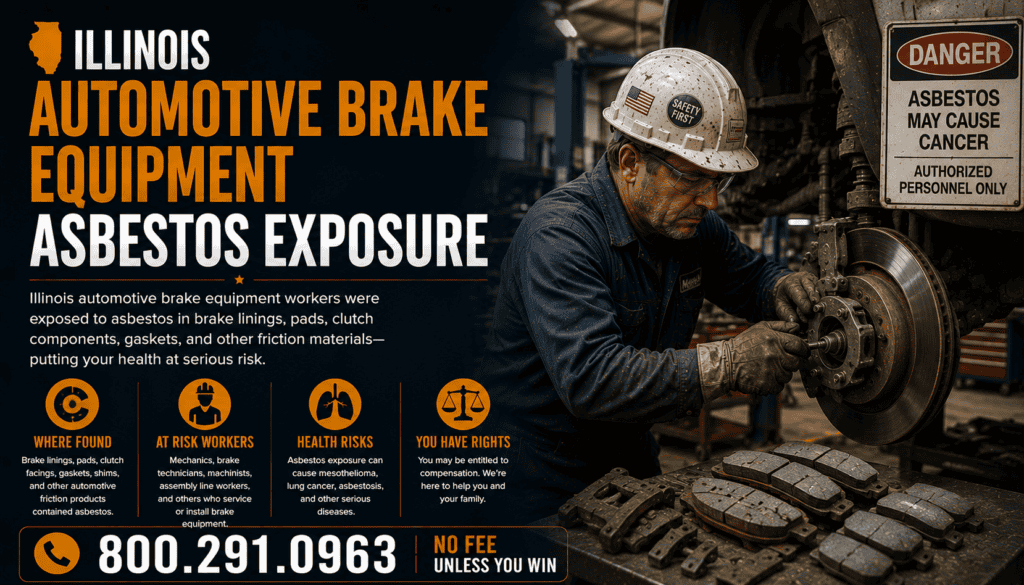
🚗 Illinois Automotive Brake Equipment Asbestos Exposure
For much of the twentieth century, Illinois automotive mechanics, fleet maintenance workers, truck mechanics, bus mechanics, dealership technicians, and industrial maintenance personnel were routinely exposed to asbestos while servicing automotive brake equipment. Brake systems generated tremendous friction and heat, making asbestos an ideal material for brake linings, brake shoes, brake pads, clutch facings, and other friction products because of its exceptional heat resistance and durability.
Before asbestos regulations were strengthened, manufacturers incorporated asbestos into drum brakes, disc brakes, heavy-duty truck brakes, bus brakes, industrial vehicle brakes, construction equipment brakes, agricultural equipment brakes, railroad brake components, and many aftermarket replacement parts. During routine brake inspections, brake drum removal, grinding, sanding, machining, arcing, cleaning, and replacement, microscopic asbestos fibers were released into the air where mechanics and nearby workers could inhale them.
Many former Illinois automotive workers were later diagnosed with mesothelioma, asbestos lung cancer, and asbestosis decades after their occupational exposure.
If you worked around automotive brake equipment in Illinois, you may also find our Illinois Asbestos Exposure Sites page helpful for identifying additional facilities where asbestos exposure commonly occurred.
🚘 Automotive Brake Equipment Throughout Illinois
Illinois has long supported one of the nation’s largest transportation and automotive industries. Thousands of repair facilities, dealerships, trucking companies, municipal fleets, school bus garages, manufacturing plants, railroad maintenance facilities, and government agencies maintained vehicles equipped with asbestos-containing brake systems.
Automotive brake equipment was commonly serviced in:
- Automobile repair shops
- Car dealerships
- Truck repair facilities
- Fleet maintenance garages
- Bus maintenance facilities
- School district garages
- Heavy equipment repair shops
- Construction equipment facilities
- Farm equipment dealerships
- Railroad maintenance shops
- Municipal vehicle garages
- State highway departments
- Manufacturing plants
- Warehouses
- Military vehicle maintenance facilities
- Industrial maintenance shops
- Delivery fleet garages
- Taxi maintenance facilities
- Emergency vehicle service centers
- Heavy truck service centers
Many of these facilities continued servicing asbestos-containing brake equipment well into the late twentieth century.
🔥 Why Asbestos Was Used in Automotive Brake Equipment
Brake systems convert vehicle motion into heat through friction. Manufacturers relied on asbestos because it tolerated extremely high temperatures while providing dependable braking performance.
Asbestos was commonly used because it provided:
- Excellent heat resistance
- High friction performance
- Fire resistance
- Long service life
- Durability
- Wear resistance
- Mechanical strength
- Low manufacturing cost
Asbestos became a standard material throughout the automotive brake industry for decades.
Common asbestos-containing brake products included:
- Brake linings
- Brake shoes
- Brake pads
- Disc brake pads
- Drum brake linings
- Brake blocks
- Clutch facings
- Clutch discs
- Brake gaskets
- Heat shields
- Wheel cylinder gaskets
- Brake seals
- Clutch insulation
- Brake dust shields
- Friction materials
- Replacement brake kits
- Industrial brake assemblies
- Heavy equipment brake linings
- Truck brake components
- Bus brake linings
🛞 Drum Brake Systems
For decades, drum brakes were installed on millions of passenger vehicles, commercial trucks, buses, trailers, and industrial equipment.
Mechanics routinely serviced:
- Brake drums
- Brake shoes
- Return springs
- Wheel cylinders
- Brake hardware
- Backing plates
- Brake adjusters
- Brake linings
- Hold-down springs
- Parking brake assemblies
Removing brake drums often released accumulated brake dust that could contain asbestos fibers. Mechanics frequently cleaned the assemblies with compressed air, a practice now recognized as creating significant airborne asbestos exposure.
🚙 Disc Brake Systems
As disc brakes became more common, technicians continued encountering asbestos-containing friction materials.
Common brake components included:
- Brake pads
- Brake calipers
- Rotors
- Caliper hardware
- Disc brake shims
- Brake pistons
- Anti-rattle clips
- Brake backing plates
- Heat shields
- Friction materials
Grinding, sanding, beveling, drilling, or fitting replacement brake pads could generate additional asbestos-containing dust.
🚛 Heavy-Duty Truck and Bus Brake Equipment
Commercial trucks, buses, and heavy industrial vehicles frequently used large asbestos-containing brake assemblies because of their superior ability to withstand continuous heavy loads and high temperatures.
Common equipment included:
- Air brake systems
- Heavy-duty brake drums
- Brake shoes
- Brake blocks
- Slack adjusters
- Air brake chambers
- Brake linings
- Wheel assemblies
- Trailer brake systems
- Emergency brake systems
Heavy truck and bus mechanics often performed brake work every day throughout their careers.
🔧 Brake Service, Repair, and Replacement
Routine brake maintenance represented one of the most common sources of occupational asbestos exposure in the automotive industry.
Technicians regularly performed:
- Brake inspections
- Brake replacement
- Brake shoe replacement
- Brake pad replacement
- Drum resurfacing
- Rotor replacement
- Brake adjustment
- Brake drum cleaning
- Brake hardware replacement
- Brake system rebuilding
Before modern dust-control procedures became standard, compressed air, wire brushes, and dry cleaning methods often dispersed asbestos fibers throughout the work area. OSHA and the EPA now recommend enclosed cleaning methods or HEPA vacuum systems because disturbing brake dust can release asbestos fibers if asbestos-containing components are present.
Workers responsible for servicing automotive brake systems may also find our Illinois Automotive Mechanics Asbestos Exposure page helpful because many mechanics worked with the same asbestos-containing brake products.
👷 Occupations with High Automotive Brake Equipment Asbestos Exposure
Many different occupations routinely worked around asbestos-containing brake equipment.
Higher-risk occupations included:
- Automotive mechanics
- Brake specialists
- Truck mechanics
- Bus mechanics
- Fleet maintenance technicians
- Heavy equipment mechanics
- Diesel mechanics
- Railroad mechanics
- Equipment maintenance workers
- Service technicians
- Automotive apprentices
- Shop foremen
- Municipal fleet mechanics
- Highway department mechanics
- Agricultural equipment mechanics
- Construction equipment mechanics
- Industrial mechanics
- Military vehicle mechanics
- Garage technicians
- Maintenance supervisors
Many employees spent decades servicing brake equipment that generated asbestos-containing brake dust throughout every workday.
👨👩👧 Secondary (Take-Home) Asbestos Exposure
Workers who repaired automotive brake equipment frequently carried asbestos fibers home on:
- Work clothing
- Coveralls
- Boots
- Gloves
- Tool bags
- Hand tools
- Shop rags
- Personal vehicles
Family members could unknowingly inhale asbestos fibers while:
- Washing contaminated clothing
- Shaking dusty uniforms
- Cleaning boots
- Handling tools
- Vacuuming vehicles
- Greeting workers after shifts
Some spouses and children later developed mesothelioma despite never working in an automotive repair facility.
Families researching legal options should also review our Illinois Mesothelioma Lawsuits page.
⚙️ Asbestos-Containing Automotive Brake Equipment Used Throughout Illinois
For decades, Illinois automotive mechanics, truck mechanics, bus mechanics, fleet maintenance technicians, dealership service personnel, and heavy equipment mechanics routinely worked with automotive brake equipment that contained asbestos. Manufacturers incorporated asbestos into brake systems because it withstood extreme temperatures, reduced wear, and provided dependable braking performance under heavy use.
Every time brake components were inspected, removed, resurfaced, ground, sanded, drilled, or replaced, asbestos-containing brake dust could become airborne. Mechanics often performed these repairs multiple times each day, resulting in repeated occupational exposure throughout their careers.
Common asbestos-containing automotive brake equipment included:
- Drum brakes
- Disc brakes
- Brake shoes
- Brake pads
- Brake linings
- Brake drums
- Brake rotors
- Brake calipers
- Wheel cylinders
- Brake hardware
- Air brake systems
- Clutch assemblies
- Clutch facings
- Brake dust shields
- Brake gaskets
- Heat shields
- Brake seals
- Friction materials
- Heavy-duty brake systems
- Industrial brake assemblies
Many of these asbestos-containing products remained in service throughout Illinois automotive repair facilities, fleet maintenance shops, trucking companies, municipalities, and industrial plants well into the late twentieth century.
Workers responsible for installing or repairing automotive brake equipment should also review our Illinois Automotive Mechanics Asbestos Exposure page.
🛞 Drum Brake Assemblies
Drum brake systems were installed on millions of passenger vehicles, commercial trucks, buses, trailers, and industrial vehicles throughout Illinois.
Common asbestos-containing components included:
- Brake shoes
- Brake linings
- Brake drums
- Wheel cylinders
- Return springs
- Hold-down springs
- Brake adjusters
- Backing plates
- Parking brake assemblies
- Brake hardware
Brake dust accumulated inside the drum each time the brakes were applied. Removing the brake drum frequently released asbestos-containing dust into the mechanic’s breathing zone.
Routine drum brake repairs included:
- Removing brake drums
- Replacing brake shoes
- Cleaning brake assemblies
- Replacing wheel cylinders
- Adjusting brake shoes
- Installing new hardware
- Inspecting return springs
- Resurfacing brake drums
- Lubricating moving parts
- Testing brake operation
Many mechanics routinely cleaned brake assemblies using compressed air or dry brushes before safer cleaning procedures became common.
🚗 Disc Brake Systems
Disc brake systems gradually replaced drum brakes on many passenger vehicles but continued to utilize asbestos-containing friction materials for many years.
Workers commonly serviced:
- Brake pads
- Brake rotors
- Brake calipers
- Caliper pistons
- Brake shims
- Anti-rattle clips
- Caliper brackets
- Brake backing plates
- Heat shields
- Friction materials
Routine maintenance often included:
- Replacing brake pads
- Turning rotors
- Grinding replacement pads
- Sanding friction materials
- Cleaning brake dust
- Lubricating caliper slides
- Replacing brake hardware
- Installing new calipers
- Bleeding brake systems
- Testing brake performance
Grinding or sanding replacement brake pads frequently generated additional asbestos dust.
🚛 Heavy-Duty Truck Brake Equipment
Commercial trucks required larger braking systems capable of safely stopping heavy loads under demanding operating conditions.
Common asbestos-containing components included:
- Heavy-duty brake shoes
- Brake linings
- Air brake drums
- Slack adjusters
- Brake chambers
- Brake hardware
- Air brake valves
- Brake blocks
- Trailer brake assemblies
- Emergency brake components
Truck mechanics routinely serviced multiple brake systems each week, often working in enclosed repair bays where brake dust accumulated.
🚌 Bus and Municipal Fleet Brake Systems
School buses, transit buses, municipal vehicles, fire trucks, police vehicles, and utility fleets required frequent brake inspections because of their high annual mileage.
Mechanics routinely maintained:
- Bus brake shoes
- Brake drums
- Air brake systems
- Brake chambers
- Parking brakes
- Brake valves
- Brake hardware
- Wheel assemblies
- Emergency brake systems
- Hydraulic brake systems
Fleet maintenance departments often scheduled brake replacements throughout the year, exposing mechanics to asbestos repeatedly over decades.
🚜 Heavy Equipment and Industrial Vehicle Brakes
Construction equipment, agricultural machinery, forklifts, cranes, loaders, mining equipment, and industrial vehicles frequently utilized asbestos-containing brake systems.
Common equipment included:
- Bulldozers
- Excavators
- Front-end loaders
- Forklifts
- Cranes
- Backhoes
- Agricultural tractors
- Road graders
- Dump trucks
- Industrial hauling equipment
Mechanics servicing heavy equipment often encountered larger brake assemblies that generated substantial amounts of asbestos-containing dust during repairs.
Workers maintaining industrial equipment should also review our Illinois Equipment & Machinery Asbestos Exposure page.
🔧 Brake Service, Machining, and Replacement
Routine brake service represented one of the most common sources of occupational asbestos exposure in the automotive industry.
Technicians regularly performed:
- Brake inspections
- Brake replacement
- Brake shoe replacement
- Brake pad replacement
- Drum resurfacing
- Rotor machining
- Brake adjustment
- Brake cleaning
- Brake hardware replacement
- Complete brake overhauls
Before modern dust-control practices became standard, mechanics commonly:
- Blew brake dust away with compressed air
- Used dry brushes to clean assemblies
- Sanded replacement brake shoes
- Ground replacement brake pads
- Machined worn brake drums
- Turned brake rotors
- Swept brake dust from shop floors
- Cleaned workbenches with compressed air
These work practices could release microscopic asbestos fibers into the surrounding work area where they remained suspended in the air.
⚙️ Clutch Assemblies and Related Components
Many Illinois mechanics also repaired manual transmission clutch systems that contained asbestos friction materials similar to automotive brakes.
Common asbestos-containing clutch components included:
- Clutch facings
- Clutch discs
- Pressure plates
- Flywheel surfaces
- Throwout bearings
- Pilot bearings
- Clutch housings
- Clutch linkage
- Friction discs
- Heat-resistant insulation
Replacing worn clutch assemblies often required cleaning accumulated asbestos dust from inside the bell housing before installing replacement parts.
👷 Occupations with Increased Automotive Brake Equipment Asbestos Exposure
Many occupations routinely worked around asbestos-containing automotive brake equipment throughout Illinois.
Higher-risk occupations included:
- Automotive mechanics
- Brake specialists
- Truck mechanics
- Diesel mechanics
- Bus mechanics
- Fleet maintenance technicians
- Heavy equipment mechanics
- Agricultural equipment mechanics
- Railroad mechanics
- Equipment maintenance workers
- Automotive apprentices
- Service technicians
- Municipal fleet mechanics
- Highway department mechanics
- Construction equipment mechanics
- Industrial mechanics
- Military vehicle mechanics
- Shop foremen
- Garage technicians
- Maintenance supervisors
Many workers serviced hundreds or even thousands of brake systems during their careers, resulting in repeated asbestos exposure over many years.
👨👩👧 Secondary (Take-Home) Asbestos Exposure
Automotive brake mechanics frequently carried asbestos-containing brake dust home on:
- Work uniforms
- Coveralls
- Boots
- Gloves
- Tool bags
- Shop towels
- Hand tools
- Personal vehicles
Family members could unknowingly inhale asbestos fibers while:
- Washing contaminated clothing
- Shaking dusty uniforms
- Cleaning work boots
- Handling shop towels
- Vacuuming personal vehicles
- Greeting workers after shifts
Some spouses and children later developed mesothelioma despite never working in an automotive repair facility.
📋 Documenting Automotive Brake Equipment-Related Asbestos Exposure
Many former mechanics cannot remember every brake manufacturer or replacement part they installed decades ago. Fortunately, successful asbestos claims often rely on employment records, repair histories, shop records, union records, coworker testimony, fleet maintenance records, and historical evidence documenting the widespread use of asbestos-containing brake products.
Helpful documentation may include:
- Employer records
- Employment dates
- Job titles
- Repair shop or dealership names
- Fleet maintenance records
- Vehicle service records
- Union membership records
- ASE certifications
- Coworker statements
- Medical records
- Social Security employment history
Workers should focus on identifying where they worked, the types of vehicles they serviced, and the brake repair work they performed rather than attempting to remember every brake manufacturer or product.