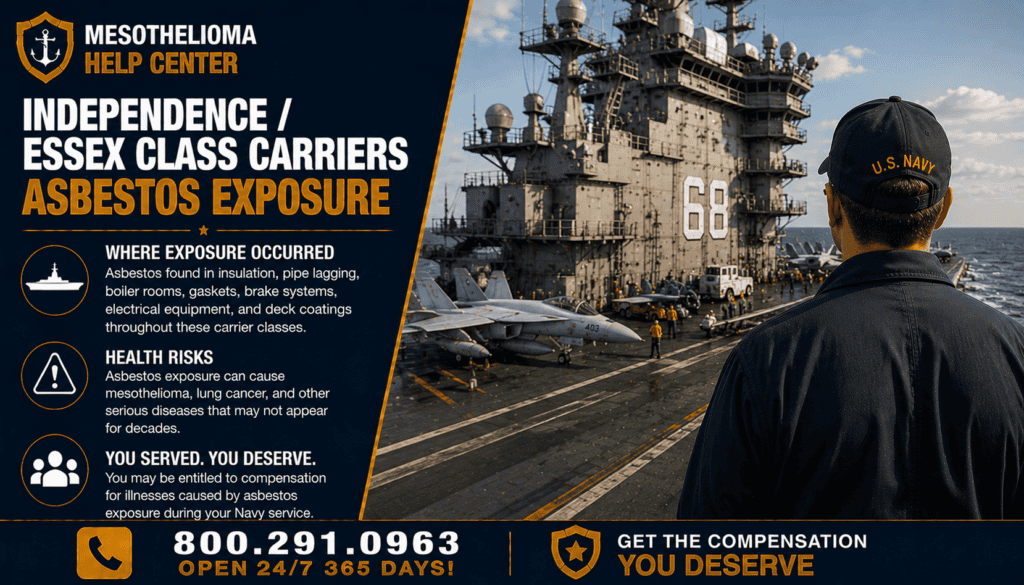
⚓ Independence & Essex-Class Carriers
Boiler & Turbine Insulation Asbestos Exposure
The Independence-class and Essex-class aircraft carriers, built during and after World War II, formed the backbone of U.S. naval aviation for decades. Designed for power, speed, and fire resistance, these ships were constructed using tons of asbestos insulation, particularly around boilers, turbines, steam lines, and exhaust ducts. Sailors and shipyard workers serving aboard or repairing these carriers faced daily exposure to airborne asbestos fibers that later caused mesothelioma, lung cancer, and asbestosis.
This guide explains where asbestos was concentrated on these carriers, who was exposed, and how veterans and families can pursue VA, trust-fund, and legal compensation today.
📞 Need help proving service aboard an Independence or Essex-class carrier? Call 800.291.0963 for free veteran claim assistance.
🧭 Step 1: Asbestos Use on Independence & Essex-Class Ships
Both carrier classes relied heavily on asbestos for insulation and durability during wartime production.
Common asbestos locations:
-
⚙️ Boiler and engine rooms lined with lagging and pipe wrap.
-
🧱 Turbine casings, pumps, and valves packed with asbestos gaskets.
-
💨 Ductwork and ventilation channels insulated for heat control.
-
🔧 Electrical panels, switchboards, and wiring lined with asbestos board.
-
🪖 Deck tiles, wall panels, and fireproof coatings in crew compartments.
Goal: Recognize how ship design embedded asbestos in virtually every engineering and living space.
📁 Step 2: Key Ships Affected
Many Independence and Essex-class carriers were active well into the Cold War, long after asbestos hazards were known.
Examples include:
-
⚓ USS Independence (CVL-22) – WWII light carrier; heavy boiler and pipe insulation.
-
⚙️ USS Essex (CV-9) – flagship of the Essex class, overhauled repeatedly with asbestos lagging.
-
🧱 USS Yorktown (CV-10) – now a museum ship, confirmed asbestos abatement site.
-
🔩 USS Intrepid (CV-11) – aviation and turbine exposure; major cleanup required.
-
💨 USS Oriskany (CV-34) and USS Bon Homme Richard (CV-31) – known turbine and boiler contamination.
Goal: Identify your assigned vessel or repair project for verified asbestos connection.
🏗️ Step 3: Who Was Exposed
Every trade and department aboard these ships encountered asbestos fibers.
Highest-risk personnel:
-
🧰 Boiler Technicians (BTs) and Machinist’s Mates (MMs).
-
⚙️ Hull Maintenance Technicians (HTs) and Shipfitters.
-
💡 Electrician’s Mates (EMs) and Enginemen (ENs).
-
🪖 Aviation support and deck crews during retrofits or repairs.
-
🧾 Civilian shipyard workers performing overhauls and decommissioning.
Goal: Match your rating or trade to documented asbestos work areas.
💼 Step 4: How Exposure Happened Aboard Carriers
Daily operations and repairs generated clouds of invisible asbestos fibers.
Typical exposure activities:
-
🔧 Replacing gaskets and valve packing in turbine systems.
-
💨 Rewrapping insulation around pipes and bulkheads.
-
🧱 Chipping, grinding, and welding near lagging materials.
-
⚙️ Cleaning bilges, ducts, and engineering compartments after maintenance.
-
🧾 Refitting ships at shipyards such as Norfolk, Mare Island, or Puget Sound.
Goal: Document hands-on maintenance and refit duties involving asbestos materials.
🩺 Step 5: Health Effects of Carrier Asbestos Exposure
Asbestos fibers can remain in the lungs for decades before symptoms appear.
Common illnesses include:
-
💀 Pleural and peritoneal mesothelioma.
-
🫁 Asbestosis and chronic lung scarring.
-
💬 Pleural thickening and calcification.
-
🩺 Lung, throat, and gastrointestinal cancers.
Goal: Obtain a full medical workup and preserve all pathology and imaging records.
⚖️ Step 6: VA Benefits for Independence & Essex-Class Veterans
Veterans diagnosed with asbestos-related diseases qualify for 100% VA disability compensation.
Available benefits:
-
💰 Monthly tax-free disability payments.
-
🏥 Access to VA mesothelioma specialists and travel reimbursement.
-
🕊️ DIC survivor benefits for families of deceased veterans.
-
⚖️ Additional asbestos trust-fund compensation (no VA offset).
Goal: File both VA and trust-fund claims to maximize total recovery.
🧱 Step 7: Civilian Shipyard Worker Rights
Shipyard workers who maintained these carriers faced some of the highest exposure levels.
Compensation options:
-
⚖️ Asbestos trust-fund claims (over $32 billion available).
-
💵 Civil lawsuits against manufacturers and suppliers.
-
🧾 SSDI and state workers’ compensation programs.
-
🕊️ Wrongful-death claims for surviving families.
Goal: Include both military and shipyard employment records in your claim.
🧠 Step 8: Supporting Evidence for Carrier Claims
Accurate records are critical for proving asbestos exposure aboard these ships.
Helpful evidence:
-
🧾 Ship assignment or muster rolls.
-
⚙️ Maintenance and engineering logs referencing asbestos.
-
💬 Witness statements from shipmates or repair teams.
-
🧱 Environmental and abatement reports from Navy archives or museums.
Goal: Gather historical and personal documentation to validate exposure.
🌈 Step 9: Ship Preservation & Abatement Records
Many carriers now serve as museums or were scrapped under asbestos supervision.
Examples:
-
🏗️ USS Intrepid and USS Yorktown museum restorations with asbestos removal.
-
⚙️ EPA-regulated dismantling of decommissioned Essex-class ships.
-
🧾 Public abatement documentation confirming historical asbestos presence.
Goal: Reference cleanup records to support your exposure timeline.
💬 Step 10: Getting Legal & VA Help
Coordinating legal, medical, and service documentation ensures faster claim success.
Next steps:
-
🧭 Verify your ship assignment and service years.
-
⚙️ Collect diagnostic and treatment records.
-
🧾 File VA and trust-fund claims promptly.
-
📞 Call 800.291.0963 for free consultation and support.
Goal: Secure full compensation for service-related asbestos exposure.
🤝 Where to Get Help
Our advocates assist carrier veterans and shipyard workers exposed aboard Independence- and Essex-class vessels nationwide.
📞 Call 800.291.0963 today for your free case review.
🧭 Summary
The Independence and Essex-class carriers were marvels of naval engineering but relied heavily on asbestos for insulation and fireproofing. Sailors and civilians who served aboard these ships often developed asbestos-related illnesses decades later. Those affected can claim VA disability, asbestos trust-fund compensation, and civil settlements for their service-related exposure.
Don’t wait—your service deserves recognition and justice.
800.291.0963