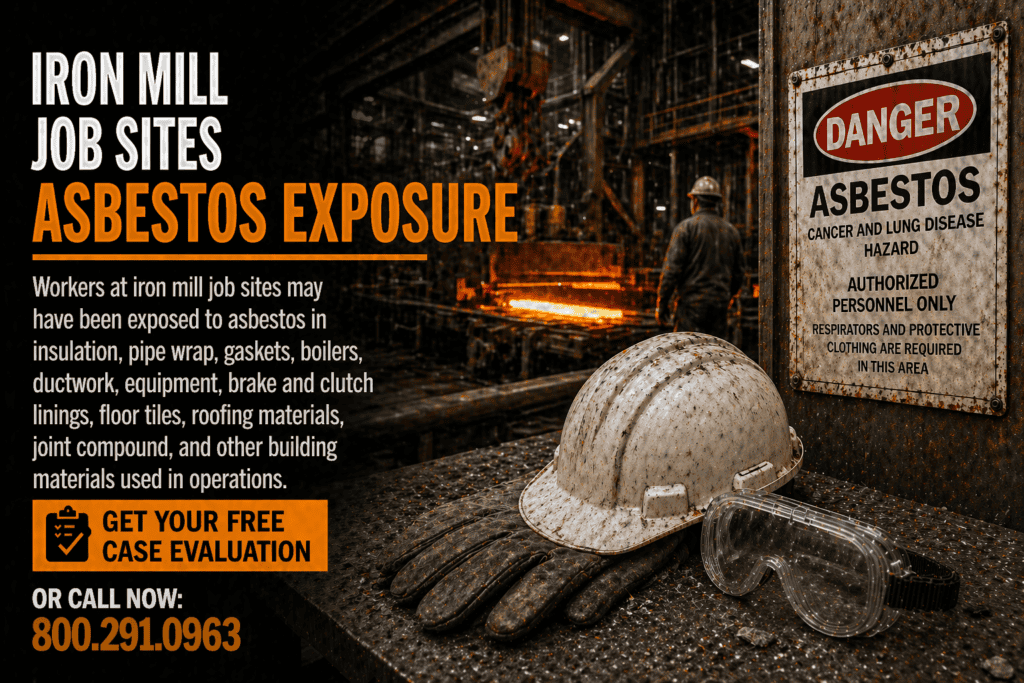
Iron Mill Job Site Asbestos Exposure Lawsuit
For much of the 20th century, iron mills across the United States routinely used asbestos-containing materials in equipment, furnace insulation, piping, and building components. The material was prized for its resistance to heat and corrosion—qualities essential in iron production—but it came with deadly consequences.
Iron mill workers who installed, repaired, or maintained machinery were often exposed to asbestos, especially in poorly ventilated areas. Cutting, grinding, or removing fireproofing materials released fine asbestos particles into the air. In many cases, exposure occurred without warning or protective gear.
⚒️ Iron Mill Job Sites – What You’ll Learn From This Page:
🧱 Iron mills used asbestos in furnaces, containers, and gaskets, especially around high-heat smelting operations.
🔧 Daily tasks like tapping, pouring, and handling molten iron disturbed asbestos-laced insulation and components.
🚧 Workers often performed maintenance without protection, releasing fibers from gaskets, valves, and hot metal molds.
🏭 Dust from degraded insulation settled in workspaces, compounding exposure during routine operations.
💰 Iron mill workers with asbestos-related conditions may qualify for legal and trust-based compensation.
🧰 Facts About Iron Mill Workers
• Over 100,000 people worked in the U.S. iron production sector during peak industrial years (1940s–1980s).
• Asbestos Exposure: High from 1930s–1980s; some exposure persists in legacy infrastructure.
• Asbestos-Related Disease Risk: Very High due to widespread use of insulation and refractory materials.
• Studies show elevated mesothelioma rates among foundry and mill workers compared to national averages.
• Similar Occupations: Foundry workers, furnace operators, pipefitters, refractory installers, millwrights
🏭 History of Asbestos Use on Job Sites
From the 1930s through the late 1980s, asbestos was widely used across heavy industries for its thermal resistance and affordability. In iron mills, it coated furnaces, piping, gaskets, walls, and machinery. Maintenance work often disturbed these materials, sending fibers into the air.
Because symptoms of asbestos-related illnesses can take decades to appear, many former ironworkers are only now being diagnosed with diseases linked to their workplace exposure.
Number of People Exposed to Asbestos in Iron Mills in the U.S.
Iron production environments used heat-resistant asbestos extensively in heavy equipment and protective gear.
| Exposure Category | Estimated Number of People Exposed |
|---|---|
| Occupational Exposure (Iron workers, furnace crews) | Approximately 450,000 workers exposed |
| Secondary Exposure (Family of workers) | Estimated 70,000 exposed |
| Environmental Exposure (Furnace and pouring areas) | Around 105,000 people exposed |
👉 Total Estimated Exposure:
Over 625,000 people in the U.S. were exposed at iron mill job sites.
⚠️ Mesothelioma Risk for Iron Mill Workers
Medical research has consistently shown a strong connection between iron mill work and asbestos-related diseases:
• A CDC analysis found ironworkers faced extremely high death rates from mesothelioma—similar to shipyard and steel mill workers.
• European findings revealed ironworkers were 4 to 6 times more likely to develop fatal asbestos diseases.
• U.S. studies indicated that those handling furnace linings and insulation were at the greatest risk of long-term exposure.
Poor ventilation, constant grinding of refractory materials, and prolonged contact with insulation made iron mills especially dangerous.
🔩 Asbestos Products Used in Iron Mills
Iron mills depended heavily on asbestos-based products to withstand extreme heat. Unfortunately, these materials broke down with time and use, releasing microscopic fibers into the breathing space of nearby workers.
🔥 Furnace Insulation
Lined blast furnaces and ladles; frequent relining released airborne fibers.
🚿 Pipe Insulation
Wrapped around high-pressure steam lines; fibers became airborne when cut or removed.
🧱 Refractory Bricks
Used in furnaces; particles released during chipping or replacement.
🧰 Gaskets and Seals
Used in pumps and boilers; emitted dust during mechanical servicing.
🧤 Protective Clothing
Gloves, aprons, and hoods shed fibers as they aged or cracked.
🚿 Spray-On Insulation
Coated ceilings and walls; fibers dislodged during vibrations and maintenance.
⚡ Electrical Panels
Backed with asbestos boards; drilling or modifications released dust.
♨️ Boiler Insulation
Thick asbestos linings disturbed during repair work.
🧵 Thermal Tape and Cloth
Wrapped around joints and piping; frayed edges released fibers.
🚜 Brake Linings
Cranes and forklifts used asbestos pads; braking and repairs released dust.
🩹 Adhesives and Coatings
Used to bond insulation; crumbled or flaked during repairs.
🧱 Cement Boards
Fire-resistant panels released particles when cut or drilled.
🛠️ How Iron Mill Workers Were Exposed
Asbestos exposure in iron mills happened during day-to-day work, emergency fixes, and even just walking through certain areas. Many never received safety gear or warnings.
🔧 Furnace Repair Workers
Removed and relined asbestos materials, releasing large dust clouds.
♨️ Boiler Operators
Cleaned and repaired asbestos-lined boilers; exposure occurred during inspections.
🛠️ Maintenance Technicians
Handled asbestos-wrapped machinery; dust released during cutting and handling.
🔩 Pipefitters
Worked on insulated steam and water lines; cutting released airborne fibers.
🏗️ Crane Mechanics
Replaced asbestos-lined brake systems; exposure during part removal.
⚡ Electricians
Cut through asbestos boards and wiring coatings; routine upgrades disturbed insulation.
🌀 Machinists
Used tools and grinders on asbestos-lined parts; dust covered nearby surfaces.
🔥 Welders and Fabricators
Wore asbestos protective gear daily; breakdown of material released fibers.
⚙️ Millwrights
Maintained machinery with asbestos seals; worked in confined, dusty areas.
🌬️ HVAC Technicians
Handled ducts lined with asbestos; exposure during sealing or repairs.
🧍 Supervisors and Floor Managers
Observed work up close without PPE; secondhand exposure common.
📦 Material Handlers and Laborers
Cleaned and moved parts with asbestos residue; exposure during sweeping and loading.
🔩 Types of Iron Mills With Asbestos Exposure
🔥 Pig Iron Production Mills
Used blast furnaces to reduce iron ore. Asbestos lined furnaces, pipes, and stoves; workers inhaled fibers during relining, slag removal, and tapping.
🏗️ Foundries (Casting Mills)
Poured molten iron into molds. High-heat equipment was insulated with asbestos; exposure common during mold preparation, furnace repair, and casting cleanup.
⚙️ Sintering Plants
Fused iron particles into larger masses. Exhaust ducts and hot zones were asbestos-lined; dust released during breakdowns, repairs, and material transfers.
🧱 Rolling & Shaping Mills
Formed hot iron into bars, plates, or beams. Asbestos was used on rollers, conveyors, and brakes—disturbed during equipment maintenance and daily operations.
🛠️ Refining & Finishing Mills
Purified iron for specific applications. Asbestos insulation was common on heat exchangers and kilns; maintenance disturbed friable materials during shutdowns and upgrades.
💨 Pelletizing Plants
Processed iron ore into uniform pellets for smelting. Dryer units, steam pipes, and fans were asbestos-insulated—exposure occurred during filter changes and duct repair.
🔌 Electrical Control Stations
Managed mill operations. Switchgear, breakers, and panels were backed with asbestos board; fibers released while accessing wiring and replacing components.
🧯 Maintenance Shops
Serviced mill equipment. Workers handled gaskets, packing, and seals containing asbestos; grinding, cutting, and removal released fibers into shared workspaces.
🚧 Slag Processing Facilities
Handled hot byproducts of ironmaking. Conveyors, bins, and dryers used asbestos for insulation; disturbed during cleaning and mechanical adjustments.
🔩 Mold Making Areas
Produced casting molds with asbestos-containing sand binders. Workers inhaled dust while mixing, shaping, and cleaning forms in confined spaces.
❓ Common Questions About Iron Mill Asbestos Claims
Can I file a claim if the iron mill shut down?
✅ Yes — claims are filed against asbestos manufacturers, not the mill.
What if I worked there decades ago?
✅ Most states allow 1–3 years after diagnosis to file a claim, even decades after exposure.
Do I need to remember every asbestos product?
✅ No — attorneys use records and plant data to document exposure.
What if I was a contractor?
✅ You may still qualify if you worked around asbestos-containing materials onsite.
What kind of compensation is possible?
✅ Many claims result in six-figure settlements or trust payouts.
Can my family file if I passed away from asbestos disease?
✅ Yes — family members may file a wrongful death or trust fund claim.
⚖️ How a Mesothelioma Attorney Can Help Iron Mill Workers
Legal help can make the claims process much easier. A qualified asbestos attorney can:
• Investigate work history and likely exposure sites
• Gather union, employment, and medical records
• File trust fund claims or lawsuits
• Identify all liable manufacturers
• Maximize compensation options
• Ensure deadlines are met
Most firms charge no fees unless they win your case.
📞 Free Legal Help for Iron Mill Workers & Families
If you or a loved one worked in an iron mill and now face mesothelioma, lung cancer, or asbestosis—you may be entitled to compensation. Whether you were an operator, mechanic, or supervisor, we can help.
Call Now: 800.291.0963
• No upfront fees
• No charge unless we win
• Full investigation of your exposure
• Trust fund & lawsuit filing available
• Help for workers, families & surviving spouses
Or request help online 24/7