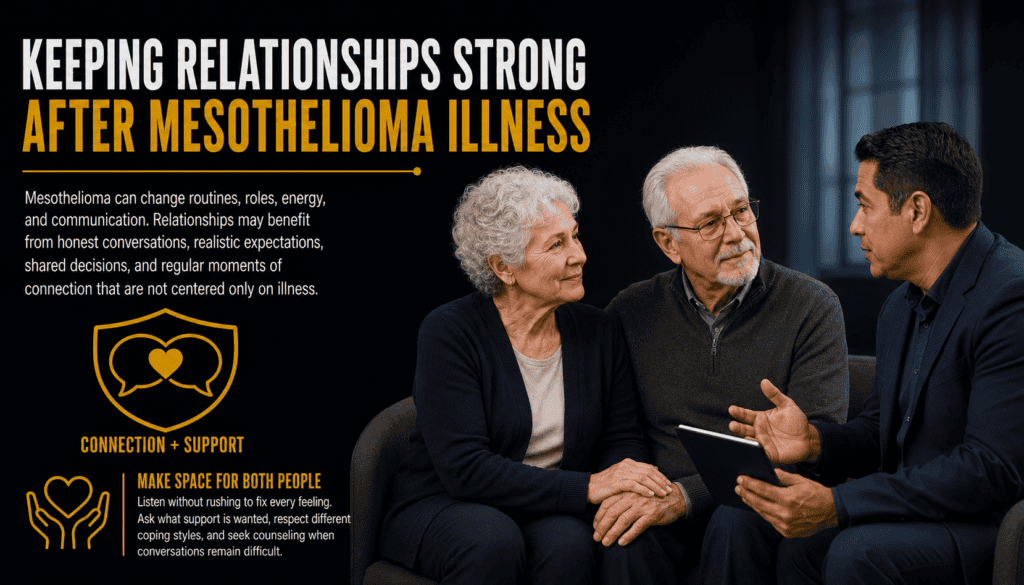
💞 Keeping Relationships Strong After Illness
A serious illness like mesothelioma can deeply affect relationships — changing routines, emotions, and even communication patterns. But with patience, openness, and mutual understanding, couples and families can emerge stronger than before. Healing together means more than medical recovery; it’s about rebuilding intimacy, communication, and shared goals rooted in empathy and love.
This guide shows you how to reconnect emotionally, strengthen communication, and nurture unity during and after cancer treatment.
📞 Need help finding family or couples support programs? Call 800.291.0963 for free guidance and emotional support today.
💬 Step 1: Acknowledge the Emotional Impact of Illness
Both patients and loved ones experience fear, stress, and uncertainty during illness. Recognizing these emotions — instead of avoiding them — is the first step to rebuilding trust and closeness.
Common emotional reactions:
-
💔 Guilt, sadness, or frustration about lifestyle changes.
-
😔 Withdrawal or reduced communication during stress.
-
💭 Anxiety about the future.
-
❤️ Overprotectiveness from partners or family members.
Goal:
To accept that everyone’s coping process looks different — and that honesty, not perfection, builds stronger bonds.
🗣️ Step 2: Communicate Openly and Compassionately
Clear, calm communication helps prevent misunderstandings and emotional distance.
Healthy communication habits:
-
💬 Schedule regular check-ins to share feelings.
-
👂 Practice active listening — reflect back what your loved one says.
-
💞 Avoid blame; use “I feel” statements to express emotions.
-
🕊️ Keep tone gentle, even when discussing difficult topics.
-
📖 Pray or read together to open conversations spiritually.
Pro Tip:
Try writing letters or journals if verbal conversations feel difficult — sometimes written words express feelings best.
🤝 Step 3: Rebuild Intimacy and Connection
Intimacy may feel different after treatment, but closeness can grow through small gestures of care and understanding.
Ways to reconnect:
-
🫶 Spend quiet time together — even short walks or shared meals matter.
-
💐 Offer physical touch: a hug, hand-hold, or gentle massage.
-
💞 Express affection through words and gratitude daily.
-
🕯️ Create moments of calm — light candles, listen to soft music, pray together.
-
💭 Be patient if emotional or physical intimacy takes time to return.
Goal:
To restore closeness through presence, tenderness, and patience.
🧭 Step 4: Set Shared Goals for Recovery and Beyond
Working toward common goals strengthens teamwork and restores hope.
Examples of shared goals:
-
🗓️ Scheduling medical appointments together.
-
🚶 Taking daily walks or exercise as a couple.
-
🧘 Committing to prayer, journaling, or gratitude rituals.
-
💡 Planning future activities or trips, even small ones.
-
💞 Setting aside “normal” time — date nights or family dinners.
Goal:
To keep the focus on living, growing, and healing together, not just surviving illness.
🩵 Step 5: Support Each Other’s Individual Needs
Illness affects each person differently — physically, emotionally, and spiritually. Supporting each other as individuals helps maintain balance and compassion.
Tips for mutual support:
-
👂 Listen without interrupting or solving immediately.
-
🌸 Allow space for solitude or personal reflection.
-
🧘 Respect how each person copes (prayer, exercise, journaling).
-
💬 Encourage each other’s small victories.
-
❤️ Express appreciation — say “thank you” often.
Pro Tip:
Remember that caregivers also need care. Encourage your partner or family to rest and recharge, too.
🕊️ Step 6: Reconnect Spiritually and Emotionally
Faith and shared reflection can bring comfort, perspective, and renewed closeness during recovery.
Spiritual connection ideas:
-
🙏 Pray together daily, even briefly.
-
📖 Read scripture that inspires hope and patience.
-
🕯️ Attend a faith service or support group as a couple.
-
💞 Share what you’re grateful for at the end of each day.
-
💬 Reflect on how your journey has strengthened your bond.
Faith reminder:
“A threefold cord is not quickly broken.” – Ecclesiastes 4:12 (KJV)
Goal:
To nurture unity through faith, gratitude, and emotional openness.
🏠 Step 7: Strengthen Family Bonds
Illness can shift family dynamics, but it can also deepen love and cooperation. Involving children or extended family in recovery fosters understanding and support.
Family-strengthening activities:
-
🍽️ Share meals together regularly.
-
🎨 Do simple hobbies like puzzles, art, or gardening.
-
🗓️ Create a family “care calendar” for tasks and visits.
-
💌 Encourage family members to express feelings openly.
-
💞 Celebrate milestones — doctor visits, recovery progress, or birthdays.
Goal:
To make every family member feel included, valued, and supported.
🌈 Step 8: Seek Professional or Peer Support
Therapists, clergy, and survivor groups can provide tools for communication and emotional healing.
Support options:
-
🧠 Couples or family counseling with oncology experience.
-
💬 Support groups for caregivers and survivors.
-
🕊️ Pastoral counseling for faith-based guidance.
-
📱 Online communities for shared understanding and encouragement.
Pro Tip:
External support can relieve pressure and help couples rediscover balance without blame or guilt.
💐 Step 9: Celebrate Love and Progress
Rebuilding relationships after illness takes time, but every moment of understanding and connection is progress.
Simple ways to celebrate:
-
🎉 Mark anniversaries, recovery milestones, or even good days.
-
📸 Create a gratitude journal or photo collage together.
-
💞 Revisit meaningful places or memories.
-
🎶 Play favorite music and dance — joy is healing.
-
🙏 Thank God daily for another day together.
Goal:
To live each day with gratitude, compassion, and renewed commitment to one another.
🤝 Where to Get Help
Our advocates can connect you with family counseling programs, caregiver resources, and relationship support services designed for mesothelioma patients and loved ones.
📞 Call 800.291.0963 to speak with a Mesothelioma Help Center advocate today.
🧭 Summary
Keeping relationships strong after illness means rebuilding trust, intimacy, and communication through empathy and understanding. With shared goals, spiritual connection, and mutual care, families and couples can rediscover hope and closeness — together.
You are not alone — emotional and relationship support is only one call away.
800.291.0963