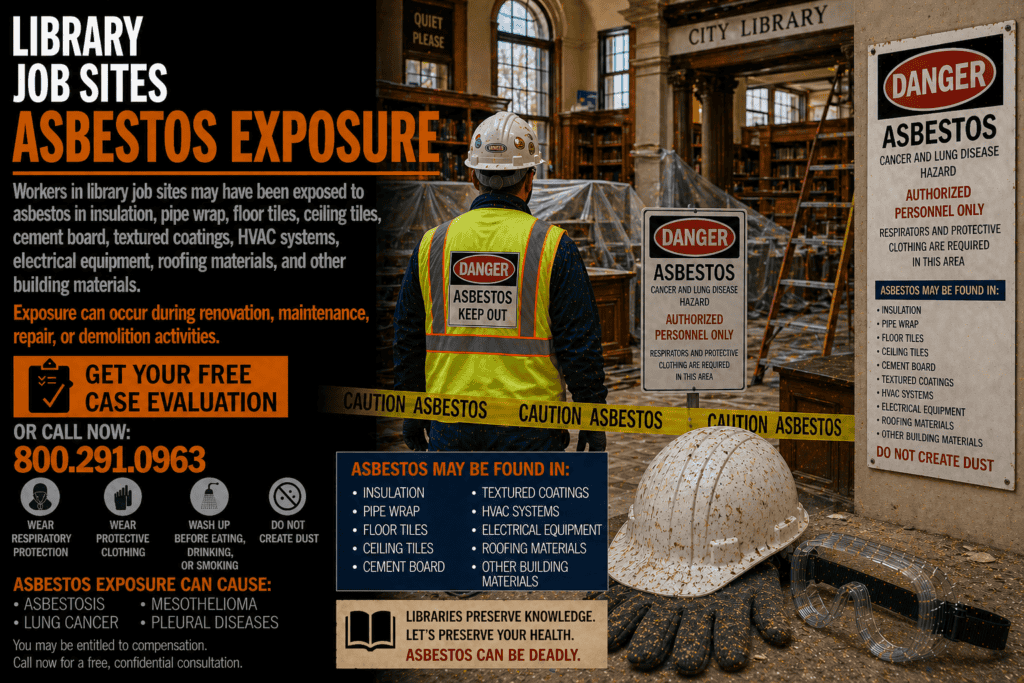
📚 Libraries Asbestos Exposure Lawsuit
Libraries built before the 1980s often contained asbestos in floor tiles, ceiling panels, wall insulation, pipe wrap, and boiler systems. These fire-resistant and soundproof materials were chosen to protect books, archival materials, and reading environments—but they put workers and visitors at risk when disturbed.
Exposure occurred during maintenance, system upgrades, remodeling, and even routine cleaning. Broken floor tiles, removed ceiling panels, and exposed ductwork released asbestos fibers into the air—placing staff, maintenance crews, and patrons in harm’s way.
📚 Library Job Sites – What You’ll Learn From This Page:
🏛 Libraries constructed before 1980 used asbestos in floor tiles, boiler rooms, duct insulation, and ceiling panels.
🛠️ Janitors and maintenance staff disturbed asbestos while repairing HVAC systems, buffing floors, or updating infrastructure.
👩🏫 Librarians, staff, and patrons were exposed during renovation projects or when insulation deteriorated.
🌬️ Poor ventilation allowed dust from damaged materials to circulate undetected in reading rooms and archives.
💰 People exposed in libraries who develop asbestos diseases may qualify for trust fund compensation or lawsuits.
Estimated Number of People Exposed to Asbestos in U.S. Libraries
Library buildings often contained undetected asbestos risks for decades.
| Exposure Category | Estimated Number of People Exposed |
|---|---|
| Occupational Exposure (janitors, techs, HVAC workers) | Around 300,000 workers exposed |
| Secondary Exposure (librarians, staff, clerks) | Estimated 150,000 exposed |
| Environmental Exposure (readers, students, researchers) | Around 350,000 people exposed |
👉 Total Estimated Exposure:
Over 800,000 people were exposed to asbestos in U.S. library buildings.
📊 Facts About Library Workers and Asbestos
• Thousands of libraries built from the 1940s to the 1980s used asbestos-containing materials.
• Asbestos Exposure: Common during HVAC repairs, ceiling work, and flooring replacement.
• Asbestos-Related Disease Risk: Elevated among janitors, technicians, and administrative staff.
• EPA inspections have documented asbestos in public, university, and school library buildings.
• Similar Occupations: Custodians, contractors, librarians, HVAC workers, archivists, electricians
🏗️ History of Asbestos Use in Library Buildings
Libraries relied heavily on asbestos for insulation and fireproofing. It was found in floor tiles, wall panels, boiler rooms, adhesives, HVAC systems, and ceilings. These materials degraded over time and were disturbed during maintenance or renovation.
Even seemingly minor updates—such as replacing lights or removing tiles—could release asbestos dust. Many workers were unaware of the hazard and did not use protective equipment.
⚠️ Mesothelioma Risk for Library Workers
Numerous cases of asbestos-related disease have been linked to library environments:
• Workers inhaled fibers during repairs or while handling damaged materials.
• Asbestos dust accumulated in storage rooms, utility areas, and under carpets.
• Patrons and staff alike were exposed when aging materials deteriorated in shared spaces.
Illness may not appear for 20–50 years after exposure, making legal and medical support essential.
🧪 Asbestos Products Found in Libraries
📦 Vinyl Asbestos Floor Tile (VAT)
Used in stacks, reading rooms, and hallways; cracked tiles released dust when removed.
🧱 Ceiling Tiles and Panels
Installed in nearly all areas; disturbed during lighting, cabling, or remodeling.
🔥 Pipe Insulation
Wrapped around heating and plumbing systems; disturbed during leaks or pipe repairs.
🧰 Boiler Room Insulation
Lined equipment in basements; exposure occurred during cleaning or system maintenance.
🧪 Drywall and Joint Compound
Used in wall construction; asbestos dust released during drilling, patching, or removal.
⚡ Electrical Panel Backing
Asbestos sheets installed behind fuse boxes; exposure occurred during rewiring.
🧴 Adhesives and Mastics
Used beneath tiles and panels; scraping or sanding released fibers.
🧥 HVAC Duct Insulation
Lined air ducts and plenums; disturbed during servicing or replacements.
🧯 Fire Doors and Core Panels
Used in mechanical rooms and exits; asbestos within layers was exposed during upgrades.
📚 Soundproofing Panels
Common in study areas; fibers dislodged when walls or ceilings were modified.
🔩 Window Caulks and Sealants
Asbestos-containing caulk used around frames; exposure during replacement or scraping.
🛠 Elevator Brake Pads
Asbestos used in mechanical systems; disturbed during inspection and repair.
👷 How Library Workers Were Exposed
Exposure occurred during daily operations, maintenance activities, and renovations.
🧹 Custodians and Janitors
Swept, vacuumed, and cleaned asbestos tile and insulation debris; often unaware of fiber hazards.
🛠 Maintenance Workers
Replaced ceiling tiles, lights, and pipes; disturbed asbestos during routine tasks.
📖 Librarians and Administrative Staff
Worked long hours in contaminated buildings; exposure from airborne dust or damaged materials.
⚡ Electricians
Accessed asbestos panels and ceilings during rewiring or lighting updates.
🧰 HVAC Technicians
Serviced asbestos-wrapped duct systems; exposure common during filter access or upgrades.
🧱 Contractors and Remodelers
Tore out floors, ceilings, and walls; high exposure during library renovation projects.
📦 Archivists and Records Staff
Worked in storage rooms with old insulation; fibers disturbed during room modifications.
🚪 Elevator Technicians
Repaired lifts with asbestos brake linings; exposure occurred in small, dusty shafts.
🧾 IT and Cabling Crews
Ran wires above ceiling tiles or through walls; disturbed asbestos during installations.
👷 Project Managers and Inspectors
Entered hazardous spaces during assessments; secondhand exposure from active job sites.
📚 Volunteers and Interns
Unknowingly exposed in dusty utility rooms, archives, or during remodeling.
🏛 Types of Libraries With Asbestos Exposure
🏛 Public Libraries
Built during city expansion eras; asbestos used in walls, ceilings, and flooring.
🏫 School Libraries
Contained ceiling tiles, pipe insulation, and mastic adhesives; exposure occurred during maintenance.
🏢 University and College Libraries
Large HVAC systems and aging infrastructure contributed to frequent exposure during retrofits.
📚 State Archives and Research Libraries
Older buildings housed collections and asbestos-containing utilities; exposure common in storage areas.
🏛 Historic Libraries
Renovated without abatement; workers and staff exposed during restoration efforts.
📘 Specialty and Private Libraries
Often located in pre-1980 buildings; exposure occurred during quiet updates or behind-the-scenes work.
🎭 Library/Theater Combinations
Contained asbestos soundproofing and fireproofing in shared auditorium spaces.
🛠 Mobile or Converted Libraries
Set up in old trailers or repurposed buildings; insulation and tile often contained asbestos.
🧱 Community Resource Centers
Included in civic buildings from the mid-1900s; exposure during public upgrades or expansion.
❓ Common Questions About Library Asbestos Claims
Can I file a claim if I worked in a library decades ago?
Yes — the deadline begins when you’re diagnosed, not when you were exposed.
What if I was exposed as a volunteer or student?
You may still qualify if you developed an asbestos-related illness from time spent in a contaminated building.
Do I need to identify specific asbestos products?
No — attorneys use building records and blueprints to identify asbestos sources.
Can surviving family members file claims?
Yes — spouses and adult children can file wrongful death claims if the worker passed away.
How much compensation is possible?
Many asbestos claims result in six-figure settlements or trust fund awards.
⚖️ How a Mesothelioma Attorney Can Help Library Workers
An experienced attorney can help by:
• Identifying asbestos products used in your library building
• Reviewing your work history and potential exposure areas
• Filing claims through asbestos trust funds or lawsuits
• Meeting strict state deadlines for filing
• Supporting family members in wrongful death cases
• Offering free consultations and no fees unless you win
Help is available for workers, patrons, and family members.
📞 Free Legal Help for Library Workers & Families
If you or a loved one worked in or around an older library and were later diagnosed with mesothelioma, lung cancer, or asbestosis—legal support is available.
Whether you maintained the building, worked behind the desk, or cleaned utility areas—compensation may be available.
Call Now: 800.291.0963
• No fees unless you win
• Free asbestos exposure investigation
• Lawsuit and asbestos trust claim assistance
• Help for librarians, custodians, volunteers, and families
Or request help online 24/7