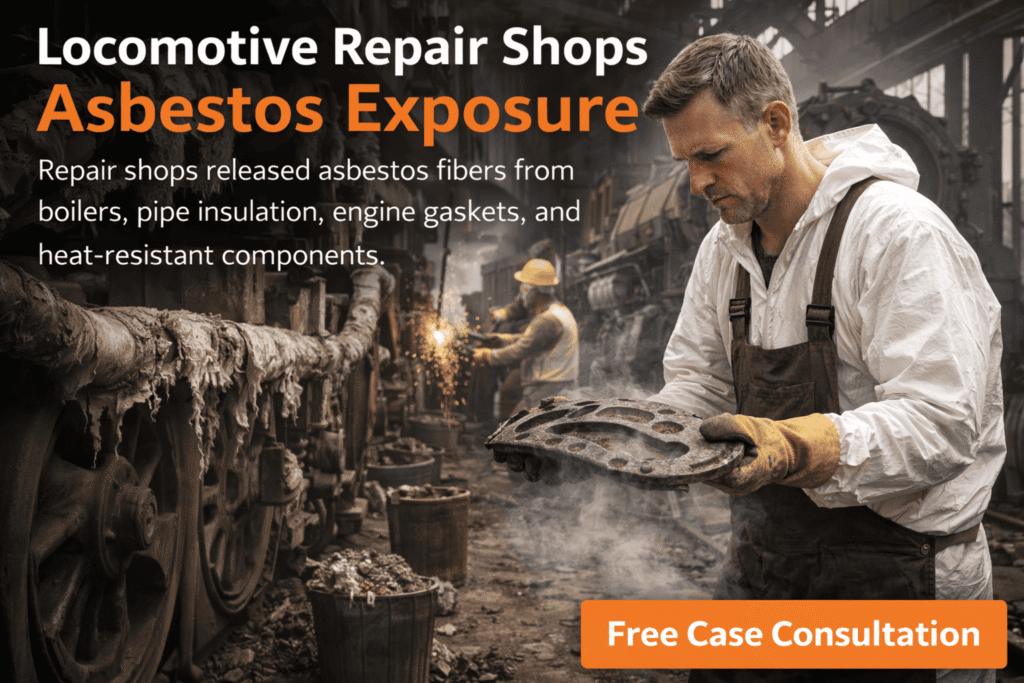
🏭 Locomotive Repair Shops Asbestos Exposure
For much of the 20th century, locomotive repair shops were among the most asbestos-contaminated railroad work environments. These facilities handled major engine repairs, boiler overhauls, brake servicing, insulation replacement, and electrical maintenance—all of which involved asbestos-containing materials. Asbestos insulation, gaskets, brake components, wiring insulation, and heat-resistant coatings were routinely disturbed during daily repair operations.
Repair shops were often enclosed structures with limited ventilation. As workers cut, scraped, ground, and removed asbestos materials, fibers accumulated in the air and settled on tools, floors, clothing, and work surfaces. Many railroad workers spent entire careers inside these shops without respirators or warnings. Decades later, thousands of former railroad employees have been diagnosed with mesothelioma, asbestos-related lung cancer, and asbestosis linked directly to exposure in locomotive repair shops.
📌 What You’ll Learn From This Page
-
🧱 Why asbestos was widely used in locomotive repair shops
-
🛠️ How repair work released asbestos fibers
-
👷 Which railroad workers faced the highest exposure risks
-
⚠️ Health conditions linked to shop-related asbestos exposure
-
⚖️ Legal and compensation options for affected workers
🧱 Why Asbestos Was Used in Locomotive Repair Shops
Railroad repair shops handled equipment exposed to extreme heat, pressure, vibration, and friction. Asbestos was used because it resisted fire, insulated heat, and reduced wear on mechanical components.
Common asbestos materials found in repair shops included:
-
🔥 Boiler insulation and lagging
-
🧩 Gaskets, packing, and seals
-
🛑 Brake shoes, pads, and linings
-
⚡ Electrical wiring insulation and panels
-
🧯 Heat shields, fireproof coatings, and refractory cement
Because repair shops serviced older locomotives long after asbestos use was widespread, workers continued to encounter asbestos well into the late 20th century.
🛠️ Repair Tasks That Released Asbestos Fibers
Daily repair operations disturbed asbestos-containing materials repeatedly. Many tasks produced visible dust clouds in close proximity to workers’ breathing zones.
High-risk tasks included:
-
🪚 Scraping and removing old gaskets and insulation
-
🛠️ Grinding and sanding brake components
-
🔧 Overhauling engines and boilers
-
🧹 Cleaning asbestos debris from shop floors and equipment
-
🧽 Using compressed air to blow out parts
These activities released asbestos fibers that remained airborne for extended periods inside enclosed shop environments.
🏭 Where Exposure Occurred Inside Repair Shops
Asbestos exposure occurred throughout locomotive repair facilities, including:
-
🏚️ Engine overhaul bays
-
🔥 Boiler rooms and steam areas
-
🛤️ Brake and wheel servicing stations
-
⚡ Electrical and control equipment areas
-
🧰 Tool rooms and storage areas
Workers frequently moved between stations, increasing cumulative exposure across multiple asbestos sources during a single shift.
👷 Railroad Workers Most at Risk
Certain railroad occupations faced especially high asbestos exposure due to daily work inside repair shops.
High-risk job roles included:
-
👨🔧 Locomotive machinists
-
🔥 Boilermakers
-
🧰 Maintenance mechanics
-
⚙️ Carmen and repairmen
-
🧹 Shop laborers and helpers
Many workers were covered in asbestos dust by the end of each shift, unknowingly carrying fibers home on clothing and equipment.
⚠️ Health Risks Linked to Repair Shop Asbestos Exposure
Asbestos fibers inhaled in repair shops can become permanently lodged in the lungs or surrounding tissues. Over time, this exposure can lead to severe and often fatal diseases.
Common asbestos-related illnesses include:
-
🩺 Mesothelioma – A rare cancer affecting the lining of the lungs or abdomen
-
🫁 Asbestos-related lung cancer – Increased cancer risk from prolonged exposure
-
😮💨 Asbestosis – Progressive lung scarring causing breathing impairment
Because asbestos diseases develop slowly, many railroad workers were diagnosed decades after their last exposure.
🧬 Why Repair Shop Asbestos Diseases Have Long Latency Periods
Once inhaled, asbestos fibers cause inflammation and cellular damage over many years. Workers often felt healthy long after retirement before symptoms emerged.
Common delayed symptoms include:
-
Persistent coughing
-
Shortness of breath
-
Chest pain or tightness
-
Fatigue and unexplained weight loss
Early diagnosis is difficult, making legal and medical support essential.
⚖️ How a Mesothelioma Lawyer Can Help Repair Shop Workers
An experienced mesothelioma lawyer understands the extensive asbestos use in locomotive repair shops and can help victims pursue compensation.
A lawyer can help by:
-
📂 Investigating railroad employment and shop assignments
-
🏭 Identifying asbestos product manufacturers
-
🧾 Filing asbestos trust fund claims
-
🏛️ Pursuing personal injury lawsuits
-
🕊️ Filing wrongful death claims for families
Most cases are handled on a contingency basis—no upfront legal costs.
💰 Compensation Options for Locomotive Repair Shop Exposure
Railroad workers exposed to asbestos in repair shops may qualify for compensation through:
-
🏦 Asbestos trust funds
-
⚖️ Lawsuit settlements or jury verdicts
-
👨👩👧 Compensation for surviving family members
Compensation can help cover medical bills, lost wages, and long-term family support.
❓ Frequently Asked Questions (FAQs)
❓ Were locomotive repair shops heavily contaminated with asbestos?
Yes. Repair shops handled boilers, brakes, insulation, and electrical components containing asbestos.
❓ Is sweeping or cleaning repair shops dangerous?
Yes. Cleaning disturbed settled asbestos dust, releasing fibers back into the air.
❓ Can repair shop exposure cause mesothelioma?
Yes. Long-term asbestos inhalation is a known cause of mesothelioma and lung disease.
❓ How long after exposure do symptoms appear?
Symptoms often appear 20–50 years after exposure.
❓ Can families file claims after a worker’s death?
Yes. Families may pursue wrongful death and asbestos trust claims.
📞 Free Mesothelioma Case Evaluation
If you or a loved one worked in locomotive repair shops and later developed mesothelioma or lung disease, help is available now.
📲 Call 800-291-0963
✅ No upfront costs
✅ No fees unless compensation is recovered
✅ Nationwide legal assistance
✅ Full exposure investigation included