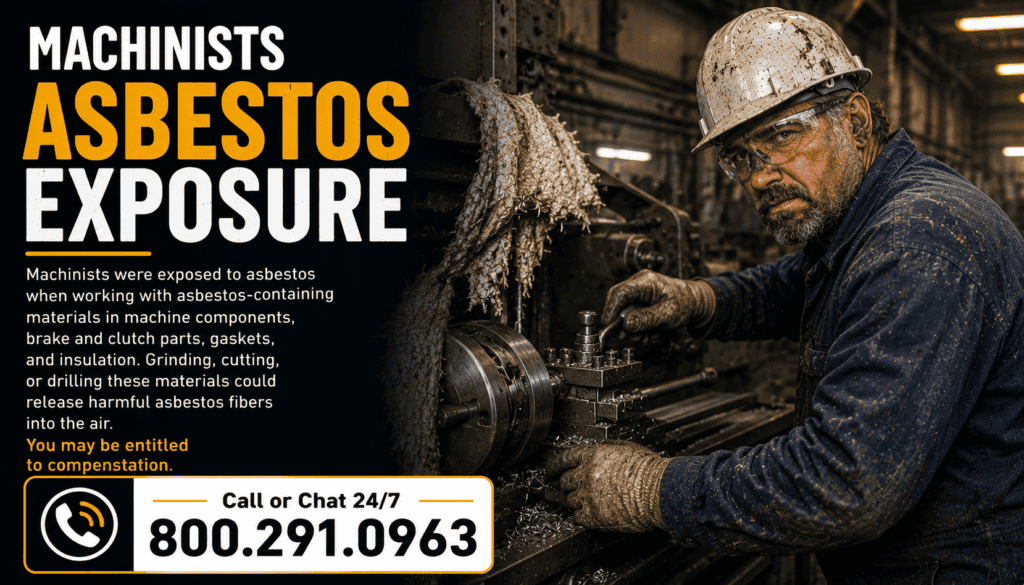
⚙️ Machinists Asbestos Exposure
Machinists worked on the front lines of industrial production, operating, maintaining, and repairing precision equipment in steel mills, automotive plants, shipyards, power plants, paper mills, chemical facilities, and manufacturing factories. Because asbestos was widely used to insulate machinery, control heat, and reduce friction, machinists were frequently exposed during routine production tasks and maintenance activities.
Exposure often occurred daily and cumulatively, as machinists worked in close proximity to asbestos-insulated equipment, worn components, and contaminated factory environments.
⚠️ How Machinists Were Exposed to Asbestos
Machinists were exposed whenever asbestos-containing equipment was operated, serviced, or repaired. Even when machinists were not directly removing insulation, nearby disturbances released fibers into shared workspaces.
Common exposure scenarios included:
-
Operating lathes, mills, and presses near asbestos-insulated machinery
-
Machining metal parts connected to insulated systems
-
Grinding, sanding, and cutting components near asbestos materials
-
Assisting with equipment teardown and rebuilds
-
Working during shutdown maintenance and overhauls
-
Exposure to asbestos dust settling on work surfaces
-
Cleaning machinery contaminated with insulation debris
-
Sharing enclosed production floors with maintenance crews
Poor ventilation in factory settings allowed fibers to accumulate and remain airborne.
🧱 Asbestos-Containing Materials in Machining Environments
Asbestos was incorporated into many materials machinists encountered during daily production work.
Common asbestos-containing components included:
-
Insulated motors and drive systems
-
Brake linings and friction components
-
Gaskets and seals on machinery
-
Heat shields and fireproof barriers
-
Pipe insulation running through production areas
-
Asbestos cement and refractory materials
-
Electrical insulation near machine controls
Even intact materials released fibers as they aged, vibrated, and deteriorated.
🏭 Industrial Facilities Where Machinist Exposure Occurred
Machinists worked in nearly every heavy industrial setting where asbestos was present.
High-risk environments included:
-
Steel mills and foundries
-
Automotive manufacturing plants
-
Aerospace manufacturing facilities
-
Shipyards and marine repair facilities
-
Paper and pulp mills
-
Chemical processing plants
-
Power generation facilities
-
Industrial machine shops
Exposure often spanned decades of employment, compounding disease risk.
🫁 Health Risks from Machinist Asbestos Exposure
Long-term asbestos exposure places machinists at increased risk for serious, often fatal diseases. Because asbestos fibers embed deep in lung tissue and internal linings, symptoms frequently appear decades later.
Documented health risks include:
-
Pleural mesothelioma
-
Peritoneal mesothelioma
-
Lung cancer
-
Asbestosis
-
Pleural thickening and scarring
-
Chronic respiratory disease
Most machinists are diagnosed 20–50 years after exposure, delaying treatment and compensation.
⚖️ Machinist Mesothelioma Lawsuits
Many manufacturers of asbestos-containing machinery and components were aware of asbestos dangers but failed to warn workers or provide safer alternatives.
Machinist asbestos lawsuits may involve:
-
Industrial machinery manufacturers
-
Brake and friction product manufacturers
-
Gasket and seal suppliers
-
Insulation product manufacturers
-
Equipment distributors and contractors
Claims often focus on failure to warn, defective design, and negligent exposure.
🏦 Asbestos Trust Fund Claims for Machinists
Numerous asbestos manufacturers later filed bankruptcy and established asbestos trust funds to compensate victims.
Machinists may qualify for trust fund claims related to exposure from:
-
Machinery insulation products
-
Brake and friction materials
-
Gaskets and packing materials
-
Refractory and heat-resistant products
Because machinists worked with multiple products over time, they may qualify for multiple trust fund recoveries.
⏳ Statute of Limitations for Machinist Claims
Each state limits how long victims have to file asbestos-related claims. In most cases, the statute of limitations begins at diagnosis, not exposure.
Failing to file within the allowed timeframe can permanently bar compensation.
👨⚖️ How an Asbestos Lawyer Helps Machinists
Machinist asbestos cases often involve long careers, multiple employers, and numerous asbestos products. An experienced asbestos lawyer can:
-
Identify specific machinery and asbestos products
-
Reconstruct exposure history across decades
-
Locate applicable asbestos trust funds
-
File lawsuits against responsible manufacturers
-
Handle deadlines and documentation
-
Maximize compensation for medical costs and family support
Most asbestos cases are handled on a contingency basis, with no upfront legal fees.
❓ Machinists Asbestos Exposure FAQs
Were machinists directly exposed to asbestos?
Yes. Machinists worked near asbestos-insulated machinery daily.
Can machinists file claims after retirement?
Yes. Claims are based on diagnosis, not employment status.
Does exposure from nearby workers count?
Yes. Secondary exposure in shared workspaces is well documented.
Are asbestos trust funds still paying claims?
Yes. Many remain active nationwide.
Can families file claims after death?
Yes. Wrongful death claims are common.
📞 Free Case Evaluation – Machinists Asbestos Exposure
If you worked as a machinist in an industrial factory and were later diagnosed with mesothelioma or another asbestos-related illness, legal compensation may still be available.
✔️ Free, confidential case evaluation
✔️ No upfront legal fees
✔️ Nationwide asbestos law support
📲 Call 800-291-0963 today to discuss your legal options.