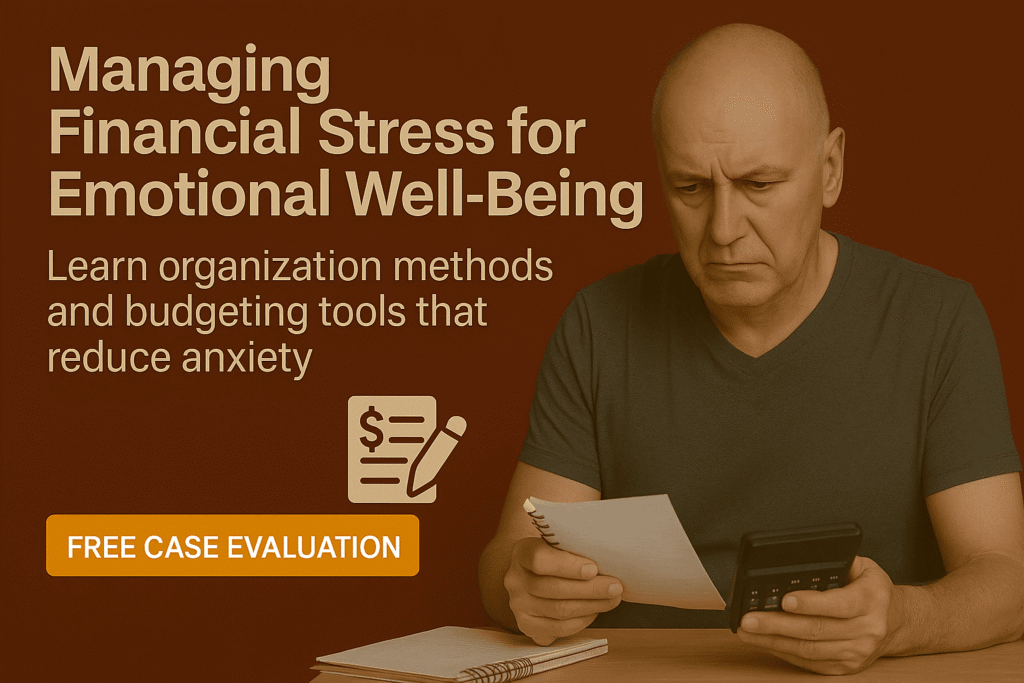
💞 Managing Financial Stress for Emotional Well-Being
A mesothelioma diagnosis can create not only physical and emotional challenges — but financial ones as well. Mounting bills, changing income, and insurance complexities can easily lead to stress and anxiety. Managing these pressures effectively helps protect your mental health and supports overall healing.
This guide provides organization methods and budgeting tools to help you reduce financial anxiety, regain control, and restore peace of mind throughout treatment.
📞 Need help managing financial stress? Call 800.291.0963 for free financial counseling and mesothelioma support today.
🌿 Step 1: Understanding the Link Between Finances and Stress
Money worries can quickly impact emotional and even physical well-being. Studies show that chronic financial stress can increase fatigue, insomnia, and feelings of hopelessness. Recognizing the connection helps you take proactive steps toward balance and calm.
Common signs of financial stress:
-
💬 Constant worry about bills or upcoming expenses.
-
😞 Difficulty focusing or sleeping.
-
💔 Feeling guilt or shame about asking for help.
-
🕰️ Avoiding bills or calls from creditors.
-
🧠 Headaches, fatigue, or anxiety spikes when thinking about finances.
Goal:
To replace fear with structure and control through clear financial planning and emotional support.
📋 Step 2: Get Organized — Create a Financial Binder or Folder
Organization brings clarity — and clarity reduces stress. Having all your financial documents in one place makes it easier to stay on top of bills, insurance claims, and due dates.
How to organize effectively:
-
📂 Use a binder, accordion folder, or digital app to store all paperwork.
-
🧾 Include bills, Explanation of Benefits (EOBs), and receipts.
-
🕒 Create a calendar or checklist for payment deadlines.
-
🗂️ Track which expenses have been paid and which are pending.
-
💬 Keep important phone numbers (insurance reps, billing offices, support programs) on the first page.
Pro Tip:
Organization isn’t just for paperwork — it’s a tool for mental peace. Each time you update your binder, you regain a sense of control.
💡 Step 3: Create a Simple Budget That Reflects Your Reality
Budgeting doesn’t have to be complicated. A clear, flexible plan helps you focus on what matters most while reducing uncertainty about the future.
Steps to build your budget:
-
🏠 List all sources of income — insurance, savings, family contributions, legal compensation.
-
💳 Write down all recurring expenses — rent, utilities, food, transportation, medications.
-
💸 Separate essential costs (medical care, housing, nutrition) from non-essentials.
-
📊 Track expenses weekly using a notebook or free budgeting app.
-
💞 Adjust as needed when medical costs fluctuate.
Goal:
To turn confusion into clarity with a visual roadmap for managing your money.
🧾 Step 4: Use Tools and Apps for Stress-Free Tracking
Technology can simplify financial management, reducing mental load and preventing oversights.
Helpful tools include:
-
💻 Mint or EveryDollar: For automated tracking and spending alerts.
-
📱 Google Sheets or Excel: For customizable monthly expense logs.
-
💬 Bank mobile apps: For real-time updates and notifications.
-
📂 Medical bill organizer apps: For claim tracking and EOB reminders.
-
🕊️ Paper-based planners: Still effective for those who prefer handwriting.
Pro Tip:
Set weekly 15-minute “financial check-ins” — quick reviews prevent overwhelm and build consistency.
⚖️ Step 5: Seek Financial and Emotional Support Early
You don’t have to manage bills and stress alone. Many hospitals, charities, and legal programs offer financial navigation services.
Resources to explore:
-
💞 Hospital social workers: Can connect you with grant or payment aid.
-
💰 Patient Advocate Foundation: Offers case managers for billing and debt relief.
-
🩵 CancerCare and Mesothelioma foundations: Provide travel, medication, or lodging support.
-
⚖️ Asbestos trust fund lawyers: Help secure compensation for exposure-related expenses.
-
🙏 Faith-based ministries: Offer prayer, encouragement, and relief funding.
Goal:
To replace anxiety with assurance by knowing where help is available.
🧠 Step 6: Protect Mental Health Through Stress Management
When bills and uncertainty weigh heavily, your emotional well-being becomes just as important as financial organization.
Proven coping techniques:
-
🌿 Practice slow breathing or guided meditation before handling bills.
-
🕊️ Schedule breaks after financial tasks — don’t process everything at once.
-
✍️ Write thoughts in a stress journal to release tension.
-
💞 Share financial worries with a trusted family member or counselor.
-
🙏 Pray or meditate for peace and provision.
Goal:
To nurture calmness and prevent financial worry from overwhelming your healing.
💬 Step 7: Communicate Openly With Loved Ones
Honest communication prevents misunderstandings and spreads the emotional load. Allow family or close friends to help where possible — managing everything alone increases burnout.
Ways to communicate effectively:
-
💬 Set weekly family check-ins about bills and needs.
-
🏠 Delegate small tasks like organizing mail or scheduling payments.
-
📞 Ask trusted loved ones to handle insurance calls when you’re fatigued.
-
💌 Be honest about what kind of support you need (prayer, listening, or financial help).
-
🕊️ Keep conversations focused on solutions, not fear.
Pro Tip:
Transparency builds teamwork — and teamwork reduces anxiety.
🌈 Step 8: Find Peace Through Faith and Gratitude
Faith and perspective bring calm when circumstances feel uncertain. Recognizing blessings — even small ones — can shift your mindset from fear to thankfulness.
Daily gratitude practices:
-
🕯️ Write three things you’re thankful for each morning.
-
📖 Read a comforting verse before paying bills.
-
🌷 Keep a “peace journal” tracking answered prayers.
-
🙏 Thank God for daily provision and strength.
-
🎶 Listen to worship or calming music during financial tasks.
To strengthen faith and perspective as anchors against financial worry.
🤝 Where to Get Help
Our advocates can connect you with financial counselors, budgeting tools, and emotional wellness programs designed to relieve financial stress during treatment.
📞 Call 800.291.0963 to speak with a Mesothelioma Help Center advocate today.
🧭 Summary
Managing financial stress is key to emotional and physical healing. With budgeting tools, support resources, and faith-driven calm, you can face financial challenges with renewed clarity and strength.
You are not alone — peace, structure, and support are only one call away.
800.291.0963