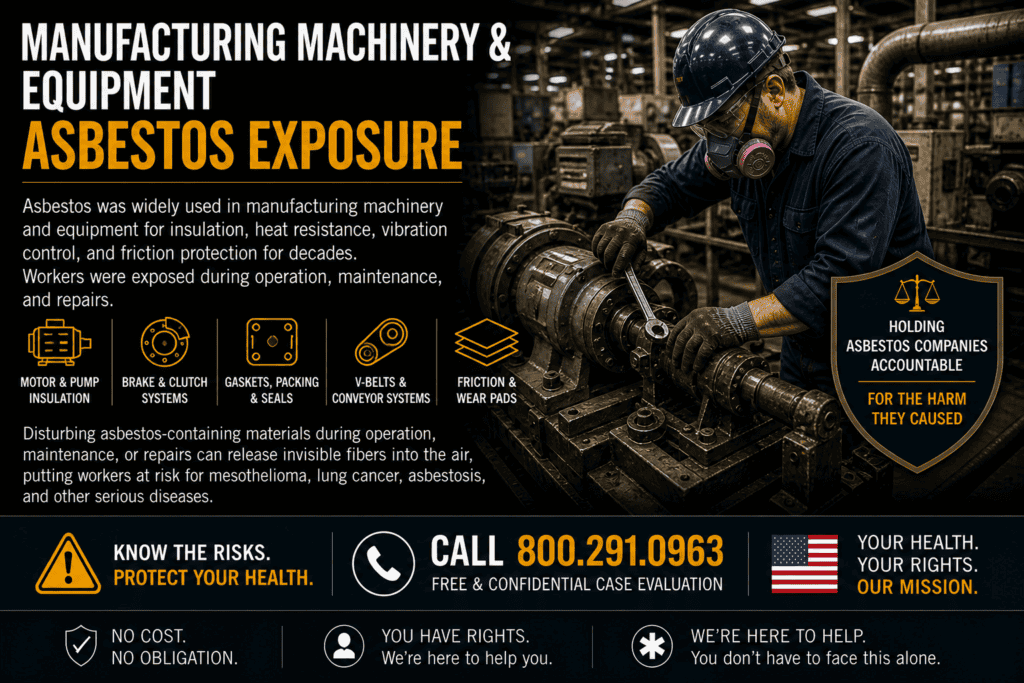
⚙️ Manufacturing Machinery & Equipment Asbestos Exposure
Manufacturing machinery and production equipment were among the most common sources of asbestos exposure inside industrial facilities. Presses, furnaces, mixers, grinders, conveyors, and other production machines frequently contained asbestos components designed to withstand heat, friction, vibration, and continuous operation.
Because this equipment operated daily—often around the clock—workers were repeatedly exposed to asbestos fibers released as components aged, wore down, or were disturbed during maintenance and repairs. Over time, this exposure placed machine operators, mechanics, and maintenance crews at significant risk for asbestos-related cancers that often appear decades later.
🔍 Why Asbestos Was Used in Manufacturing Machinery & Equipment
Manufacturing equipment generated intense heat and friction, especially in metalworking, chemical processing, and industrial assembly environments. Asbestos offered properties that made it ideal for these demanding conditions.
🔥 Key reasons asbestos was used
-
Resistance to extreme heat and flame
-
Ability to withstand friction and mechanical stress
-
Durability during continuous operation
-
Insulation for internal machine components
As a result, asbestos was integrated into many moving and stationary parts of production equipment.
🧱 Common Asbestos-Containing Machinery Components
Asbestos was not limited to insulation—it was built directly into machinery and equipment components.
⚙️ Production Machines
-
Presses, stamping machines, and molding equipment
-
Furnaces, kilns, and heat-treating systems
-
Mixers, grinders, and crushers
🔩 Friction & Wear Components
-
Brake pads and clutch linings
-
Friction discs and wear plates
-
Heat shields and vibration dampeners
🔧 Seals, Gaskets & Packing
-
Equipment gaskets and seals
-
Valve packing and flange materials
-
Insulation boards and panels
⚡ Electrical & Control Components
-
Motor housings and insulation
-
Control panels and switchgear boards
-
Wiring insulation inside equipment enclosures
These components were often enclosed within machines, making exposure less visible but no less dangerous.
💨 How Asbestos Exposure Occurred from Machinery & Equipment
Asbestos exposure from manufacturing equipment frequently occurred during normal production activities—not only during major breakdowns.
🔧 Normal Equipment Operation
Heat, vibration, and mechanical movement caused asbestos-containing components to degrade over time, releasing fibers into the surrounding air.
🛠️ Maintenance & Repairs
Replacing worn parts, gaskets, belts, and seals disturbed asbestos materials embedded inside machines.
🏗️ Equipment Overhauls & Rebuilds
Major tear-downs and rebuilds exposed large quantities of asbestos dust trapped inside machinery housings.
🧨 Equipment Removal & Replacement
Removing obsolete machinery released accumulated asbestos dust into production areas.
Because machinery was often located in enclosed spaces, asbestos fibers could linger and spread throughout work areas.
👷 Workers Most Commonly Exposed
Exposure from manufacturing machinery affected a wide range of plant personnel.
👷 High-risk workers included
-
Machine operators and line workers
-
Maintenance and repair technicians
-
Mechanics and millwrights
-
Electricians and control technicians
-
Supervisors and production managers
-
Contractors performing equipment upgrades
Operators working beside machines inhaled fibers released during operation, while maintenance workers experienced intense exposure during repairs.
⚠️ Health Risks Linked to Machinery & Equipment Asbestos Exposure
Medical research has firmly linked asbestos inhalation to serious cancers that often take 20 to 50 years to develop after exposure.
🩺 Asbestos-related cancers include
-
Mesothelioma (pleural or peritoneal)
-
Lung cancer caused by asbestos exposure
Symptoms may include chest pain, shortness of breath, chronic coughing, fatigue, and unexplained weight loss. Because symptoms appear gradually, diagnosis is often delayed.
🧠 Frequently Asked Questions
❓ Can machine operators be exposed without repairing equipment?
Yes. Fibers released during normal operation can be inhaled even without direct contact.
❓ Are enclosed machines safer?
Not necessarily. Enclosures can trap asbestos dust that is released during maintenance or breakdowns.
❓ Does short-term exposure during repairs matter?
Yes. Brief but intense exposure can significantly increase long-term cancer risk.
❓ Can asbestos spread beyond machine areas?
Yes. Air movement and foot traffic can carry fibers throughout production spaces.
⚖️ Legal Options for Manufacturing Machinery Exposure
Workers diagnosed with asbestos-related cancers may have legal rights, even if exposure occurred decades ago.
🛡️ Manufacturing Machinery Asbestos Lawsuits
Lawsuits may be filed against manufacturers of asbestos-containing machinery, components, and replacement parts. Compensation may include:
-
Medical expenses
-
Lost wages and reduced earning capacity
-
Pain and suffering
Most cases are resolved through settlements, though some proceed to trial.
💰 Manufacturing Machinery Asbestos Trust Funds
Many equipment and component manufacturers established asbestos trust funds after bankruptcy to compensate workers harmed by asbestos exposure.
✔ Trust claims often avoid court
✔ Multiple trust claims may be available
✔ Payments depend on diagnosis and exposure history
Trust fund claims are often pursued alongside lawsuits.
👨👩👧 Manufacturing Machinery Wrongful Death Claims
Families who lost loved ones to asbestos-related cancers may pursue wrongful death claims to recover compensation for:
-
Funeral and burial expenses
-
Lost income and benefits
-
Loss of companionship and support
Wrongful death claims help families achieve financial stability and accountability.
🧾 How an Asbestos Attorney Can Help
Experienced asbestos attorneys assist machinery-exposed workers by:
🔍 Investigating equipment and exposure history
📁 Identifying asbestos-containing machinery and parts
🧠 Coordinating medical documentation
⚖️ Filing lawsuits and trust fund claims
💬 Negotiating settlements
Most asbestos cases are handled on a contingency basis.
📞 Free Case Consultation
If you or a loved one worked with manufacturing machinery or equipment and were later diagnosed with an asbestos-related cancer, help may be available.
🟧 Free Case Consultation
📞 Call 800-291-0963 to speak with an experienced asbestos professional today.
There is no obligation, and you pay nothing unless compensation is recovered.
📌 Key Takeaways
-
⚙️ Manufacturing machinery frequently contained asbestos components
-
💨 Exposure occurred during operation, maintenance, and equipment removal
-
⚠️ Asbestos exposure is linked to serious cancers decades later
-
⚖️ Legal options include lawsuits, trust funds, and wrongful death claims
-
📞 Help is available through a free case consultation