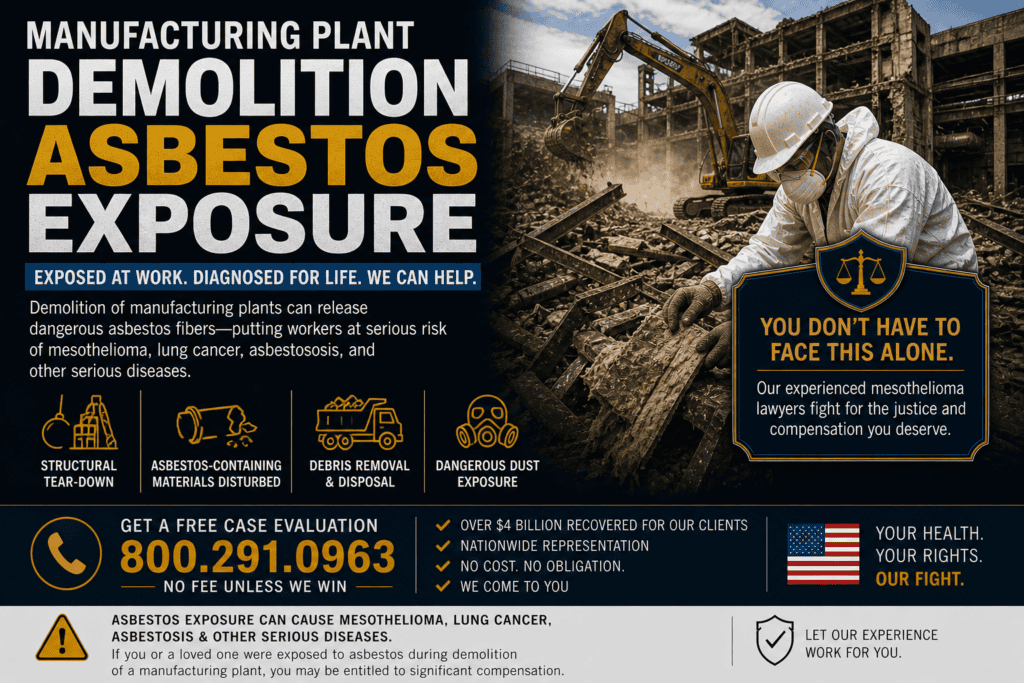
🧨 Manufacturing Plant Demolition Asbestos Exposure
Manufacturing plant demolition created some of the most extreme asbestos exposure conditions ever recorded in industrial settings. When older factories, processing buildings, and production areas were dismantled, massive amounts of asbestos-containing materials were disturbed at once. Insulation, fireproofing, machinery components, and building materials installed decades earlier were shattered, crushed, and torn apart—releasing dense clouds of airborne asbestos fibers.
Workers involved in demolition, cleanup, and debris handling were often exposed without proper containment or protective equipment. In many cases, nearby workers and surrounding communities were also exposed as asbestos dust spread beyond demolition zones. These exposures have been directly linked to asbestos-related cancers diagnosed many years later.
🔍 Why Manufacturing Plant Demolition Was Extremely Hazardous
Demolition work differed from routine maintenance or renovations because it involved widespread destruction of asbestos materials in a short time.
🔥 Key factors increasing exposure
-
Simultaneous disturbance of multiple asbestos-containing systems
-
Mechanical crushing and structural collapse
-
Lack of containment during early demolition projects
-
Airborne dust spreading throughout facilities and outdoors
Older manufacturing plants were constructed during peak asbestos use, making demolition particularly dangerous.
🧱 Asbestos Materials Commonly Released During Demolition
Demolition released asbestos from nearly every component of manufacturing facilities.
🏗️ Structural & Building Materials
-
Fireproof beams, columns, and ceilings
-
Wall panels, ceiling tiles, and floor materials
-
Roofing, siding, and insulation boards
🔥 Insulation & Fireproofing
-
Boiler and steam pipe insulation
-
Spray-applied fireproof coatings
-
Thermal insulation around machinery
⚙️ Machinery & Industrial Equipment
-
Insulated housings and access panels
-
Gaskets, seals, and heat shields
-
Electrical components and wiring insulation
🌬️ Utility & Ventilation Systems
-
Duct insulation and plenum linings
-
Mechanical room insulation
-
Pipe chases and utility corridors
These materials were often pulverized during demolition, releasing concentrated asbestos dust.
💨 How Asbestos Exposure Occurred During Demolition
Exposure during demolition was intense and widespread.
🧨 Structural Teardown
Breaking walls, collapsing ceilings, and cutting steel released fibers trapped for decades.
🚜 Heavy Equipment Use
Bulldozers, wrecking balls, saws, and crushers shattered asbestos materials into fine dust.
🧹 Debris Removal & Cleanup
Handling rubble, sweeping dust, and loading debris exposed workers to lingering asbestos fibers.
🌬️ Airborne Spread
Wind, ventilation systems, and worker movement carried fibers beyond demolition zones.
Asbestos dust often remained suspended in the air long after demolition activities ended.
👷 Workers Most Commonly Exposed
Demolition exposure affected a wide range of workers.
👷 High-risk roles included
-
Demolition laborers
-
Heavy equipment operators
-
Construction contractors
-
Maintenance and utility workers
-
Electricians and pipefitters
-
Supervisors and safety personnel
-
Cleanup and waste handling crews
Workers who performed demolition before strict asbestos regulations were especially vulnerable.
⚠️ Health Risks Linked to Demolition Asbestos Exposure
Medical research confirms that inhaling large amounts of asbestos fibers greatly increases the risk of serious cancers that often develop 20 to 50 years after exposure.
🩺 Asbestos-related cancers include
-
Mesothelioma (pleural or peritoneal)
-
Lung cancer caused by asbestos exposure
Symptoms may include chest pain, shortness of breath, chronic coughing, fatigue, and unexplained weight loss. Because demolition exposure was often intense, disease progression may occur more rapidly in some individuals.
🧠 Frequently Asked Questions
❓ Why is demolition exposure more dangerous than renovation?
Demolition releases far larger quantities of asbestos at once.
❓ Were demolition workers warned about asbestos?
Many were not informed or protected during early demolition projects.
❓ Can nearby workers be exposed?
Yes. Asbestos dust can spread beyond demolition zones.
❓ Does cleanup work still pose a risk?
Yes. Disturbing settled dust during cleanup can release fibers again.
⚖️ Legal Options After Demolition Asbestos Exposure
Workers diagnosed with asbestos-related cancers after demolition exposure may have legal rights even if exposure occurred decades ago.
🛡️ Manufacturing Plant Demolition Asbestos Lawsuits
Lawsuits may be filed against asbestos product manufacturers, demolition contractors, property owners, and other responsible parties. Compensation may include:
-
Medical expenses
-
Lost wages and reduced earning capacity
-
Pain and suffering
Most cases resolve through settlements, though some proceed to trial.
💰 Manufacturing Plant Demolition Asbestos Trust Funds
Many companies responsible for asbestos-containing building materials established trust funds following bankruptcy.
✔ Claims often do not require court appearances
✔ Multiple trust claims may be available
✔ Payments depend on diagnosis and exposure history
Trust fund claims are commonly pursued alongside lawsuits.
👨👩👧 Demolition-Related Wrongful Death Claims
Families who lost loved ones to asbestos-related cancers may pursue wrongful death claims. These claims may provide compensation for:
-
Funeral and burial expenses
-
Lost income and benefits
-
Loss of companionship and support
Wrongful death claims help families recover financially while holding responsible parties accountable.
🧾 How an Asbestos Attorney Can Help
Experienced asbestos attorneys assist demolition-exposed workers by:
🔍 Investigating demolition history and exposure sources
📁 Identifying asbestos-containing materials involved
🧠 Coordinating medical documentation
⚖️ Filing lawsuits and trust fund claims
💬 Negotiating settlements
Most asbestos cases are handled on a contingency basis, meaning no upfront legal fees.
📞 Free Case Consultation
If you or a loved one were exposed to asbestos during manufacturing plant demolition and were later diagnosed with an asbestos-related cancer, help may be available.
🟧 Free Case Consultation
📞 Call 800-291-0963 to speak with an experienced asbestos professional today.
There is no obligation, and you pay nothing unless compensation is recovered.
📌 Key Takeaways
-
🧨 Manufacturing plant demolition released massive amounts of asbestos dust
-
💨 Exposure occurred during teardown, debris removal, and cleanup
-
⚠️ Asbestos exposure is linked to serious cancers decades later
-
⚖️ Legal options include lawsuits, trust funds, and wrongful death claims
-
📞 Help is available through a free case consultation