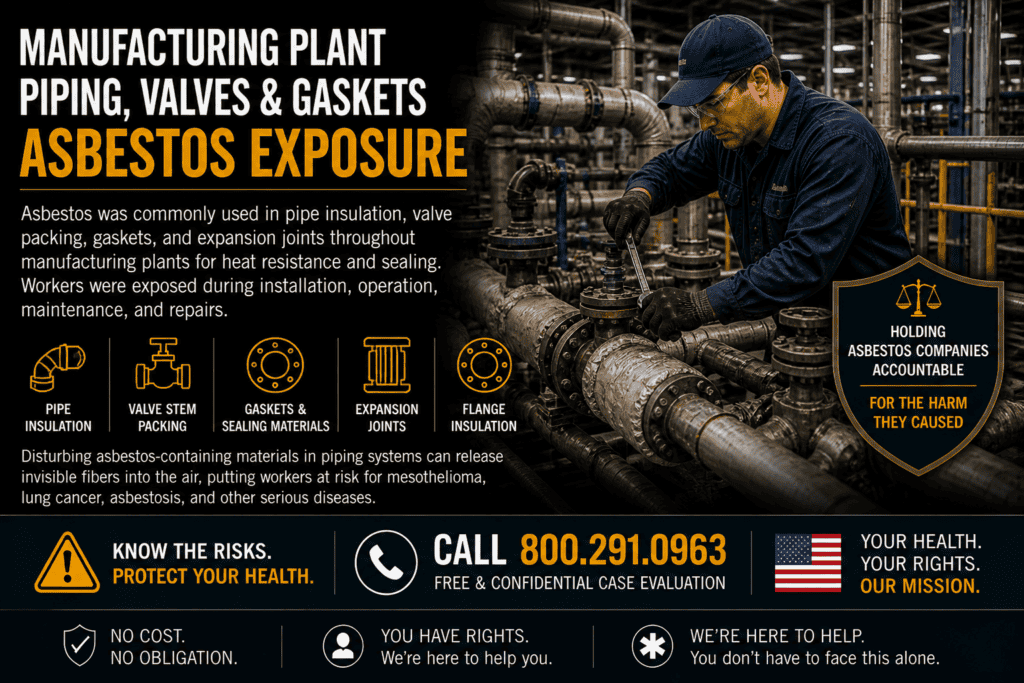
🧵 Manufacturing Plant Piping, Valves & Gaskets Asbestos Exposure
Manufacturing plant piping systems, valves, and gaskets were major sources of asbestos exposure across industrial facilities for much of the 20th century. Steam lines, process piping, chemical transfer systems, and pressure lines were insulated and sealed with asbestos materials designed to withstand extreme heat, pressure, and corrosive substances.
Because these systems ran throughout entire plants—often overhead, beneath floors, and inside walls—workers across many departments were exposed when asbestos materials were disturbed during routine operations, maintenance, repairs, and system upgrades. Over time, repeated inhalation of airborne asbestos fibers placed many manufacturing workers at risk for serious asbestos-related cancers decades later.
🔍 Why Asbestos Was Used in Manufacturing Piping Systems
Piping systems in manufacturing environments carried steam, chemicals, hot liquids, gases, and compressed air. Asbestos was heavily relied upon because it met multiple performance and safety needs.
🔥 Key reasons asbestos was used
-
Resistance to high heat and pressure
-
Insulation to prevent burns and heat loss
-
Durability against vibration and chemical exposure
-
Fire protection for surrounding structures
As a result, asbestos became a standard component in piping insulation, valve packing, and gasket materials across manufacturing plants.
🧱 Common Asbestos-Containing Piping, Valves & Gaskets
Asbestos was incorporated into nearly every part of plant piping systems.
🚿 Pipe Insulation & Coverings
-
Thermal pipe insulation and lagging
-
Insulation cement and wrap materials
-
Elbows, joints, and expansion points
🔩 Valves & Valve Packing
-
Asbestos rope and packing materials
-
Valve stem seals and flanges
-
Pressure control and shutoff valves
🧵 Gaskets & Seals
-
Flange gaskets and compression seals
-
Pump and equipment gaskets
-
High-temperature gasket sheets
🏗️ Structural & Mechanical Areas
-
Mechanical rooms and pipe chases
-
Ceiling and wall penetrations
-
Boiler rooms and utility corridors
These materials were often installed during original construction and left in place for decades.
💨 How Asbestos Exposure Occurred from Piping Systems
Exposure to asbestos from piping, valves, and gaskets frequently occurred during everyday plant activities.
🔧 Routine Maintenance
Cutting, scraping, and replacing insulation, gaskets, and valve packing released asbestos fibers directly into the air.
🛠️ Repairs & Leak Response
Fixing leaks or pressure failures required disturbing aged insulation and seals, often in confined spaces.
🏗️ System Modifications & Upgrades
Rerouting piping or upgrading systems exposed asbestos hidden behind walls, ceilings, and equipment housings.
🧨 Insulation Removal & Replacement
Removing deteriorated insulation released large amounts of asbestos dust that spread throughout work areas.
Once airborne, fibers could circulate widely through plant airspace, exposing workers far from the immediate work zone.
👷 Workers Most Commonly Exposed
Because piping systems served entire facilities, many job roles were exposed—even if workers were not assigned directly to pipe work.
👷 High-risk workers included
-
Pipefitters and steamfitters
-
Maintenance and repair crews
-
Mechanics and millwrights
-
Boiler operators
-
Electricians working near piping systems
-
Supervisors and engineers
-
Contractors performing upgrades
Workers in mechanical rooms and overhead pipe areas often experienced especially high exposure levels.
⚠️ Health Risks Linked to Piping, Valves & Gasket Asbestos Exposure
Medical evidence has established a strong link between asbestos inhalation and serious cancers that often develop 20 to 50 years after exposure.
🩺 Asbestos-related cancers include
-
Mesothelioma (pleural or peritoneal)
-
Lung cancer caused by asbestos exposure
Symptoms may include chest pain, shortness of breath, persistent coughing, fatigue, and unexplained weight loss. Because symptoms often appear decades later, diagnosis is frequently delayed.
🧠 Frequently Asked Questions
❓ Can workers be exposed without removing insulation?
Yes. Aging insulation can release fibers through vibration, heat, and normal wear.
❓ Are gasket replacements dangerous?
Yes. Removing old gaskets and scraping residue can release concentrated asbestos dust.
❓ Can exposure spread beyond mechanical rooms?
Yes. Air movement and worker traffic can carry fibers into other areas of the plant.
❓ Are modern replacements asbestos-free?
Many newer materials are asbestos-free, but older systems often still contain legacy asbestos components.
⚖️ Legal Options for Piping, Valve & Gasket Exposure
Workers diagnosed with asbestos-related cancers may have legal options even if exposure occurred decades ago.
🛡️ Piping & Gasket Asbestos Lawsuits
Lawsuits may be filed against manufacturers of asbestos-containing insulation, valves, gaskets, and related products. Compensation may include:
-
Medical expenses
-
Lost wages and reduced earning capacity
-
Pain and suffering
Most cases are resolved through settlements rather than trial.
💰 Piping, Valve & Gasket Asbestos Trust Funds
Many companies that manufactured asbestos insulation, gaskets, and packing materials established trust funds following bankruptcy.
✔ Claims often do not require court appearances
✔ Multiple trust claims may be available
✔ Payments depend on diagnosis and exposure history
Trust fund claims are commonly pursued alongside lawsuits when multiple products contributed to exposure.
👨👩👧 Wrongful Death Claims for Piping System Exposure
Families who lost loved ones to asbestos-related cancers may pursue wrongful death claims. These claims may provide compensation for:
-
Funeral and burial expenses
-
Lost income and benefits
-
Loss of companionship and support
Wrongful death claims help families recover financially while holding responsible parties accountable.
🧾 How an Asbestos Attorney Can Help
Experienced asbestos attorneys assist piping system–exposed workers by:
🔍 Investigating work history and job duties
📁 Identifying asbestos-containing products used on-site
🧠 Coordinating medical records
⚖️ Filing lawsuits and trust fund claims
💬 Negotiating settlements
Most asbestos cases are handled on a contingency basis, meaning no upfront legal fees.
📞 Free Case Consultation
If you or a loved one worked around manufacturing plant piping, valves, or gaskets and were later diagnosed with an asbestos-related cancer, help may be available.
🟧 Free Case Consultation
📞 Call 800-291-0963 to speak with an experienced asbestos professional today.
There is no obligation, and you pay nothing unless compensation is recovered.
📌 Key Takeaways
-
🧵 Manufacturing plant piping systems used extensive asbestos insulation and sealing materials
-
💨 Exposure occurred during maintenance, repairs, upgrades, and insulation removal
-
⚠️ Asbestos exposure is linked to serious cancers decades later
-
⚖️ Legal options include lawsuits, trust funds, and wrongful death claims
-
📞 Help is available through a free case consultation